Introduction: The Evolution of Concrete Repair
For decades, property owners facing sinking slabs or structural voids had two equally disruptive options: total concrete replacement or "mudjacking." While replacement is capital-intensive and time-consuming, mudjacking—pumping a heavy slurry of cement and soil beneath a slab—often exacerbates the underlying issue. By adding significant weight to already compromised soil, traditional mudjacking can lead to further settlement. In contrast, modern polyfoam grout (polyurethane injection) represents a shift from cosmetic patching to engineering-grade soil stabilization. This evolution is driving a massive industry change, with the global concrete restoration market projected to exceed $36 billion by 2034 as facility managers prioritize sustainable rehabilitation over demolition (Bhilare, "Concrete Restoration Market").
Black Birch Contracting utilizes high-density polyurethane foam to address the root cause of settlement rather than just the symptoms. Unlike the heavy cement slurries used in the past, polyurethane is lightweight yet incredibly strong. Engineering data indicates that while mudjacking material can weigh up to 100 pounds per cubic foot, polyurethane foam weighs only 2 to 4 pounds per cubic foot, significantly reducing the burden on weak subsoils (Superior PolyLift, "Polyurethane vs Mudjacking").
The benefits of this methodology extend beyond weight reduction. We employ hydrophobic grouts that cure rapidly and remain stable even in water-saturated environments. These materials are designed to achieve 90% of their compressive strength within just 15 minutes of injection, allowing for immediate return to service for driveways, warehouse floors, and walkways (Superior PolyLift, "Foam Strength"). By expanding into voids and compacting the surrounding soil, polyfoam grout creates a permanent, water-resistant base that locks concrete in place without the chaos of excavation.
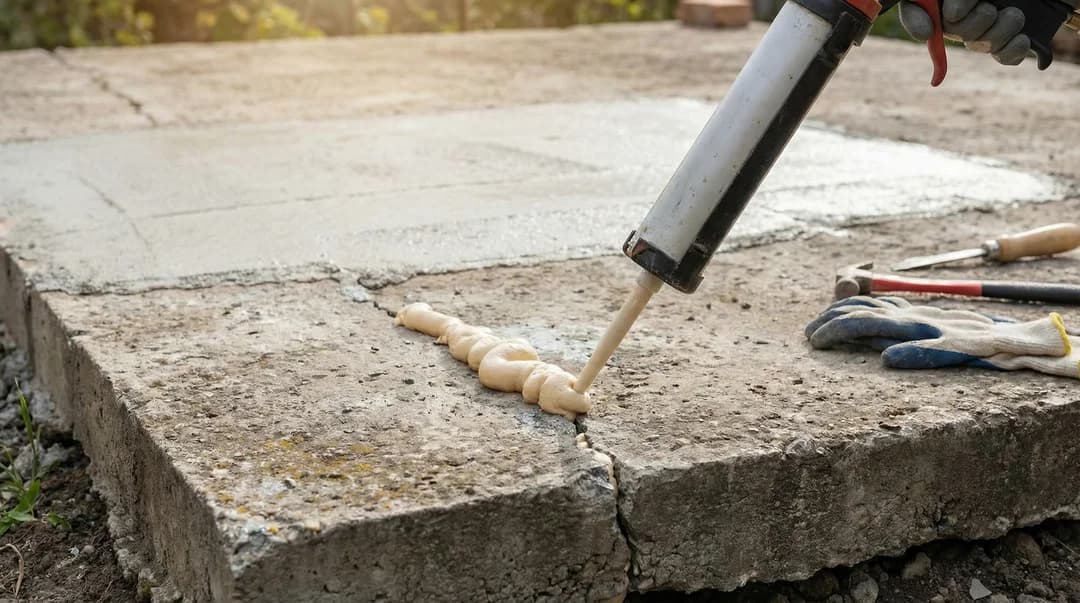
What Is Polyfoam Grout and How Does It Differ from Mudjacking?
Polyfoam grout, technically known as high-density polyurethane, is a two-component expanding polymer designed to stabilize soil and lift sunken concrete slabs. Unlike simple cosmetic fillers, this structural resin involves a chemical reaction between two liquid components—an isocyanate and a resin blend—that expand rapidly upon injection. As the material expands, it fills voids, compresses loose soil, and exerts a powerful lifting force capable of raising heavy residential and commercial structures (Superior Grouting, "What Is Polyurethane Concrete Raising?").
While both polyfoam injection and traditional mudjacking aim to level concrete, the engineering principles behind them are fundamentally different. Mudjacking relies on hydraulic pressure to pump a heavy slurry of sand, cement, and water beneath the slab. In contrast, polyfoam grout utilizes the expansive force of the chemical reaction itself. This distinction leads to three critical advantages for property owners:
Negligible Weight Load: Mudjacking slurry is incredibly dense, weighing approximately 100 pounds per cubic foot. This added mass can create a "heavy anchor" effect, burdening already weak soil and potentially causing further settlement. Polyurethane foam is significantly lighter, weighing only 2 to 4 pounds per cubic foot, which provides structural support without overburdening the subgrade (Superior PolyLift, "Polyurethane vs Mudjacking").
Minimally Invasive Application: The equipment used for mudjacking requires drilling large injection holes, typically 1 to 2 inches in diameter (roughly the size of a soda can). Polyurethane injection requires only penny-sized holes, approximately 5/8 of an inch wide, which are easily patched and virtually invisible upon completion (Bluegrass Foundation Repair, "Concrete Leveling Methods").
Erosion and Moisture Resistance: Traditional mudjacking slurries are cement-based and can be susceptible to washout if water infiltration issues persist. Polyfoam grout is hydrophobic, meaning it repels water and will not erode, shrink, or degrade over time, creating a permanent solution even in wet environments (Family Waterproofing, "Polyurethane vs Mudjacking").
The Step-by-Step Polyurethane Injection Process
Unlike traditional mudjacking, which relies on heavy cement slurries, the application of polyfoam grout is a precise, engineering-driven approach to concrete restoration. This method addresses the root cause of settlement—weak or poorly compacted soil—without the destructive excavation associated with total slab replacement. At Black Birch Contracting, we utilize a controlled injection method that ensures structural stability with minimal disruption to your property.
Step 1: Assessment and Drill Pattern Planning
Every project begins with a comprehensive site evaluation. Technicians identify the extent of the void and the specific settling patterns of the concrete. Using this data, a strategic drill grid is mapped out to ensure the lifting force is distributed evenly, preventing slab cracking during the elevation process.
Step 2: Precision Drilling
To access the voids beneath the slab, technicians drill small injection holes, typically only 5/8 of an inch in diameter (roughly the size of a penny). This non-invasive approach preserves the structural integrity of the concrete and is significantly less damaging than the large holes required for cementitious grouting.
Step 3: Port Installation
Specialized mechanical ports are installed into the drilled holes. These ports create a tight seal, ensuring that the polyurethane resin acts as a closed delivery system. This prevents material leakage and guarantees that the expansion pressure is directed entirely downward into the soil and upward against the slab.
Step 4: Hydrophobic Grout Injection
A two-component liquid polyurethane polymer is injected through the ports. Once the components mix, an exothermic reaction occurs immediately. Recent material science research highlights that specific polyurethane formulations can expand approximately 33 times their original liquid volume, stabilizing fully within roughly two minutes (Gao et al., "Impact of Composition"). This rapid expansion fills deep voids, fissures, and washes out areas, effectively compacting the sub-base.
Step 5: Monitoring the Lift
As the foam expands, it exerts controlled upward pressure. Technicians monitor the slab’s movement with precision levels, raising the concrete in small increments. This allows for fine-tuned adjustments to ensure the surface is perfectly leveled with adjacent slabs and that proper water drainage pitch is restored.
Step 6: Patching and Completion
Once the lift is verified, the ports are removed, and the small drill holes are patched with a color-matching cementitious grout. Because the polyurethane cures to 90% structural strength within minutes, the area is ready for immediate foot traffic or vehicle loads, eliminating the long cure times required by concrete replacement.
Common Applications: Beyond Just Concrete Lifting
While many property owners associate polyfoam grout primarily with leveling uneven sidewalks or driveways, its utility extends far beyond simple cosmetic repairs. The expanding properties of polyurethane injection make it a versatile tool for complex structural interventions, offering a non-invasive alternative to excavation for both residential and commercial projects.
The material’s ability to aggressively expand and cure within minutes allows it to address several critical structural issues:
Void Filling: Erosion and soil settlement often create dangerous empty spaces beneath concrete slabs before any visible cracking occurs. Polyfoam grout flows into these hidden cavities under driveways, sidewalks, and warehouse floors, expanding to fill every crevice. This process prevents future settling and structural failure by re-establishing 100% contact between the slab and the subgrade (Superior Grouting, "Why Does Polyurethane Beat Cement Grout?").
Structural Soil Stabilization: Before construction begins or when adding new loads to existing structures, weak soil can be a liability. Structural soil stabilization involves injecting resin to bind loose soil particles into a rigid, load-bearing mass, effectively consolidating the ground to prevent subsidence (Alchatek, "Engineering Soil with Polyurethane").
Deep Injection for Infrastructure: For municipal and commercial projects, surface-level repairs are often insufficient. Deep injection techniques place expanding polymer at depths of 2 meters or more to densify weak soil strata. This method is crucial for stabilizing heavy infrastructure like highways and bridge approaches without the disruption of digging (Purlift, "Deep Soil Injection (DSI)").
Stabilizing Rocking Slabs: In industrial environments, loose slabs that "rock" as forklifts pass over them create trip hazards and damage expensive equipment. Injecting expanding resin beneath these slabs eliminates movement and vibration, instantly reducing liability and restoring operational safety (Groundworks, "Efficient Rocking Slab Stabilization Solutions").
Load-Bearing Support: Modern polyurethane foams are engineered for high compressive strength. They are frequently used to increase the load-bearing capacity of floors in factories and warehouses, allowing them to support heavy machinery or increased traffic loads without settlement (Superior Grouting, "Polyurethane Foam Vs. Other Methods").
Waterproofing and Hydrophobic Capabilities
One of the most distinct advantages of polyfoam grout is its hydrophobic nature, meaning it is chemically designed to repel water rather than absorb it. Unlike cementitious slurries or hydrophilic grouts that can become diluted or shrink when the surrounding soil dries out, hydrophobic polyurethane reacts specifically to push water away. When injected into a wet environment, the material utilizes the moisture as a catalyst to initiate expansion, rapidly transforming from a liquid resin into a rigid, watertight foam. This chemical process ensures that the grout maintains its volume and structural integrity even during drought cycles, providing a permanent solution rather than a temporary patch (Federal Highway Administration, "Ground Modification Methods").
This capability makes polyurethane injection uniquely effective for stopping active leaks in severe environments such as basements, tunnels, and manholes. Because the resin has a low viscosity before it cures, it can penetrate hairline fractures and "chase" water through the path of least resistance. As the foam expands—often up to 20 or 30 times its original volume—it exerts pressure that displaces the water and fills the void with a dense, impermeable seal. This creates a hydrostatic barrier that not only stops the current leak but also prevents future water migration through adjacent micro-cracks (Magill, "Chemical Grouts for Inflow & Infiltration").
Beyond simply plugging leaks, the high-expansion pressure of polyfoam grout addresses the root cause of many settlement issues: soil washout. When drainage systems fail or groundwater rises, fine soil particles are often washed away from beneath concrete slabs, creating dangerous voids. Injecting hydrophobic grout into these areas creates a composite mass that binds loose soil particles together. This process, known as permeation grouting, stabilizes the sub-slab environment and creates a barrier against future erosion, effectively waterproofing the soil itself to protect the structure above (Fakhar et al., "Road Maintenance Experience").
Performance, Cure Time, and Environmental Safety
For homeowners and facility managers, the decision to repair settled concrete often hinges on three factors: how long the downtime will last, whether the fix is permanent, and if the materials are safe for the surrounding property. Polyfoam grout—specifically high-density polyurethane—offers a distinct advantage in all three categories compared to traditional mudjacking or total concrete replacement.
Rapid Cure Time and Immediate Use
One of the most significant operational benefits of polyurethane injection is its speed. Unlike cementitious grouts that require days to fully harden, polyurethane foam creates a structural cure almost immediately. Technical data indicates that high-density polyurethane foam systems are typically traffic-ready within 15 minutes of injection (Alchatek, "AP Lift 475 Technical Data Sheet"). This rapid polymerization allows residential driveways, commercial warehouse floors, and highways to return to full service the same day, minimizing disruption to daily routines or business operations (Korniyenko et al., "Research on Polyurethane-Stabilized Soils").
Environmental Safety and Stability
Concerns about injecting chemicals into the ground are valid, but cured polyurethane grout is engineered to be environmentally benign. Once the chemical reaction completes, the material becomes chemically inert and non-biodegradable, meaning it will not break down, erode, or leach harmful substances into the soil over time. Leading manufacturers now produce grouts that are NSF/ANSI/CAN 61 certified, verifying that they are safe even for contact with potable water systems (Avanti International, "NSF/ANSI/CAN 61 Certified Injection Grouts"). This makes polyfoam a safe choice for residential areas near gardens, water wells, or sensitive landscaping.
Cost-Effectiveness vs. Replacement
Beyond performance and safety, polyurethane injection is a financially prudent alternative to demolition. Excavating and pouring new concrete is labor-intensive and requires the disposal of old materials, driving up costs. In contrast, concrete lifting with polyurethane typically costs 50% to 70% less than full slab replacement (Lift Up Concrete Lifting, "The Cost-Benefit Analysis"). This efficiency allows property owners to allocate their budget toward other maintenance needs while securing a permanent solution for structural settlement.
Why Choose Black Birch Contracting for Concrete Restoration?
At Black Birch Contracting, we prioritize engineering-grade solutions over temporary patches. When dealing with settling concrete or structural voids, property owners often face a choice between invasive replacement and modern restoration. We utilize advanced polyfoam grout (polyurethane injection) because it addresses the root cause of instability—weak soil and subsurface voids—rather than simply treating the symptoms. Unlike traditional mudjacking, which adds heavy cement slurry that can burden already compromised soil, our high-density expansion resin is lightweight yet incredibly strong, reducing the risk of future settlement.
Our approach to concrete lifting and restoration offers distinct structural advantages:
Precision and Minimally Invasive Application: The injection process requires only dime-sized drill holes, preserving the aesthetic integrity of your slab while allowing for exact leveling. This method is rapid, with the foam curing to full strength in as little as 15 minutes (Level Best, "Understanding Polyurethane Injection").
Hydrophobic Soil Stabilization: Water intrusion is a primary driver of concrete failure. We use hydrophobic grout that repels moisture and forms a waterproof barrier. This capability is critical for environments with high water tables, as the material creates a closed-cell matrix that prevents erosion and withstands hydrostatic pressure (Superior Grouting, "Using Polyurethane Foam").
Long-Term Durability: While cement-based patches often degrade or wash away, polyurethane foam is chemically stable and resistant to biological decay. Research indicates that foam injection repairs can remain structurally sound for over 20 years, providing a permanent solution for residential and commercial assets (Helicon, "Foam vs Mudjacking").
Structural Reinforcement: Beyond simple slab jacking, the expansion force of the polymer compacts loose soils and increases the ground's load-bearing capacity, effectively binding sandy or shifting terrains into a stable sub-base (Alchatek, "The Role of Polyurethane Grout").
Whether you are managing a commercial facility with trip hazards or a home with a sinking driveway, Black Birch Contracting delivers precise, long-lasting results. Contact us today to schedule a site assessment and discover how structural soil stabilization can restore the safety and value of your property without the chaos of excavation.