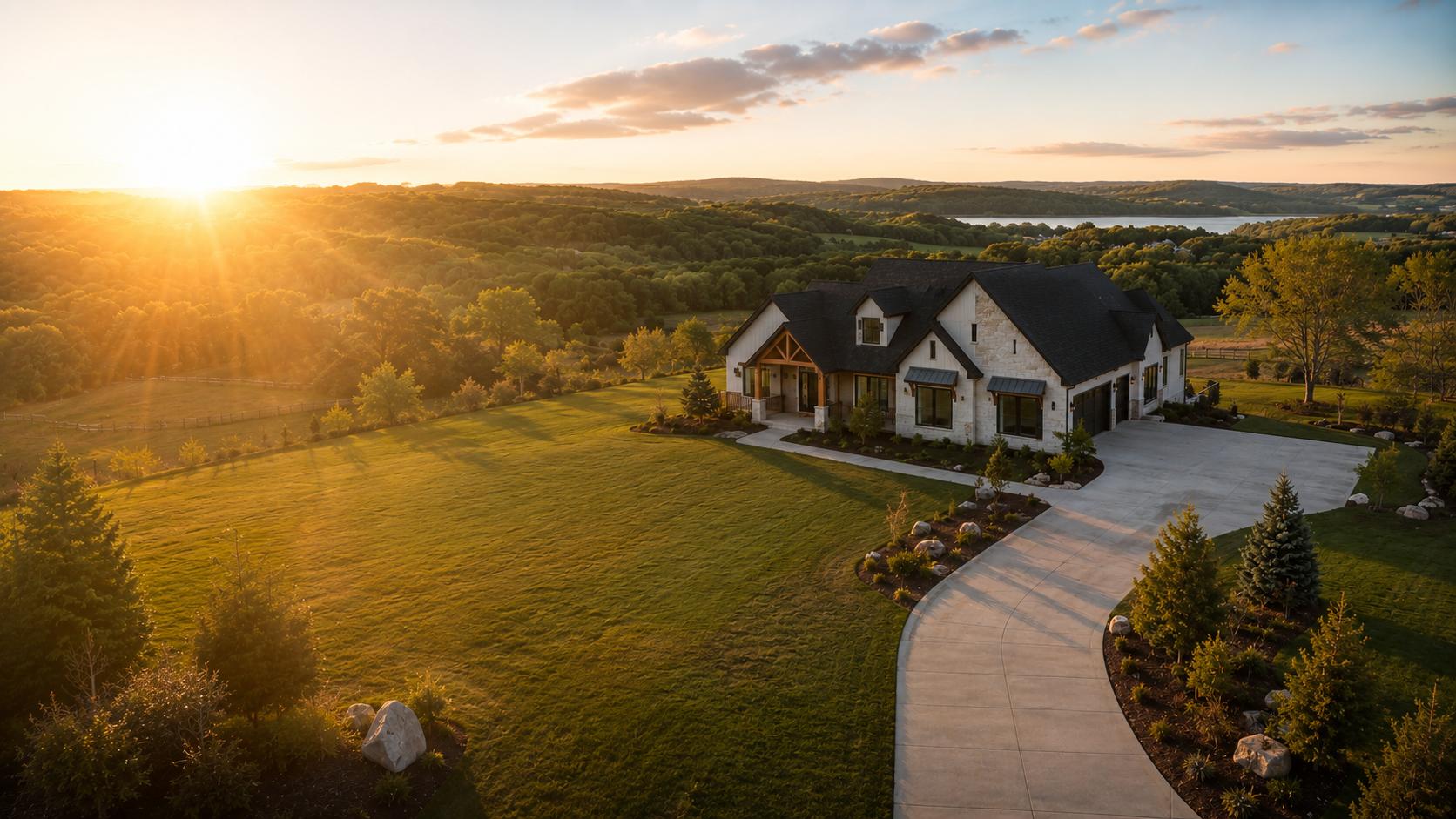
Most homeowners pour their energy into floor plans, finishes, and fixtures, but house placement on lot is the single decision that shapes everything else about how a home performs and feels for decades. Where you position your home determines how much natural light your living spaces get, how water moves around your foundation, whether you can add a garage or suite down the road, and how your structure holds up against the elements. Choosing where to place a house on your lot is far more than a zoning checkbox or an aesthetic preference. It's a builder-level strategic decision that deserves careful analysis before any excavation begins. Custom home lot positioning is especially consequential in the Fraser Valley, because the region presents a genuinely unusual mix of challenges: rolling topography, clay-heavy soils, extended wet winters, and lot sizes ranging from compact subdivisions to sprawling acreage properties.
When planning site orientation for a custom home, you need to consider how the sun tracks across your property in both summer and winter, where natural drainage channels exist (or where water will pool if you ignore them), and how your home's footprint relates to setbacks, septic fields, outbuildings, and future expansion. In the Fraser Valley, getting sun exposure and home site orientation right can mean the difference between a bright, energy-efficient kitchen and one that requires artificial lighting all day. Drainage planning matters just as much. It's not something you want to figure out after your first rainy season reveals water pooling against the foundation. We've seen that scenario play out more than once, and it's an expensive problem to fix retroactively. These are things experienced builders assess before a site plan is ever drawn up.
This post walks through the core factors every homeowner should understand about lot positioning for a custom home. We'll cover sun angles, water management, soil considerations, expansion flexibility, and how topography plays into structural performance. Whether you're building on a flat suburban lot or a sloped rural acreage, thoughtful placement on lot is the foundation, literally, of a home that works well today and adapts to your needs over time. Here's what you should be thinking about before a shovel hits the ground.
Why Lot Positioning Is a Structural and Long-Term Decision
When deciding where to place a house on your lot, it's tempting to focus on curb appeal, driveway placement, or which rooms catch the morning light. But custom home lot positioning is, at its core, a structural and engineering decision. Home site orientation in the Fraser Valley requires careful analysis before any design work begins. Soil conditions and water tables can vary dramatically from one property to the next, sometimes within the same block. Getting this right from the start protects your investment for decades, and getting it wrong can be very expensive to fix.
It Starts Below the Surface
House placement on lot directly determines how your foundation interacts with the ground beneath it. Soil type, moisture content, slope grade, and water table depth all influence settlement risk and long-term structural performance. Poor soil drainage underneath a residential lot can lead to hydrostatic pressure against foundation walls, uneven settling, and repairs that could have been avoided entirely with better planning upfront. If you're curious how these factors connect, we've written more about foundation placement and soil conditions. Drainage planning for a new home build isn't something you figure out after the pour. It needs to be mapped before design even begins.
Setbacks, Zoning, and Real Constraints
Setback requirements dictate the legal boundaries of where your structure can sit, and they vary by municipality. These constraints directly limit your options when deciding on house placement on lot, which means structural considerations and zoning review need to happen at the same time. Experienced custom home builders treat home site orientation as an engineering question first, not an aesthetic one. Sun exposure and future expansion planning matter, but they come after the structural groundwork is understood.
Working From the Ground Up
The concept is straightforward: topography and placement analysis have to come before architectural design. A home shifted even a few meters on a sloped lot can move from stable, well-drained soil into a problem zone with seasonal water pooling. Site orientation for a custom home needs to account for natural drainage paths, bearing capacity, and how the structure will actually perform over 50 or 100 years. We've seen the consequences of skipping this step firsthand at Black Birch Contracting, and they're rarely cheap to fix after the fact. Getting lot positioning right from the start is one of the best decisions you can make for the long-term health of your home.
Sun Exposure and Home Orientation Done Right
When it comes to home site orientation in the Fraser Valley, few decisions have as much long-term impact as where you place your house on the lot. How you position your home relative to the sun affects everything from your heating bills to how your living room feels on a January afternoon. Sun exposure is one of those choices that costs nothing extra to get right during planning, but becomes expensive or impossible to fix after the foundation is poured. Taking the time to dial in your orientation from the start is one of the smartest things you can do.
Why South-Facing Matters in BC
In our climate, south-facing glazing is the gold standard for passive solar gain. During winter months, the sun tracks low across the southern sky, and large windows on your south wall can capture meaningful warmth without any mechanical system running. That matters more than people realize. It reduces heating loads, fills your home with natural light, and makes rooms genuinely more pleasant to be in day to day. A custom home lot positioning that prioritizes southern exposure will outperform a randomly placed house on energy costs year after year, not by a little, but consistently. We've seen this play out in Fraser Valley builds where orientation was treated as an afterthought versus those where it drove the site plan from the start. The difference shows up in utility bills and in how the home actually feels in January. Research into integrated rooftop and building envelope systems in BC supports what good builders have known for a long time: passive design strategies can meaningfully reduce energy demands in our region.
Reading the Fraser Valley Landscape
The Fraser Valley runs roughly east to west, which creates some natural advantages for lot positioning in custom home builds. South or southeast-facing orientation tends to work well here, capturing morning light in bedrooms and kitchens while keeping afternoon heat manageable through summer. Every lot has its own constraints, though. Tree cover, neighbouring structures, road frontage, and municipal setbacks all shape what's actually possible, and home site orientation in the Fraser Valley is never a one-size-fits-all formula. A beautiful mountain view might face north, which means weighing that view against your solar strategy. Sometimes clerestory windows or light wells can help make up the difference.
Practical Steps That Make a Difference
Smart builders think beyond the front door when planning sun exposure. They consider which rooms get morning versus afternoon light, where outdoor living spaces should land for usability, and how garage placement might block or preserve solar gain. Drainage planning for a new home build and future home expansion planning also factor into the equation, since lot orientation affects grading and where additions could realistically go. A good builder will walk your lot at different times of day, observe shadow patterns, and make recommendations grounded in what the site actually does, not just what a floor plan assumes.
Drainage Planning and How Lot Grading Shapes Everything
When figuring out where to place a house on your lot, most people focus on the view, the street presence, or sun exposure. Those things matter, but house placement decisions also determine something far less glamorous and far more consequential: where water goes. Custom home lot positioning and home site orientation in the Fraser Valley need to account for drainage from the very first sketch, because our climate and soil conditions don't leave room for guesswork. Getting drainage planning right during your new home build is probably the single best investment you can make in the longevity of your foundation.
Why Lot Grading Drives Everything Else
Lot grading and drainage work together to push water away from your foundation. When grading is done incorrectly, or treated as an afterthought, the consequences show up fast: basement moisture, foundation movement, erosion, and failed landscaping. In the Fraser Valley, heavy clay soils make this problem worse because they hold water rather than letting it drain naturally. Seasonal rainfall can saturate a poorly graded lot in days, and that moisture doesn't simply disappear. It pushes against your foundation walls, seeps into cracks, and over time causes structural consequences of poor site drainage that are expensive to reverse.
Topography, Home Placement, and Working With the Land
Where your home sits relative to the natural slope of the land has real cost implications. Placing a home at the top of a natural slope is often ideal because water naturally moves away from the structure. A mid-slope position introduces more complexity, typically requiring retaining walls and engineered swales to manage flow. Placing a home at the low point of a lot is the riskiest scenario, since all surface water converges there. Each situation demands a different drainage strategy, and house placement on lot decisions should account for this before the foundation is ever poured. As research into water dynamics in civil engineering highlights, water management is one of the most underestimated forces acting on built structures.
Fix It Now or Pay Later
Retaining walls, swales, catch basins, and French drains are all common tools for managing drainage flow and slope stability on residential lots. The real question is whether these solutions get designed into the plan from the start or get bolted on after problems show up. Correcting drainage issues after construction typically means tearing up landscaping, regrading soil, and sometimes underpinning foundations. Thoughtful house placement on a lot, with drainage considered at the outset, avoids all of that. If you're planning future additions or expansions, the same logic applies: where you build today shapes where water will travel tomorrow. Getting it right at the placement stage isn't just the smart approach. It's the professional one.
Thinking Ahead: Future Expansion and Lot Use
When you're planning a custom build, decisions about where to place your house on the lot have consequences that stretch far beyond move-in day. Positioning your home thoughtfully in the Fraser Valley means accounting for how you'll use your property five, ten, or even twenty years from now. Experienced builders know that lot placement is one of the most permanent choices you'll make. Getting it right preserves flexibility. Getting it wrong can box you in for good, leaving you with a beautiful home on a lot that has nowhere left to grow.
Leave Room for What Comes Next
Future expansion planning starts the moment you decide where the primary structure sits on your property. A house pushed to one side of the lot might intentionally preserve space for a detached garage, secondary suite, workshop, pool, or carriage house down the road. Custom home lot positioning should treat that open ground as a valuable asset, not leftover space. Think of where you place your home as the anchor point for everything else that will eventually surround it. Every square foot of usable land you preserve today is a square foot of opportunity tomorrow.
Setbacks, Utilities, and Legal Constraints
Setback requirements on a custom home dictate the legal minimum distance your structures must maintain from property lines, roads, and easements. These aren't just rules for the current build, they also limit where future additions can go, so understanding them before you break ground matters more than most people realize. Driveway placement, utility hookup locations, and access roads introduce additional constraints that homeowners frequently overlook during initial planning. Drainage is just as important, because grading and stormwater management systems are difficult and expensive to move once they're established. House placement on lot needs to account for all of these elements at the same time, not one at a time.
Protect Your Best Outdoor Spaces
Sun exposure and house placement on lot go hand in hand with long-term livability. Positioning your home to preserve a south-facing backyard is a decision that pays off for decades, giving you the best conditions for gardens, patios, and outdoor entertaining areas. These outdoor living zones are often the spaces families value most as their lifestyle evolves. We've seen this play out repeatedly: a backyard that gets good sun becomes the heart of how a family uses their property, while a shaded one gets ignored. A good custom home builder thinks about the full 20-year picture of how a property will be used, not just the immediate footprint. If you're starting this process, consider working with a builder who understands site fundamentals and can help you make smart, forward-looking decisions from day one.
What a High-Level Builder Brings to Site Planning
Deciding where to place a house on your lot is one of the most consequential choices in a custom build, and it happens before a single footing is poured. Getting lot positioning right requires a builder who can hold multiple variables in mind at once: zoning bylaws, engineering data, topography, climate patterns, and how the homeowner actually wants to live. In the Fraser Valley, home site orientation is especially nuanced because the region's river-influenced soil profiles, variable terrain, and municipal requirements differ from one neighborhood to the next. A good builder treats this stage as genuine craft, not a box to check on the way to framing.
What a Real Site Analysis Looks Like
A skilled builder doesn't just drop a floor plan onto a survey map and call it done. They study the land first, often visiting the lot at different times of day to see how sun exposure shifts, where shadow lines fall from neighboring structures, and how water actually moves across the property after a good rain. Soil and geotechnical reports get reviewed carefully, because what's happening beneath the surface directly shapes drainage planning for a new home build and determines which foundation system will hold up over decades. Setback requirements, easements, and municipal overlay zones all come into the picture before any design work starts. We've seen what happens when that groundwork gets skipped, and it's rarely cheap to fix. That kind of thorough site analysis is what separates a thoughtful process from a rushed one.
Collaboration Drives Better Decisions
House placement on lot decisions are never made in isolation. The builder, designer, and often a civil engineer or landscape architect all contribute their expertise, each seeing the lot through a different lens. A designer might prioritize site orientation to capture afternoon light in the living spaces, while an engineer flags a slope that needs careful grading. In the Fraser Valley, builders who understand local topography and soil conditions, from the silty floodplain areas near the river to the clay-heavy benches higher up, bring real practical value to these conversations. We've seen projects where that local knowledge alone saved homeowners from costly surprises mid-build. Where to place a house on your lot is never a simple formula. Every parcel carries its own constraints and its own opportunities, and spotting them takes an experienced eye.
Thinking Beyond Move-In Day
The best builders are also thinking about what comes next. Sun exposure and house placement on lot decisions affect long-term energy costs and livability, while thoughtful grading protects the foundation for years to come. Future expansion is another consideration a good builder raises early. If you might want a detached shop, a laneway suite, or an addition down the road, the original home position needs to leave room for it. Understanding the long-term value of getting foundational decisions right is what drives this kind of thinking. With more Canadians choosing to build in areas like Chilliwack, the demand for this level of site planning expertise keeps growing. The best custom home builds start with a builder who reads the lot clearly, listens carefully, and treats placement as one of the most important calls of the entire project.
Frequently Asked Questions
Why does house placement on a lot matter so much before construction begins?
Where you place your home on a lot affects sun exposure, natural drainage, foundation performance, and your ability to expand the property later. Poor placement can lead to water pooling against the foundation, inadequate natural light, and costly structural repairs down the road. Getting this decision right before excavation begins protects your investment for decades, and it's genuinely one of those things that's much harder to fix once the concrete is poured.
How does sun orientation affect a custom home in the Fraser Valley?
In BC's climate, positioning your home so that the main living areas face south allows the low winter sun to provide natural warmth and light through your windows, which reduces heating costs in a meaningful way. A home placed without considering the sun's seasonal path can end up with rooms that feel dark and cold all winter, requiring more artificial lighting and mechanical heating. Sun exposure is one of the few factors that costs nothing extra to get right during planning, yet it's nearly impossible to correct after construction is complete.
What role does soil and drainage play in deciding where to place a house?
Soil type, moisture content, and natural drainage paths all directly affect how a foundation performs over time. Placing a home in a low-lying area or on poorly draining soil can lead to hydrostatic pressure against foundation walls and uneven settling. We've seen this catch people off guard more than once. Drainage planning needs to be mapped out before the design phase, not discovered after the first rainy season.
What are setback requirements and how do they affect lot positioning?
Setback requirements are municipality-specific rules that define how far a structure must sit from property lines, roads, and other features. These legal boundaries directly limit where your home can be placed on the lot, which is why zoning review and structural analysis need to happen together. Experienced builders treat setbacks as one of the first constraints to map before any home site orientation decisions are made, because ignoring them early creates expensive problems later.
Can topography change the best location for a home on a sloped lot?
Yes, and sometimes dramatically. Even a small shift in placement on a sloped lot can move a foundation from stable, well-drained ground to a zone that collects seasonal water or has weaker bearing capacity. Topography analysis is a core part of custom home lot positioning because it affects long-term structural performance, drainage management, and how the home holds up over 50 to 100 years. This is especially relevant in the Fraser Valley, where rolling terrain and clay-heavy soils are common.
How does lot positioning affect future home expansion or outbuilding plans?
Where you place your home now determines how much usable space remains for garages, suites, workshops, or other future additions. A footprint that maximizes the current structure without accounting for setbacks and lot coverage rules can leave you with no room to expand when your needs change. Thinking through future expansion at the site orientation stage keeps your options open, and it's a lot cheaper to plan for it now than to redesign around a tight lot later.
House placement on a lot is one of the most important decisions in the custom home building process, and it's regularly underestimated. It touches foundation health, long-term energy efficiency, and everything in between. If you're planning a build in the Fraser Valley and want to make sure your home site orientation, drainage planning, and lot positioning are done right from the start, reach out to our team at Black Birch Contracting to talk through your project.