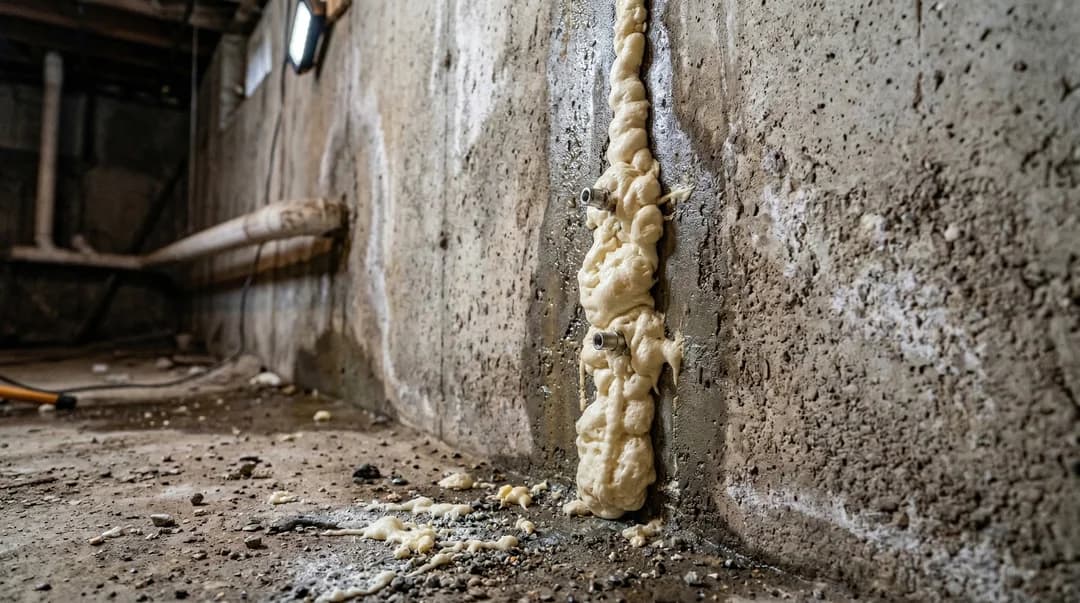
Project Profile: Severe Moisture Issues in Sardis
A recent residential project in Sardis highlighted the critical importance of addressing crawlspace vulnerabilities before they escalate into systemic structural issues. The property faced severe moisture accumulation, a common challenge in the Fraser Valley due to the region’s high water table and heavy seasonal rainfall. Upon assessment, our team identified active water ingress points along the foundation, creating standing water that threatened the building’s long-term stability.
The primary concern for this homeowner was the risk of structural damage. When water infiltrates a crawlspace, it often leads to soil instability and hydrostatic pressure against the foundation walls. Over time, this pressure can cause concrete to crack or bow, compromising the home's structural integrity. Industry experts note that moisture intrusion triggers freeze-thaw cycles that degrade concrete and masonry, potentially leading to material failure if left unchecked (Spycor Building, "5 Warning Signs"). For this Sardis property, the presence of voids behind the concrete walls necessitated a solution capable of structural soil stabilization and foundation crack sealing without extensive excavation.
Beyond structural risks, the homeowners reported persistent musty odors, a hallmark of damp crawlspace environments. This issue is driven by the "stack effect," a phenomenon where warm air rises and pulls cool, damp air from the crawlspace up into the living quarters. Studies indicate that up to 50% of the air homeowners breathe indoors originates from the crawlspace, meaning that mold spores and humidity from below directly impact the home's air quality (Green Home Solutions, "What Is the Stack Effect"). To eliminate these health hazards and restore the property's value, the situation required a precision intervention—such as polyfoam grout waterproofing—to seal leaks at their source and permanently halt moisture migration.
What is Polyfoam Grout Waterproofing?
Polyfoam grout waterproofing, technically known as polyurethane injection, is a modern, non-invasive method for sealing foundation cracks and stabilizing soil without the need for costly excavation. Unlike traditional repair methods that require digging up the perimeter of a home, this process utilizes a high-performance chemical resin injected directly into compromised areas from the interior.
The core mechanism relies on a hydrophobic reaction. When the liquid polyurethane grout encounters moisture within a crack or soil void, it undergoes rapid chemical expansion. According to a 2022 study on water-active grouting materials, this reaction causes the foam to expand significantly—often 20 to 40 times its original liquid volume—allowing it to penetrate deep into micro-fractures that standard cement cannot reach (Zhang et al., "Preparation and Performance"). This expansion creates a dense, closed-cell foam that essentially becomes a waterproof rock, permanently blocking water ingress pathways.
Key Capabilities of Polyfoam Grout
Hydrophobic Activation: The resin specifically seeks out and reacts with water to cure, making it ideal for actively leaking cracks.
Structural Void Filling: Beyond just sealing leaks, the high-density foam effectively fills voids behind concrete walls caused by soil erosion. Industry data suggests this method can be up to 400% more cost-effective than replacing settled concrete slabs (NCFI Polyurethanes, "Concrete Raising").
Rapid Curing: The material cures to 95% of its full strength within approximately 20 minutes, allowing homeowners to use the space almost immediately (Stratum Structural Systems, "Epoxy vs. Polyurethane").
By opting for this "no-dig" solution, homeowners can address the root cause of moisture and structural instability—specifically the voids and fissures that allow water to pool—while avoiding the disruption of major construction work.
The 'Inside-Out' Advantage: Poly Injection vs. Traditional Excavation
For many homeowners, the phrase "foundation repair" conjures images of heavy excavators tearing up manicured lawns, destroyed patio pavers, and weeks of muddy chaos. Traditionally, fixing a crawlspace leak repair issue meant digging a trench around the home's perimeter to access the foundation from the outside. While effective, this "excavation" method is invasive, labor-intensive, and often prohibitively expensive. In contrast, polyfoam grout waterproofing offers a sophisticated "inside-out" approach that eliminates the need for exterior destruction.
The process involves drilling small, dime-sized holes through the interior concrete wall or slab. A specialized hydrophobic resin is then injected under high pressure. Unlike passive membranes that simply cover a crack, this expanding foam seeks out water and reacts with it, expanding up to 30 times its liquid volume to fill not just the visible crack, but also the voids and soil pockets behind the wall (SS Remedial, 'Polyurethane Crack Injection'). This capability allows us to reach "impossible" leaks—such as those behind finished drywall, under structural slabs, or beneath permanent exterior additions like decks—without removing a single shovel of dirt.
The efficiency of this non-invasive waterproofing method translates directly to homeowner savings and convenience. Recent industry data indicates that polyurethane injection projects are often completed in a matter of hours rather than days, with costs significantly lower than excavation-based repairs due to reduced labor and equipment requirements (Elite Concrete Restoration, 'How Much Does Polyurethane Foam Injection Cost 2026?'). Furthermore, the cured foam remains flexible, allowing it to move with minor thermal expansions and contractions of the structure. This provides a durable seal that rigid repairs often fail to maintain (Gamcon, 'Basement Crack Repair Guide'). For our recent project in Sardis, this meant the difference between a major renovation headache and a quick, clean resolution that restored the crawlspace's utility immediately.
Structural Benefits: Can Polyfoam Fix Shifting?
Water intrusion creates more than just damp environments; it actively undermines the soil supporting your home. In the case of the Sardis property, the "musty odors" were a symptom of a deeper issue: soil erosion. When water moves through the earth beneath a foundation, it causes "washout," leaving behind dangerous voids that lead to settling and cracks. While polyfoam grout waterproofing is primarily known for stopping leaks, its role in structural soil stabilization is equally critical for preserving property value.
The primary structural benefit of polyurethane injection lies in its expansive force. Unlike passive fillers, polyfoam aggressively expands to fill hidden cavities, compacting the loose soil around the footing as it cures. Recent engineering research confirms that injecting polyurethane foam adhesive significantly improves the shear strength and cohesion of sandy soils, transforming weak ground into a stable, load-bearing base (Feng et al., "Shear Strength Enhancement in Soil"). This process effectively re-levels slabs and prevents future movement without the need for invasive excavation.
Furthermore, this method provides a permanent moisture barrier solution that addresses the root cause of the shifting. Once injected, the grout cures into a rigid, hydrophobic mass that does not wash away or degrade over time. Studies indicate that polymer injection technologies offer superior long-term performance compared to traditional cement slurries, particularly in preventing recurring settlement in infrastructure (Dirgėlienė and Kordušas, "Stabilization of Soil Using Polyurethane"). By implementing this concrete void filling technique, we not only waterproofed the crawlspace but also reinstated the structural integrity of the home's foundation.
The Solution in Action: Securing the Foundation
For the residential property in Sardis, the path to a dry crawlspace began with a rigorous inspection. Before applying any materials, our team conducted a thorough assessment to pinpoint the exact water ingress points. Identifying these specific entry routes is critical; without this step, any waterproofing effort is merely a bandage rather than a cure. The assessment revealed that hydrostatic pressure was forcing water through foundation cracks, threatening the home's structural integrity.
To address these active leaks without the destruction of traditional excavation, we utilized polyfoam grout waterproofing. This advanced technique involves injecting a hydrophobic polyurethane resin directly into the foundation cracks and soil voids. Unlike cement-based solutions that are heavy and slow to dry, polyurethane foam expands to fill voids completely and achieves structural strength within 15 to 30 minutes (Superior Grouting, "Why Does Polyurethane Beat Cement Grout?"). This rapid curing process allowed us to stabilize the soil and seal the leaks instantly, creating a permanent barrier against moisture intrusion.
However, a truly robust solution often requires a multi-layered approach. While the polyurethane injection sealed the immediate breaches, we installed an interior perimeter drainage system to manage any future groundwater fluctuation. This was complemented by the installation of high-performance membranes. These membranes are essential for encapsulation, as unchecked moisture in crawlspaces can lead to wood rot and significant structural decay (Elite Foundation Repairs, "Crawl Space Repair"). By combining the immediate sealing power of hydrophobic grout injection with a comprehensive drainage and membrane system, we ensured the crawlspace would remain dry regardless of external weather conditions.
The choice of a "no-dig" injection method was particularly valuable for this project, as it avoided the high cost and landscape disruption associated with exterior excavation (Prime Roofing, "Top 8 Advantages"). The result was a total transformation: the once-damp hazard became a safe, dry storage area. This intervention not only secured the foundation but significantly increased the property's marketability, as moisture issues are frequently cited as a primary concern for home buyers and a cause for value reduction.
Case Study Outcome: From Damp Void to Usable Storage
The immediate transformation of the residential property in Sardis demonstrated the power of modern waterproofing technology. Following our intervention, the crawlspace—once a source of structural anxiety and musty odors—was completely dried and conditioned. By eliminating the water ingress points, we successfully halted the moisture cycle that threatened the home's foundation. The air quality improvements were immediately palpable, removing the heavy, damp feeling often associated with compromised subterranean spaces. This shift turned a neglected "damp void" into a clean, climate-controlled environment suitable for long-term storage, effectively adding usable square footage to the home's footprint.
A critical component of this success was our use of polyfoam grout waterproofing. For homeowners concerned about disruption, this method offers a superior alternative to excavation. We utilized a hydrophobic grout injection technique, which involves pumping a specialized polyurethane resin into cracks and soil voids. As the material reacts, it expands to fill empty spaces and creates an impermeable moisture barrier solution. This process not only seals leaks but also provides structural soil stabilization without the need for aggressive digging or heavy machinery. The foam’s ability to navigate complex soil fissures ensures that even the smallest pathways for water are permanently blocked, a capability confirmed by industry experts who note that polyurethane injection is "effective in filling cracks and voids, preventing water infiltration, and restoring... structural integrity" (Elite Concrete Restoration, "Top Benefits").
Beyond the functional benefits, this project delivered a tangible return on investment for the client. A sealed, dry crawlspace is a significant market asset. Recent real estate data indicates that converting a damp crawlspace into a closed, encapsulated environment can increase property value by an average of 10% (FastExpert, "How Much Value"). This increase is driven by the reduction in future repair risks and improved energy efficiency. To conclude the project, Black Birch Contracting performed a rigorous final verification, using moisture meters and thermal imaging to guarantee that every injection point was secure, ensuring the homeowner could trust in the longevity of their new dry storage space.
If you’re experiencing crawlspace moisture, foundation cracks, or standing water around your home, Contact Black Birch Contracting to find out how our polyfoam grout injection services can permanently stop water intrusion.