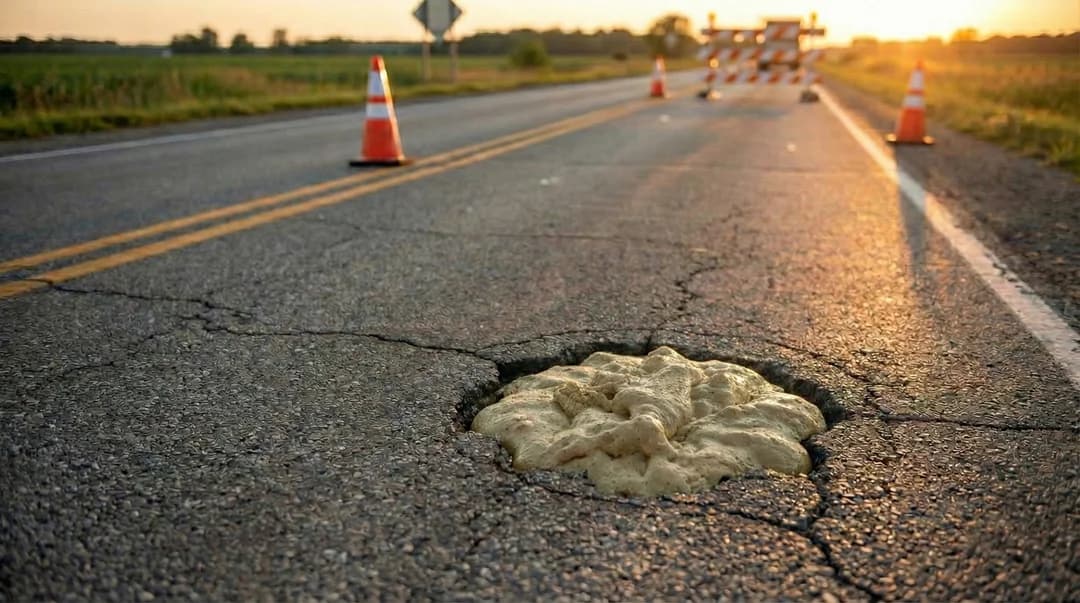
The Urgency of Geotechnical Emergency Services
When soil washout or sinkhole symptoms appear, the window for effective intervention is dangerously narrow. Subsurface voids in active collapse zones pose an immediate threat to municipal infrastructure, often compromising the load-bearing capacity of roadways and commercial foundations before surface-level damage becomes visible. The scale of this challenge is immense; recent data indicates a national infrastructure funding gap of $2.6 trillion, suggesting that reactive emergency repairs will become increasingly critical as legacy systems age (BigRentz, 'American Infrastructure Statistics'). For facility managers and civil engineers, treating these events as "wait-and-see" maintenance issues is both a financial and safety gamble.
The cost of delay extends beyond simple structural repair. As water infiltration continues unchecked through compromised soil, it accelerates erosion, leading to roadway subsidence that can disrupt logistics and endanger public safety. Traditional remediation methods often exacerbate these risks. Bringing heavy excavation equipment onto unstable ground can trigger further collapse due to dynamic vibration and added surcharge loads. The danger is well-documented; in 2022 alone, trenching and excavation activities resulted in 39 fatalities in the U.S., highlighting the severe risks associated with digging in unstable environments (4M Analytics, '10 Common Excavation Hazards').
Black Birch Contracting bypasses these risks by utilizing zero-excavation emergency ground stabilization. Unlike traditional "dig-and-replace" methods, we employ high-density polyurethane foam injection. This material is lightweight, minimizing additional stress on weak soil, and expands to compact the surrounding earth while filling voids (Lat et al., 'Review of Polyurethane'). Because the polymer is hydrophobic, it cures rapidly even in water-saturated soil, effectively sealing washout pathways and restoring structural integrity in minutes rather than days. This approach allows municipal directors and engineers to secure active collapse zones immediately, preventing catastrophic failure without the logistical nightmare of heavy earthmoving.
Polyurethane Foam Injection: How It Stabilizes Active Washouts
In emergency scenarios where soil washout has compromised structural integrity, speed and precision are critical. Polyurethane foam injection utilizes a two-component chemical reaction—typically an isocyanate and a resin blend—that triggers an immediate, high-velocity expansion upon injection. When introduced into the substrate, this material can expand between 15 to 40 times its liquid volume within seconds, aggressively seeking out voids and fissures (Superior PolyLift, "Polyurethane Foam vs. Soil Issues"). Unlike cementitious grouts that rely on gravity and flow, the expansive force of the foam actively compacts weak soil layers, effectively densifying the loose matrix surrounding the washout zone without excavation.
A critical advantage during active washout events is the material’s hydrophobic capability. In disaster responses involving burst pipes or floodwaters, traditional slurry often washes away or fails to cure properly. High-density geotechnical foam is engineered to displace standing water and cure in fully saturated conditions. Modern hydrophobic formulations ensure that the chemical reaction remains stable even in moisture-rich environments, forming a rigid, closed-cell barrier that prevents future water infiltration (HMI, "Hydrophobic Polyurethane Foams"). This ability to cut off water flow while simultaneously re-establishing bearing capacity makes it uniquely suited for stabilizing roadways and foundations during storm events.
Furthermore, the physics of ground stabilization favors polyurethane in emergency contexts due to its low overburden weight. Adding heavy concrete to an already unstable sinkhole can trigger a secondary collapse due to the added mass. In contrast, polyurethane foam reinforces the subgrade without contributing to significant settlement, as the material is lightweight yet capable of exerting high compaction pressure on the surrounding soil (Lat et al., "Performance Comparison"). This allows civil engineers to restore load-bearing capacity immediately, minimizing downtime for critical infrastructure.
Speed of Cure: Minutes vs. Days
In the aftermath of a soil washout or sinkhole event, the most critical variable for municipal directors and facility managers is often time to traffic. Traditional remediation methods typically rely on concrete underpinning or cementitious grouting, which introduce significant logistical delays due to material properties. Standard concrete requires up to 28 days to reach full structural integrity, with even rapid-set mixes often demanding days of curing time before they can safely bear heavy dynamic loads (Ace Avant, "How Long Does It Take Concrete to Cure?"). For a highway or an active industrial facility, this waiting period translates to extended lane closures, lost revenue, and prolonged safety risks.
Polyurethane foam injection fundamentally alters this timeline through rapid chemical expansion. Upon injection, the two-component polymer undergoes an exothermic reaction that expands to fill voids and compact loose soil almost instantly. Unlike cement-based solutions, high-density geotechnical foam achieves 90% of its compressive strength within just 15 minutes of application (Dalinghaus Construction, "5 Steps to Polyurethane Foam Injection"). This "zero-excavation" approach allows our crews to drill dime-sized injection ports, stabilize the subgrade, and reopen the area to full-capacity traffic immediately after the equipment is cleared.
This differential in cure speed—minutes versus days—is vital for disaster response scenarios. By eliminating the downtime associated with hydration and curing, Black Birch Contracting ensures that critical infrastructure, such as bridge approaches and warehouse loading docks, returns to service in a single shift rather than weeks. This capability not only mitigates immediate structural hazards but also significantly reduces the indirect costs associated with long-term operational shutdowns.
Zero-Excavation Soil Stabilization: Eliminating Heavy Machinery
Traditional sinkhole repair often involves a "dig-and-replace" approach, requiring excavators to tear up roadways and remove tons of soil to reach the problem area. In contrast, emergency ground stabilization using polyurethane foam injection is performed through penny-sized drill holes—typically 5/8 of an inch in diameter—drilled directly through the pavement (Olshan Foundation Repair, "Mudjacking vs Polyurethane"). This method eliminates the need for large trenches, allowing technicians to inject structural-grade polymer resins that expand to fill voids and densify loose soil without removing a single cubic foot of earth.
The safety implications of this zero-excavation approach are critical for municipal and commercial projects. Placing heavy yellow iron, such as backhoes or dump trucks, near the edge of a compromised sinkhole significantly increases the risk of secondary collapse, potentially endangering crew members. In 2022 alone, trenching and excavation hazards led to 39 worker fatalities, a sharp increase that highlights the inherent dangers of open-pit infrastructure repair (CPWR, "Trenching and Excavation Safety"). By keeping heavy equipment at a safe distance and deploying lightweight injection guns directly at the site, crews can stabilize the ground without adding dangerous static loads to an already unstable surface.
Logistically, this trenchless solution offers a leaner, more agile response to infrastructure emergencies. Instead of mobilizing a slow-moving convoy of flatbeds and earthmovers, a single self-contained box truck carries all necessary materials and pumping equipment to the site. This "mobile plant" footprint is minimal, allowing one lane of traffic to remain open while crews work (Market.us, "Trenchless Pipe Rehabilitation Trends"). Once the injection is complete, the high-density foam cures to 90% strength within 15 minutes, allowing immediate resumption of normal traffic flow—a distinct advantage over the days or weeks required for concrete to cure in traditional excavation scenarios.
Accessing Hard-to-Reach Void Areas
In the aftermath of soil washouts or sinkhole events, the structural integrity of overlying infrastructure often depends on the speed and precision of the response. A critical advantage of modern polyurethane injection systems is the ability to stabilize ground conditions without heavy equipment directly accessing the compromise zone. Advanced geotechnical foam rigs utilize heated hose assemblies capable of extending over 300 feet, allowing technicians to treat voids under collapsing roadways, bridge abutments, or compromised foundations while the pumping unit remains safely positioned at a distance (Graco, "Minimum and Maximum Heated Hose Lengths"). This remote capability is vital for disaster response in tight urban alleyways or interior warehouse floors where excavation machinery simply cannot fit.
Beyond simple reach, the injection process offers surgical precision in stabilizing complex geometries. Unlike bulk-fill flowable fill (slurry), which can migrate uncontrollably, high-density polyurethane foam is injected via handheld guns that allow technicians to target specific depths and void structures. This control is essential for sensitive applications, such as lifting settled bridge approach slabs or filling cavities behind retaining walls without imposing dangerous hydrostatic pressure on the structure (Gaspard et al., "Performance of Settled Bridge-Approach Slabs"). By bypassing the need for demolition to expose the problem, emergency crews can restore load-bearing capacity in hours rather than days, significantly reducing downtime for critical municipal infrastructure.
Key Operational Advantages:
Remote Injection: Hoses reaching 310+ feet allow treatment of unstable zones from a safe staging area.
Zero Excavation: 5/8-inch injection ports are drilled directly through existing concrete, preserving the surface asset (NCFI, "Polyurethane in Infrastructure Repair").
Precision Control: Rapid reaction times (seconds to minutes) prevent material waste and ensure targeted void filling.
Structural Capacity and Environmental Safety
For municipal directors and facility managers, the decision to utilize polyurethane foam injection often hinges on two critical factors: the immediate load-bearing capacity of the material and its long-term environmental footprint. A common misconception is that "foam" lacks the density required for heavy infrastructure; however, high-density geotechnical polyurethane is engineered specifically for extreme compression environments.
Modern high-density structural foams can support loads exceeding 14,000 pounds per square foot, making them capable of handling highway traffic, heavy machinery, and industrial slab loads (Alchatek, "AP Lift 475"). Unlike cementitious grouts that require days to reach full strength, polyurethane achieves 90% of its compressive strength within 15 minutes of injection (Superior PolyLift, "Foam Strength"). This rapid cure time allows for the immediate reopening of roadways and facilities, a crucial advantage during emergency ground stabilization efforts where downtime equates to significant financial loss or public safety risks.
From an environmental standpoint, the material is designed to be chemically inert once cured. Because soil washouts frequently occur near storm drains, water tables, or sensitive aquifers, ensuring that the repair material does not leach harmful contaminants is a priority. Geotechnical polyurethanes are rigorously tested, and many formulations are certified to NSF/ANSI 61 standards, verifying they are safe even for contact with drinking water (EagleLIFT, "Environmental Impact"). This compliance ensures that emergency repairs do not inadvertently create environmental violations.
Furthermore, the material’s hydrophobic properties provide a permanent defense against the recurrence of sinkholes. Unlike traditional "mudjacking" slurry, which can erode or wash away if water infiltration persists, closed-cell polyurethane creates a waterproof barrier that displaces standing water and prevents future soil migration (Superior Grouting, "High Water Table Areas"). By stabilizing the soil and sealing the moisture pathways simultaneously, this method addresses both the structural symptom and the hydraulic cause of the failure.
Conclusion: Choosing Black Birch for Disaster Response Infrastructure Repair
When municipal infrastructure or commercial facilities face immediate risks from sinkholes and soil washout, the speed of the response determines the extent of the damage. Traditional remediation methods—often requiring heavy excavation machinery—can inadvertently destabilize weakened ground further and prolong road closures. In contrast, Black Birch Contracting utilizes zero-excavation polyurethane injection to provide a rapid, structural solution that cures in minutes rather than days, minimizing downtime and public safety hazards.
The shift toward these advanced trenchless methods is driven by their proven efficiency in critical environments. Recent engineering studies indicate that polyurethane stabilization can significantly enhance soil stiffness, with some tests showing an increase in the deformation modulus by a factor of 16 to 60 compared to untreated soil (Research on Polyurethane-Stabilized Soils, 2024). This technical advantage ensures that emergency repairs do not just fill a void but actively reinforce the subgrade against future washout events.
Furthermore, the logistical benefits of trenchless technology are reshaping disaster response strategies. By eliminating the need for large-scale digging, crews can bypass the "days, if not weeks" typically added to project timelines by excavation and site restoration (HK Solutions, "Why Trust Trenchless Technology"). For civil engineers and facility managers, this means roadways reopen faster, and structural liabilities are neutralized immediately.
Why Partner with Black Birch?
Rapid Deployment: Our teams are equipped for emergency mobilization to stabilize roadways, warehouse floors, and bridge approaches.
Minimal Disruption: We operate with a small footprint, keeping vital traffic lanes and facility operations open during repair.
Long-Term Stability: Our geotechnical foam is hydrophobic and environmentally inert, providing a permanent cure that resists water erosion.
Do not wait for a minor subsidence issue to evolve into a catastrophic failure. Contact Black Birch Contracting today for a rapid assessment and secure your infrastructure against ground instability.