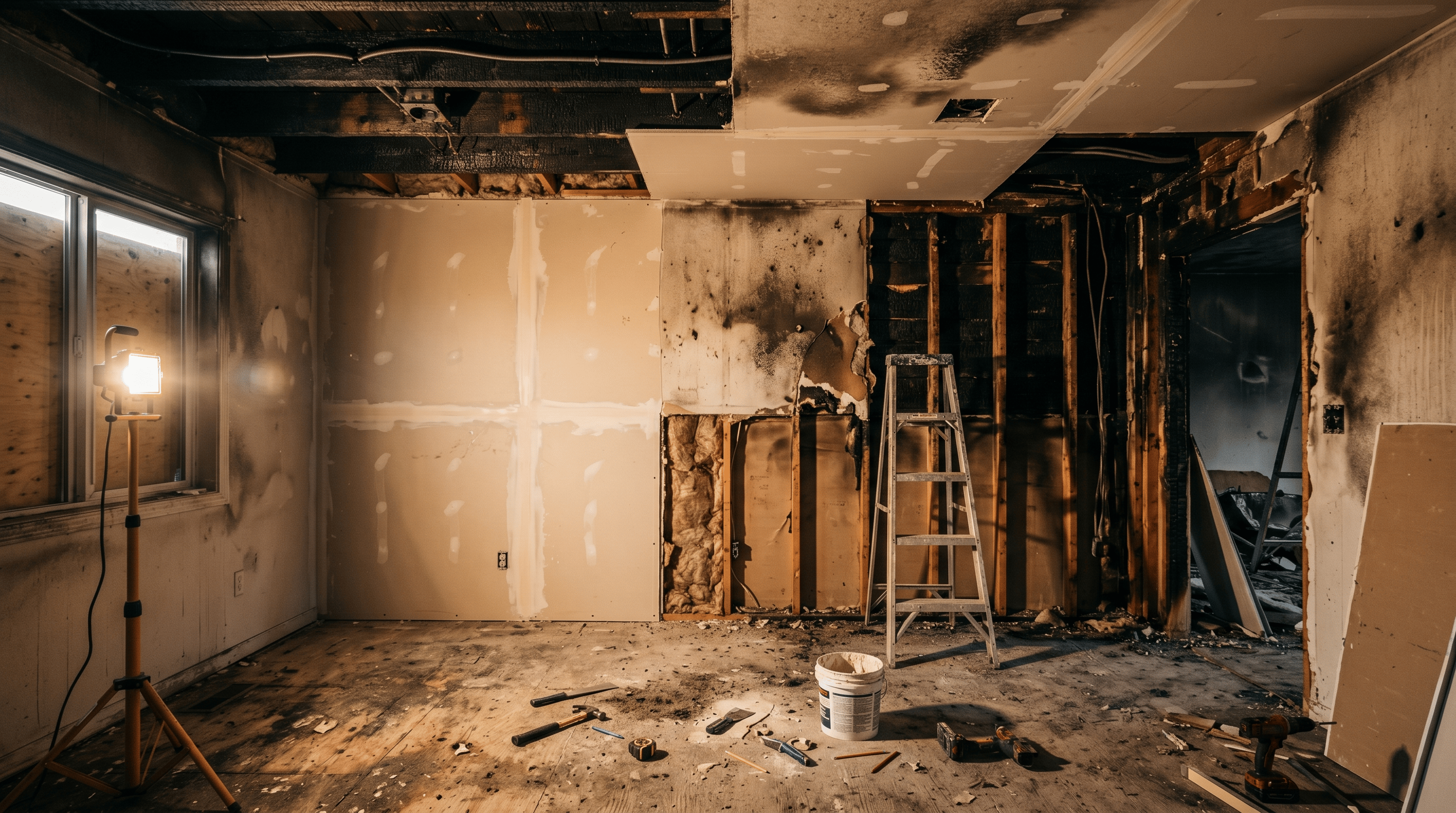
When fire sweeps through a home, the aftermath can feel overwhelming. Even after the flames are out, you're left staring at scorched walls, warped ceilings, and floors that no longer feel safe underfoot — all while trying to process the emotional weight of what just happened. If you're dealing with this right now, take a breath. Fire damaged drywall repair, ceiling restoration, and structural assessment are all manageable challenges when you have the right general contractor guiding you through the process. You don't have to figure this out alone, and the path forward is clearer than it might seem in these early days.
The scope of interior fire damage often extends far beyond what's visible on the surface. Drywall can become structurally compromised even in areas the fire didn't directly touch, as intense heat weakens the gypsum core and causes it to crumble or crack. Ceilings are especially vulnerable since heat rises, meaning repairing fire damaged ceilings and flooring frequently involves addressing layers of damage that aren't immediately obvious. Beneath the surface, smoke residue can infiltrate wall cavities, insulation, and subflooring, creating hidden hazards that need professional attention. According to Trim-Tex, even drywall that appears intact may have sustained heat damage that compromises its integrity, making thorough inspection a critical first step. Smoke damaged walls repair, drywall replacement after fire, and flooring repair fire damage all fall within the broader scope of what a proper restoration addresses.
At Black Birch Contracting, we've helped homeowners across the Fraser Valley navigate the full journey of home fire damage repair services — from initial damage assessment through to the final coat of paint. As a fire damage restoration contractor specializing in concrete restoration and structural repair, we understand that what matters most to you right now is knowing your home will be safe and whole again. This guide is designed to walk you through what to expect at every stage of fire damage repair, including ceiling repair after fire, fire restoration services, and the detailed work involved in bringing your space back to life. Our goal is simple: to take the uncertainty out of the process so you can focus on what matters most to your family.
Understanding the Full Scope of Fire and Smoke Damage
When a fire tears through a building, the visible charring and destruction are only part of the story. A fire damage restoration contractor understands that smoke, soot, and intense heat penetrate deep into materials — far beyond what the eye can see. Repairing fire damaged ceilings and flooring, replacing compromised drywall, and addressing hidden contamination all fall within the scope of a comprehensive recovery effort. Whether you're a homeowner or a general contractor assessing damage, it's critical to understand that fire damage repair involves much more than cosmetic fixes. Fire damaged drywall repair alone can reveal layers of problems lurking beneath the surface.
Fire damage generally breaks down into three layers. Surface damage includes visible scorching, discoloration, and peeling finishes — the cosmetic layer that most people notice first. Structural damage affects load-bearing elements like framing, subfloors, and ceiling joists, often requiring ceiling repair after fire or flooring repair fire damage work. Then there's hidden damage, the most insidious layer, which lives inside walls, above ceilings, and beneath flooring where smoke and heat have migrated through gaps and cavities. Skipping a thorough inspection of all three layers leads to recurring problems and significantly higher costs down the road.
Smoke damaged walls repair is fundamentally different from standard painting or patching. Soot damage cleanup requires specialized techniques because improper cleaning — like wiping soot with a wet rag — can actually drive contaminants deeper into porous surfaces, causing long-term staining and persistent odor issues. Smoke odor removal walls present a particular challenge because materials like drywall act like sponges, absorbing volatile compounds that continue off-gassing for months or even years. According to restoration specialists, drywall often needs to be fully replaced after smoke damage rather than simply cleaned, especially when odor has penetrated beyond the surface layer. Drywall replacement after fire is frequently the most reliable path to eliminating embedded contamination.
Professional assessment before beginning any fire restoration services cannot be overstated. As outlined in industry cost and timeline estimates, understanding the full extent of damage upfront prevents costly surprises mid-project and ensures every layer of damage receives proper treatment from the start.
Assessing and Repairing Structural Fire Damage
After a fire, it can be tempting to jump straight into cosmetic fixes — patching walls, replacing trim, and getting life back to normal. But before any fire damaged drywall repair or surface-level restoration begins, the structural integrity of your home or building needs a thorough evaluation. A qualified general contractor who specializes in fire damage restoration can identify what's happening behind the walls and beneath the floors, which is where the real risks often hide. Repairing fire damaged ceilings and flooring without first confirming the structure is sound is a recipe for costly problems down the road.
Structural fire damage can take several forms, and not all of it is immediately obvious. Charred or deeply scorched framing members, weakened load-bearing walls, cracked concrete, and compromised floor joists are all common findings during a post-fire assessment. Fire affects different materials in different ways — wood framing loses its load-carrying capacity as it chars, while concrete can experience spalling and internal fracturing from extreme heat. Steel connections may warp or lose temper. According to the American Society of Civil Engineers, a proper evaluation considers the depth of damage to each material type to determine whether repair or full replacement is the appropriate path forward.
This is exactly why working with an interior fire damage contractor — rather than someone who only handles surface repairs — matters so much. A fire damage restoration contractor understands the difference between smoke damaged walls repair and a wall that's actually lost its structural capacity. They know when sistering a joist is sufficient versus when an entire section of framing needs to come out. In British Columbia, structural fire damage repair typically requires building permits and engineering sign-offs, along with inspections at key stages. As Envista Forensics notes, a strategic and systematic approach to damage assessment is essential for safe restoration.
Once the structural work is complete and inspected, it sets the stage for everything else — drywall replacement after fire, ceiling repair after fire, and flooring repair fire damage all depend on a solid, properly restored frame. Fire restoration services that address structure first ensure that your cosmetic finishes last and, more importantly, that your building is safe for everyone inside it.
Fire-Damaged Drywall: Repair vs. Full Replacement
After a fire, one of the first questions homeowners face is whether their drywall can be salvaged or needs to come down entirely. Fire damaged drywall repair is a critical early step in any fire damage restoration contractor's workflow, and getting it right sets the stage for everything that follows — including repairing fire damaged ceilings and flooring. A qualified general contractor can assess the extent of the damage and help you understand which walls are structurally sound and which have been compromised beyond repair. The answer isn't always obvious, so knowing what to look for makes a real difference.
Signs Your Drywall Needs Full Replacement
Not all fire damage looks the same, and surface-level soot doesn't necessarily mean the board is ruined. However, drywall replacement after fire becomes necessary when you see bubbling, warping, crumbling, or charring that penetrates beyond the paper face. Water saturation from firefighting efforts is another major factor — soaked drywall loses structural integrity and becomes a breeding ground for mold. If the board feels soft, crumbles when pressed, or has a persistent smoky odor deep in the gypsum core, replacement is the safer route over patching. Smoke damaged walls repair can sometimes be handled with cleaning and repainting for minor exposure, but anything beyond light cosmetic damage typically warrants removal.
Fire Rated Drywall and the Repair Process
When replacing drywall in areas that originally had fire-rated board — such as garage-to-house walls, stairwells, or multi-unit separations — fire rated drywall repair requires using Type X or Type C board to maintain code compliance. The process for how to repair drywall after a house fire follows a clear sequence: damaged sections are removed, framing is inspected for structural damage or charring, new boards are installed, then joints are taped, mudded, and sanded smooth. Before any paint goes on, sealing with an odor-blocking primer is essential. This step locks in residual smoke odor that standard primers simply can't handle, and skipping it often means the smell returns weeks later. For multi-room or whole-home damage, fire restoration services typically stage the work room by room, prioritizing structural areas and working outward.
What Does Fire Damage Drywall Repair Cost?
If you're wondering how much does fire damage drywall repair cost, the answer depends on scope, materials, labor rates, and your location. Costs can range widely based on whether you're patching a single wall or gutting an entire home, with fire-rated board and specialty primers adding to the total. Ceiling repair after fire and flooring repair fire damage are often bundled into the same project, and a drywall contractor fire restoration specialist can provide an accurate estimate once the full extent of damage is assessed. Getting multiple quotes and confirming your contractor's experience with fire damage repair will help you make a confident decision.
Ceiling and Flooring Repair After a Fire
When it comes to repairing fire damaged ceilings and flooring, most homeowners are surprised to learn that the ceiling takes the hardest hit. Heat rises, which means ceilings absorb the most intense temperatures, soot, and smoke during a fire. Even in rooms where the flames never reached, smoke damaged walls repair and ceiling restoration are often necessary because of how aggressively hot air and particulates travel upward and spread through a structure. Working with a qualified general contractor who understands fire damage restoration is essential for getting these repairs done safely and in the right order.
How Ceiling Repair After Fire Works
Ceiling repair after fire typically begins with removing all damaged drywall, plaster, and insulation to expose the framing underneath. A fire damage restoration contractor will carefully inspect joists for charring, structural compromise, and signs of weakened load-bearing capacity before any new material goes up. Once the framing is cleared and reinforced as needed, new insulation is installed followed by fresh drywall or plaster. In many residential renovations, fire-rated ceiling assemblies may be required — particularly in multi-story homes or near attached garages — to meet updated building codes and improve future fire resistance. This fire damaged drywall repair process is methodical, and skipping steps can lead to hidden problems down the road.
Flooring Repair Fire Damage: What's Hiding Underneath
Flooring repair fire damage involves more than replacing what you can see on the surface. Hardwood floors may appear salvageable, but heat warps boards from below while firefighting water saturates the subfloor, creating hidden moisture damage and potential mold risk. Tile and laminate floors often crack or delaminate from heat exposure, and even if surface materials look intact, the subfloor beneath them can be structurally compromised. Proper fire damage repair always addresses the subfloor first and surface flooring second — that sequence is non-negotiable for a lasting result.
Tying It All Together in a Fire Damaged Home Renovation
A thorough fire damaged home renovation coordinates ceiling, wall, and floor work as a unified scope rather than treating each as a separate project. Drywall replacement after fire needs to happen alongside subfloor repairs so that moisture barriers, insulation, and structural connections are all properly integrated. Fire restoration services that address these systems together prevent costly rework and ensure the home meets current safety standards from top to bottom.
Working With a Fire Damage Contractor: What to Expect
Dealing with fire damage in your home is overwhelming, but understanding the restoration process can bring some much-needed peace of mind. When you hire a fire damage restoration contractor who also serves as your general contractor, you're getting a single point of contact who manages every phase — from fire damaged drywall repair to repairing fire damaged ceilings and flooring. Knowing what to expect from that first phone call through to final walkthrough helps you feel more in control during an incredibly stressful time.
The Typical Phases of Fire Restoration
Every fire damage repair project follows a logical sequence, and skipping steps can lead to costly problems down the road. It begins with a thorough assessment where your contractor evaluates structural integrity, smoke penetration, and water damage from firefighting efforts. From there, the project moves into remediation — removing debris, addressing soot, and tackling smoke damaged walls repair before any rebuilding begins. As ERX Emergency Restoration notes, this assessment and cleanup phase is critical to ensuring the home is safe and ready for reconstruction. Only after remediation is complete does the structural repair, drywall replacement after fire, ceiling repair after fire, and flooring repair fire damage work begin, followed by finishing and a final inspection.
Choosing the Right Fire Restoration Services Provider
Not all contractors are equipped to handle the complexity of interior fire damage work. Look for a fire restoration services provider with proper licensing, comprehensive insurance, and documented experience with home fire damage repair services. A qualified drywall contractor fire restoration specialist understands that fire-affected structures require careful evaluation before any new materials go up. Local knowledge matters too — a contractor familiar with your area's building codes and inspection requirements will keep your project on track. As Tamarack Restoration explains, experienced contractors also know how to coordinate with insurance adjusters, ensuring your claim documentation supports the full scope of necessary repairs.
Black Birch Contracting's Approach in the Fraser Valley
At Black Birch Contracting, we coordinate every trade — electricians, plumbers, framers, drywall installers, and flooring specialists — under one organized project plan so nothing falls through the cracks. Our approach as your interior fire damage contractor is built on transparent communication, proper sequencing of work, and quality materials that restore your home to its pre-loss condition. Timelines vary depending on the extent of damage, insurance processing, and material availability, but we keep you informed at every step. When you're ready to rebuild, we're here to make it straightforward.
Frequently Asked Questions
Does all drywall need to be replaced after a fire, or can some of it be saved?
Not all drywall automatically requires replacement, but more of it typically does than homeowners expect. Even drywall that looks intact may have a weakened gypsum core from heat exposure, and smoke can penetrate deeply enough that cleaning alone won't eliminate odors or contaminants. A thorough inspection by a qualified fire damage restoration contractor is the only reliable way to determine what can be saved and what needs to go.
Why does smoke-damaged drywall sometimes need to be replaced instead of just cleaned?
Drywall is a porous material that absorbs smoke and volatile compounds much like a sponge. Improper cleaning methods, like wiping soot with a wet cloth, can actually push contaminants deeper into the surface rather than removing them. When smoke odor and residue have penetrated beyond the surface layer, full drywall replacement after fire is often the most effective and lasting solution.
How do I know if my ceilings and floors were structurally affected by the fire?
Because heat rises, ceilings are among the most vulnerable areas in a fire-damaged home and can sustain serious damage even when the fire didn't directly reach them. Flooring can also be compromised by heat, smoke migration, and water from firefighting efforts. A professional structural assessment should always happen before any ceiling repair after fire or flooring repair work begins, since hidden damage in joists and subfloors isn't always visible from the surface.
What is the risk of skipping a professional inspection and going straight to repairs?
Jumping directly into cosmetic fixes without a full damage assessment often leads to much larger and more expensive problems later. Hidden damage inside wall cavities, above ceilings, and beneath flooring can continue to cause structural issues, persistent odors, and air quality problems if left untreated. Addressing all three layers of fire damage — surface, structural, and hidden — from the start is what separates a proper restoration from a temporary patch job.
What does a fire damage restoration contractor actually handle on a project like this?
A fire damage restoration contractor manages the full scope of repairs, from initial damage assessment through smoke damaged walls repair, drywall replacement, ceiling and floor restoration, and final finishing work. Rather than hiring multiple separate trades and trying to coordinate everything yourself, working with a single experienced contractor ensures that every layer of damage is addressed in the right sequence. This approach reduces the risk of missed damage and makes the overall recovery process significantly less stressful for homeowners.
How long does fire damaged drywall repair typically take from start to finish?
The timeline varies considerably depending on the size of the affected area, the extent of hidden damage discovered during assessment, and whether structural repairs are needed before surface work can begin. Smaller repairs may be completed in a matter of days, while a more extensive home fire damage repair project involving ceiling, floor, and wall restoration can take several weeks. Getting a detailed assessment upfront is the best way to establish a realistic timeline and avoid unexpected delays mid-project.
Fire damage is stressful enough without having to navigate the repair process alone — knowing what to expect at each stage makes a real difference in how smoothly your home comes back together. At Black Birch Contracting, we walk Fraser Valley homeowners through every step of the restoration process, from that first structural assessment to the final finishes, so nothing gets missed and your home is genuinely safe and whole again. If you're dealing with fire or smoke damage and aren't sure where to start, reach out to Black Birch Contracting and let's talk through what your home needs.