If your floors bounce, dip, or tilt underfoot, they are telling you something is wrong underneath. The floor itself is rarely the problem. What is usually failing is below it: the framing, the support posts, or the foundation holding everything up. Once you learn to read what a floor is doing, you can have a much clearer conversation about what actually needs fixing.
I am Marcus, the owner of Black Birch Contracting. Across Chilliwack, Abbotsford, Mission, and the rest of the Fraser Valley, our crews have spent years diagnosing floor movement in homes like yours. After enough crawlspace inspections, the same four patterns start to show up over and over.
Four Types of Floor Movement and What They Mean
Bounce: The floor feels springy, almost like a trampoline. That usually points to joists that are undersized or spanning too far for the distance they cover. The fix is normally sistering new lumber alongside the existing joists or adding midspan support.
Deflection: The floor flexes under heavy load, whether that is furniture or foot traffic in one spot. It traces back to joist problems too, but sometimes the connections between joists and beams are starting to give out. An inspection measures that flex to figure out how much reinforcement is needed.
Sagging: You can see a dip or valley in the floor, often near the middle of a room. That almost always means a failing support underneath: a rotted beam, a sinking post, or a crawlspace post that has lost contact with its footing. Targeted problem, targeted repair.
Slope: The whole floor tilts one direction, and doors start swinging open on their own. A consistent slope usually means differential settlement, where the soil under one part of the foundation has shifted. This is the most involved of the four and often calls for foundation work, not a simple joist fix.
Your Floor Is the Messenger, Not the Problem
Every one of those symptoms traces to something below the surface. That is why we never quote a floor repair from the finished side. Fraser Valley crawlspaces make these problems especially common here, with high water tables, seasonal flooding, and soil that holds moisture against untreated wood.
Homeowners often mix up minor cosmetic settling with real structural failure, and that mistake cuts both ways. A slightly uneven floor in a 40-year-old home might be perfectly stable, while a newer floor with active bounce or worsening sag could be heading toward trouble. Panic over the first and you spend money you did not need to. Ignore the second and you let something quietly get worse. Knowing the difference between cosmetic fixes that only mask a structural problem and a real repair is where safe decisions start.
When the Framing Was Never Adequate
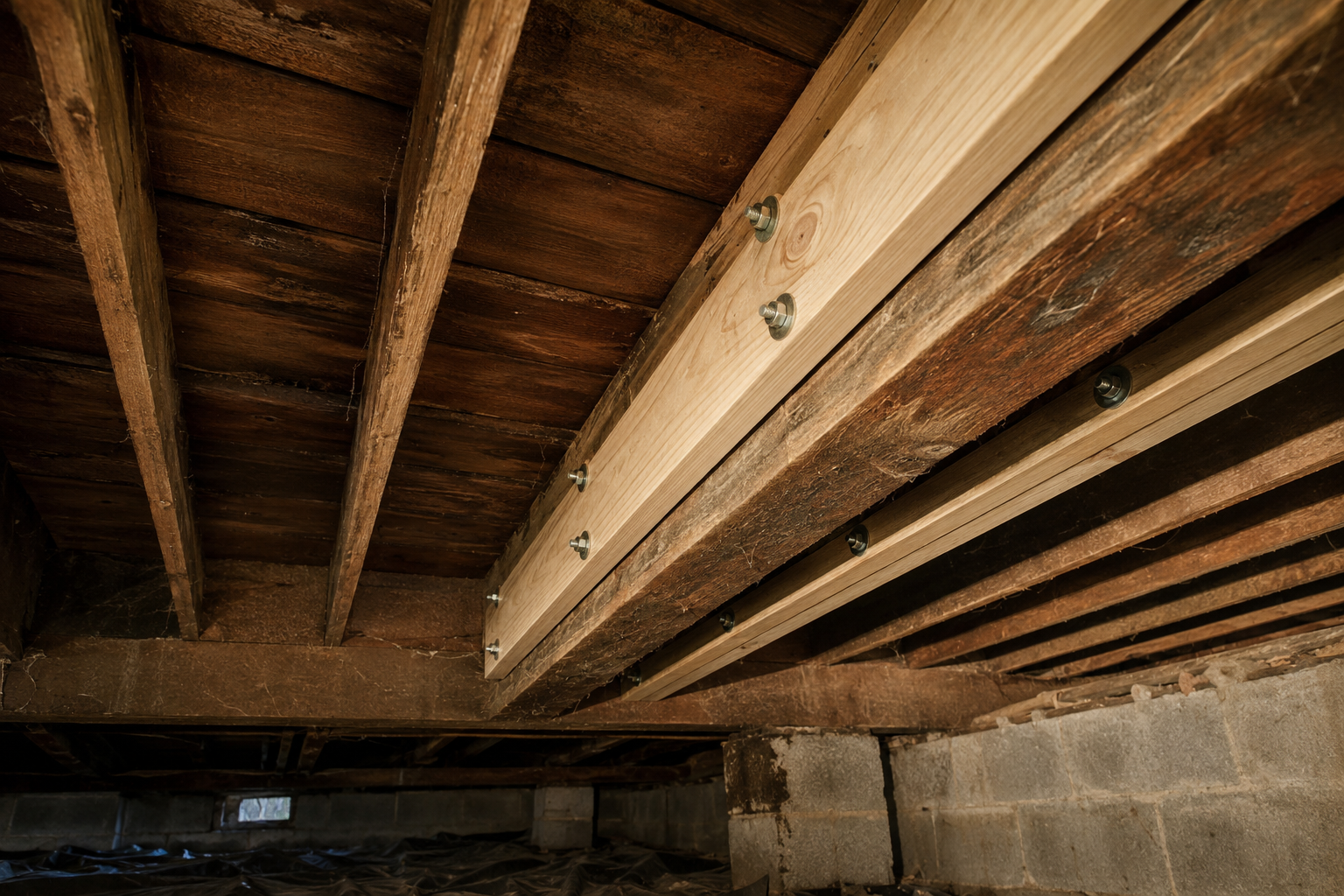
Floor joists are the horizontal members that bridge your foundation walls or support beams and carry everything above them. When they are undersized or span too far without intermediate support, you get the excessive flex you feel as a spongy floor, and over time you get cracking drywall, squeaks, and slope. Older framing tables allowed spans and joist sizes that today's code no longer considers adequate, which is why so many homes from that era keep showing up with the same issue.
A look from the crawlspace tells you a lot: the joist size, the spacing, and whether any lumber is sagging, cracked, or twisted. A 2x6 spanning 14 feet is a red flag on its own, and long unsupported spans with no midspan beam or blocking are the classic sign of overspanned joists. The permanent fixes are straightforward: sister new lumber alongside the existing joists, install a midspan beam on properly footed posts, or both. The route to avoid is the temporary one, dropping in jack posts without real footings or shimming, which tends to create new problems. Pulling out load-bearing walls or blocking during a DIY job can turn a minor bounce into a serious slope.
Rotted Beams and Failed Posts
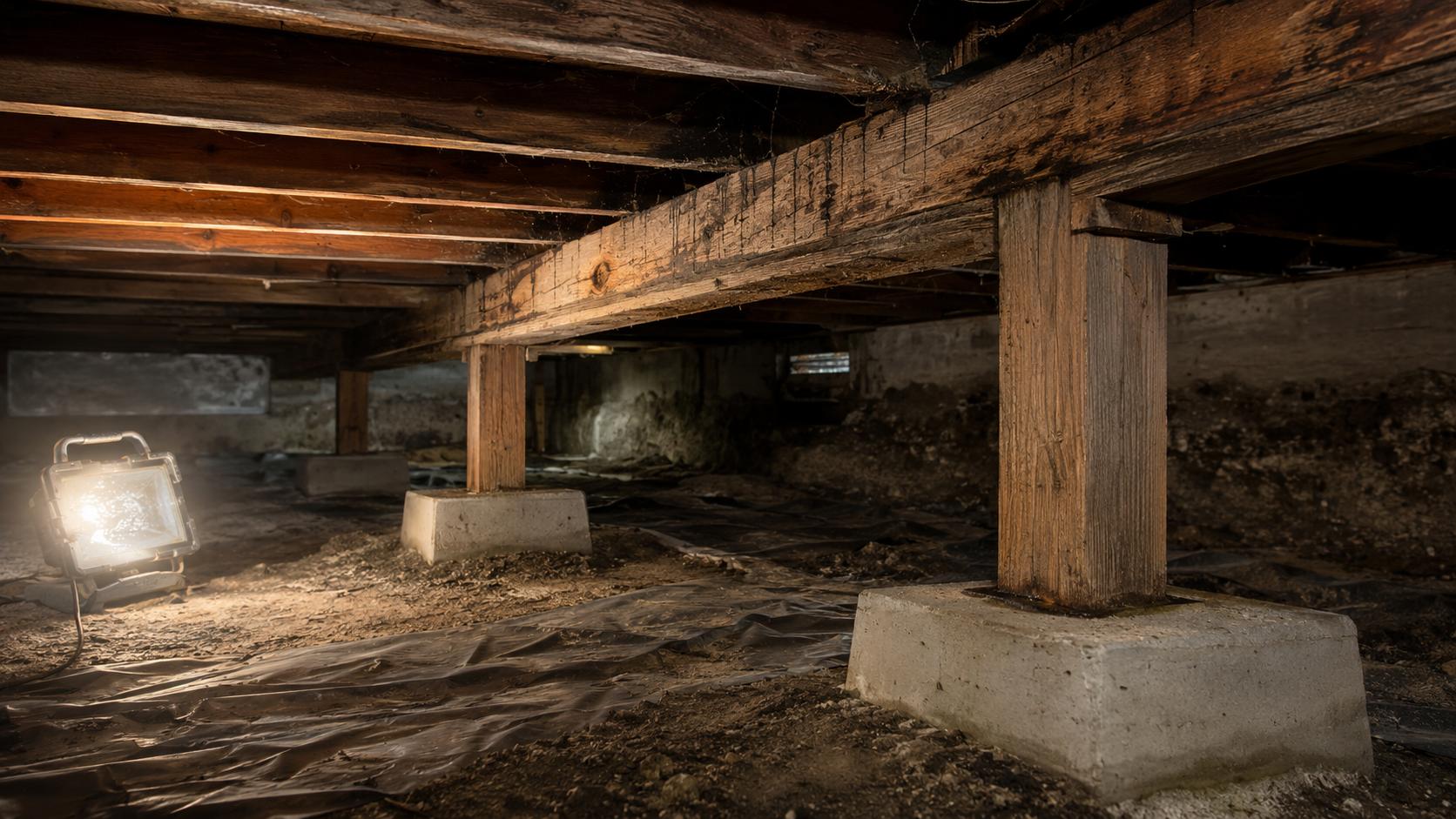
The real structural danger usually lives in the main carrying beams and the posts holding them up. Most Fraser Valley homes use the same system: wood beams span between the perimeter foundation walls, supported at intervals by wood posts sitting on concrete pads, or in older homes directly on soil. The joists rest on top. Dry and solid, it works fine. Add persistent moisture and the clock starts on rot, and our crawlspaces are very good at trapping it.
Post failure shows up a few ways: posts shift off their pads, crush as rot softens the wood, tip sideways, or dissolve at the base where they sit in moisture. A beam that has lost section to rot can no longer carry its load. Upstairs you feel slope, bounce, and deflection that gets a little worse each year. None of that is normal settling. A proper inspection means probing the wood for soft spots, checking every point where posts meet pads and beams meet posts, and reading the moisture through the space. Catching it early matters, because a minor bounce becomes a failed post if it is ignored long enough. If you want to see how moisture drives structural damage, our crawlspace moisture write-up walks through it.
When the Problem Is the Foundation Itself
When a slope runs across a whole side of the house rather than one room, the cause is almost always below the foundation. Settlement starts in the soil under your footings: it compresses under the weight of the house, erodes from water movement, or shifts as moisture changes. In the low-lying parts of Chilliwack and Abbotsford, silty alluvial soils deposited by rivers over thousands of years behave unpredictably under load. Expansive clay in parts of the region shrinks in dry summers and swells when the fall rains return, a seasonal push and pull that slowly moves foundations.
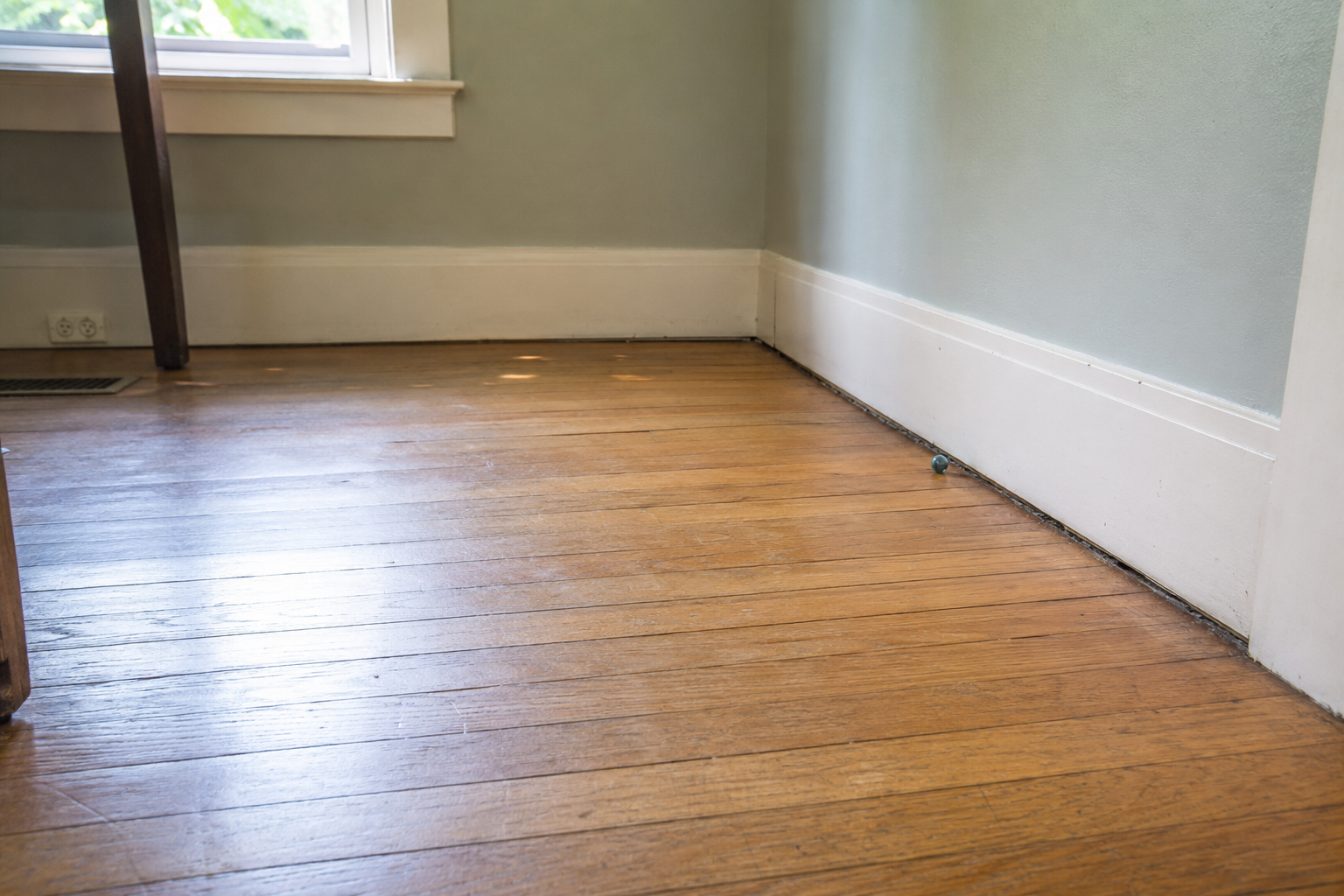
That movement travels upward in a predictable chain. The footing drops, the foundation wall follows, the sill plate and crawlspace framing tilt, and eventually the finished floor moves too. A floor that slopes toward one corner is the classic sign of differential settlement, where one section has dropped more than the rest. Not every sloped floor is still active, though. Plenty of homes settled decades ago and have been stable ever since. The question is whether it is still moving. Watch for doors and windows that have recently become hard to close, fresh drywall cracks above door frames and at ceiling corners, and new gaps opening between baseboards and the floor. If those signs are recent and getting worse, the foundation is probably still on the move. Our guide to foundation settlement in the Fraser Valley covers the warning signs in more detail.
When settlement is the cause, shimming furniture, pouring self-leveling compound, or replacing the flooring solves nothing. The floor is the messenger. The real fix means addressing the foundation, whether that is underpinning, helical piers, or correcting the drainage and soil conditions that started the movement. Skip that and you are just waiting for the same cracks and slopes to come back.
Frequently Asked Questions
What causes bouncy or soft floors in Fraser Valley homes?
Bouncy or soft floors are most often caused by undersized floor joists, overspanned joists that cover too great a distance without support, crawlspace post failure, or rotted beams. Fraser Valley homes are particularly prone to these issues because of the region's high water tables, seasonal flooding, and soil conditions that can accelerate moisture damage to crawlspace framing. The floor surface itself is rarely the problem. The real issue is almost always in the structural members below it.
What is the difference between floor bounce, deflection, sagging, and slope?
Bounce is that springy, trampoline-like feeling underfoot, and it usually points to overspanned or undersized joists. Deflection is measurable bending of joists or beams under load, sometimes too subtle to feel at first. Sagging is a visible dip or valley in the floor, typically caused by a failing midspan support like a rotted beam or sinking post. Slope is a consistent tilt across a room or floor level, and that one often signals foundation settlement or differential soil movement beneath the home.
How do I know if my uneven floor is a cosmetic issue or a structural problem?
A slightly uneven floor in an older home isn't automatically a cause for alarm. Active bounce, progressive sagging, or a floor that's getting noticeably worse over time are signs that something structural may be failing. Doors that swing open on their own, visible dips near the center of a room, and floors that flex under furniture are all red flags worth investigating. A professional assessment is the most reliable way to tell the difference and avoid either unnecessary repairs or dangerous inaction.
Is sagging floor repair in Chilliwack and the Fraser Valley expensive?
The cost depends heavily on what's actually causing the sag. A targeted fix, such as replacing a rotted beam, sistering new joists alongside failing ones, or stabilizing a sinking crawlspace post, is often far less expensive than homeowners expect. The costly scenarios are the ones where foundation settlement has gone unaddressed for years. Catching the problem early and getting the root cause right is the best way to keep repair costs manageable.
Can I fix bouncy floors myself, or do I need a contractor?
Some minor stiffening work, like adding blocking between joists, can be done by a capable DIYer. That said, most bouncy floor or sagging floor issues in Fraser Valley homes really do need a proper structural assessment before any work begins. The wrong repair can mask a deeper problem without actually solving it. We've seen this firsthand, where a cosmetic patch gets applied and the underlying cause just keeps progressing. A contractor experienced in crawlspace and structural framing repairs can identify the true cause and recommend a fix that addresses the root issue rather than just the symptom.
What is crawlspace post failure and why is it so common in the Fraser Valley?
Crawlspace post failure happens when the wooden support posts beneath your floor lose structural integrity due to rot, moisture damage, or deteriorated footings that no longer make solid contact with the ground. The Fraser Valley's combination of high rainfall, seasonal flooding risk, and naturally damp soil creates conditions where untreated wood in crawlspaces deteriorates faster than in drier climates. When a post fails, the beam it was carrying drops, pulling the floor down with it and creating the sagging or sloping symptoms homeowners notice first.
Bouncy, sagging, or sloping floors are your home's way of asking for help, and getting the right diagnosis early makes a real difference in both safety and cost. If you're noticing floor movement in your Fraser Valley home and want a straight answer about what's causing it, reach out to our team at Black Birch Contracting to schedule an assessment.