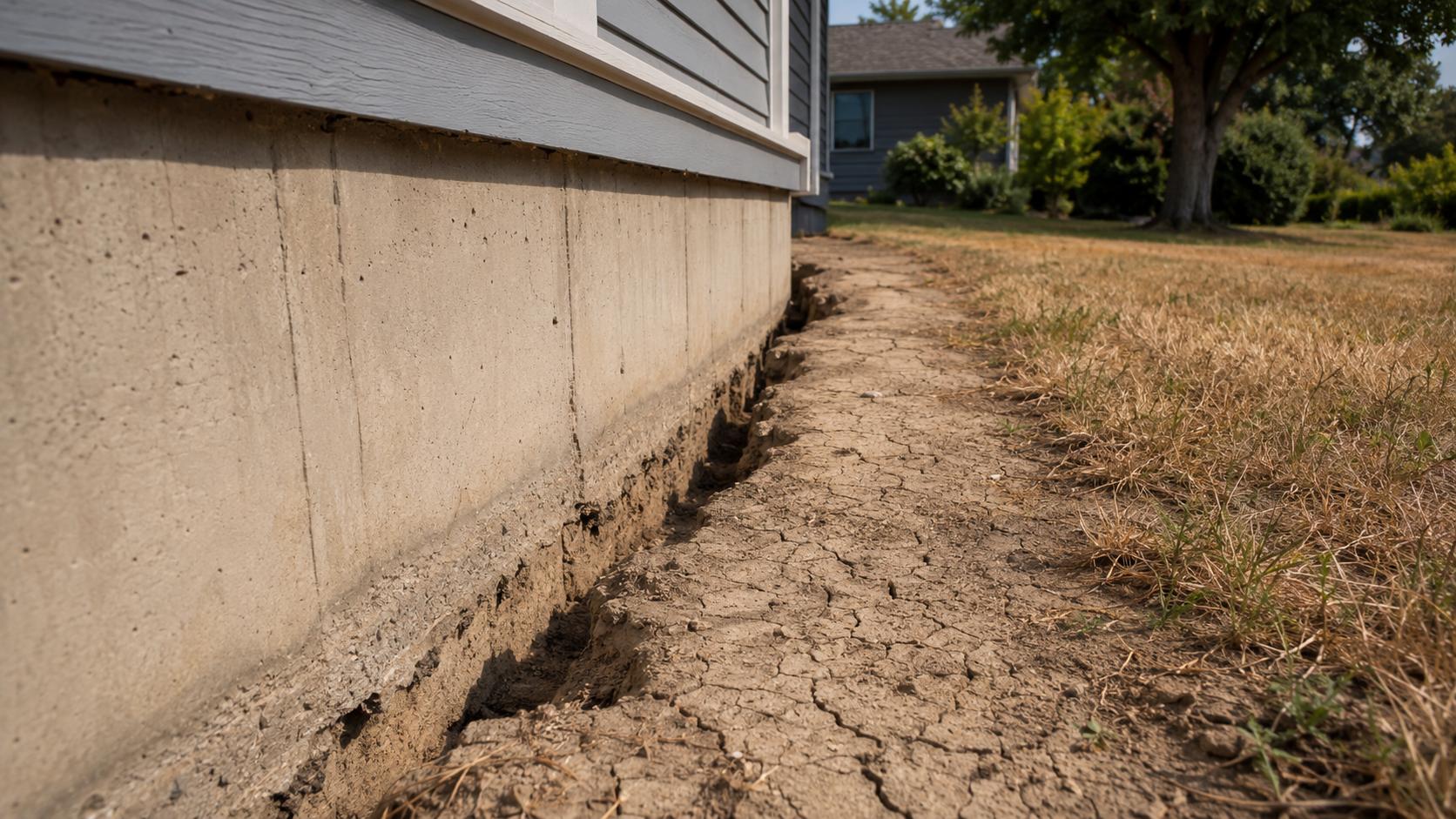
Every August, our phone starts ringing with the same worried question: "We just found cracks in our foundation, but it hasn't rained in weeks. How is that possible?" It catches homeowners off guard every time. Foundation cracking during a dry Fraser Valley summer is far more common than people expect, and drought is usually the real culprit behind those zigzag lines creeping up a basement wall. The season everyone associates with relief from water problems is actually when some of the most serious structural movement begins.
Why Dry Weather Is Harder on Your Foundation Than You Think
Most people assume foundation problems peak during our wet coastal winters, and that makes sense. Pooling, seepage, and hydrostatic pressure all sound like the obvious threats. But here in the Fraser Valley we sit on expansive clay, and that clay behaves in ways that surprise even longtime residents. When summer heat bakes it dry, it shrinks, pulls away from your footings, and leaves voids where the foundation can settle. The trouble is that water damage is visible. You see the puddle, you feel the damp wall, you smell the mildew. Drought damage is invisible until it becomes serious. By the time the cracks show up, the soil under your home has already shifted.
How Clay Soil Behaves in the Fraser Valley
The valley floor was shaped by glacial retreat and centuries of Fraser River deposits, which left a soil profile loaded with fine, clay-rich and silt-heavy material. Unlike the sandy soils of the interior, these fine particles are reactive and physically unstable when moisture changes. Clay behaves like a sponge: it swells and heaves when it absorbs water, then contracts and pulls away from footings when it dries. That sharp swing between saturation and drought is what makes clay soil settlement such a recurring problem in our region.
A few things make it worse. Inconsistent irrigation creates wet zones right next to dry ones, which drives uneven settlement. Large tree roots pull enormous volumes of water out of the clay, drying the ground unevenly near mature landscaping. And seasonal drought, which now arrives earlier and lasts longer, drives clay shrinkage well below footing level. Each of these pushes the soil further from its natural moisture balance, and the foundation ends up paying for it.
Why Dry Summers Do More Damage Than Wet Winters
Wet soil in winter can push upward through heaving, but it tends to do so fairly uniformly and often corrects itself once moisture stabilizes in spring. Summer shrinkage is different. As the clay dries through evaporation, root absorption, and a lack of rain, it physically shrinks and opens voids beneath the slab or footings. Those voids rarely recover. When the rain finally returns, the soil re-expands but seldom fills the gaps completely, leaving permanent weak points behind. And with our summers trending hotter and drier, dry summer foundation damage is becoming a recurring problem rather than an occasional one.
The bigger danger is that soil never dries out evenly. The south-facing side of a house takes more sun, and ground near big trees loses moisture fastest. That uneven drying causes differential settlement, where one corner or section drops more than the rest. You end up with diagonal cracks above doors and windows, frames that suddenly stick, and floors with a noticeable slope. Drought settlement tends to show up as sudden, localized problems rather than the slow whole-house shift that gives you time to notice a pattern.
Why Homeowners Who Only Watch for Water Miss It
We are all conditioned to associate foundation trouble with water: leaks, seepage, puddles where they shouldn't be. So dry summer damage slips past people, because it rarely announces itself with anything dramatic. No puddle, no musty smell. Instead you get a hairline crack that looks like nothing, a door that sticks slightly, or a small gap opening above a window. Those are the early signs of soil shrinkage, and they happen as the clay pulls away from your footings during a long dry spell.
By the time a crack is wide enough to worry you, significant movement has already happened underneath. That is also why we see so many homeowners fill cracks with caulk or hydraulic cement and call it done. The crack looks better, but the cause has not been touched. A cosmetic fix addresses what you see. A structural repair addresses why the crack formed. If you want the full breakdown of that distinction, we broke it down in what makes a repair structural instead of cosmetic. Patching over active settlement only delays the day you realize it got worse.
Warning Signs to Watch For
Diagonal cracks at the corners of windows and doors. The classic sign of differential settlement, where one part of the foundation drops while the rest stays put.
Stair-step cracking in brick or block walls. These follow the mortar joints in a zigzag and tie directly to soil shrinkage under the footing.
Doors and windows that suddenly stick in mid-summer. Frames go out of square when settlement distorts the structure, sometimes within a few weeks of a dry stretch.
Gaps between wall and ceiling, or between trim and wall. Even a few millimeters tells you movement is happening.
Sloping or uneven floors, especially in crawlspace and slab-on-grade homes that sit closest to the soil.
Cracks wider at the top than the bottom, which point to a corner dropping and usually mean active movement.
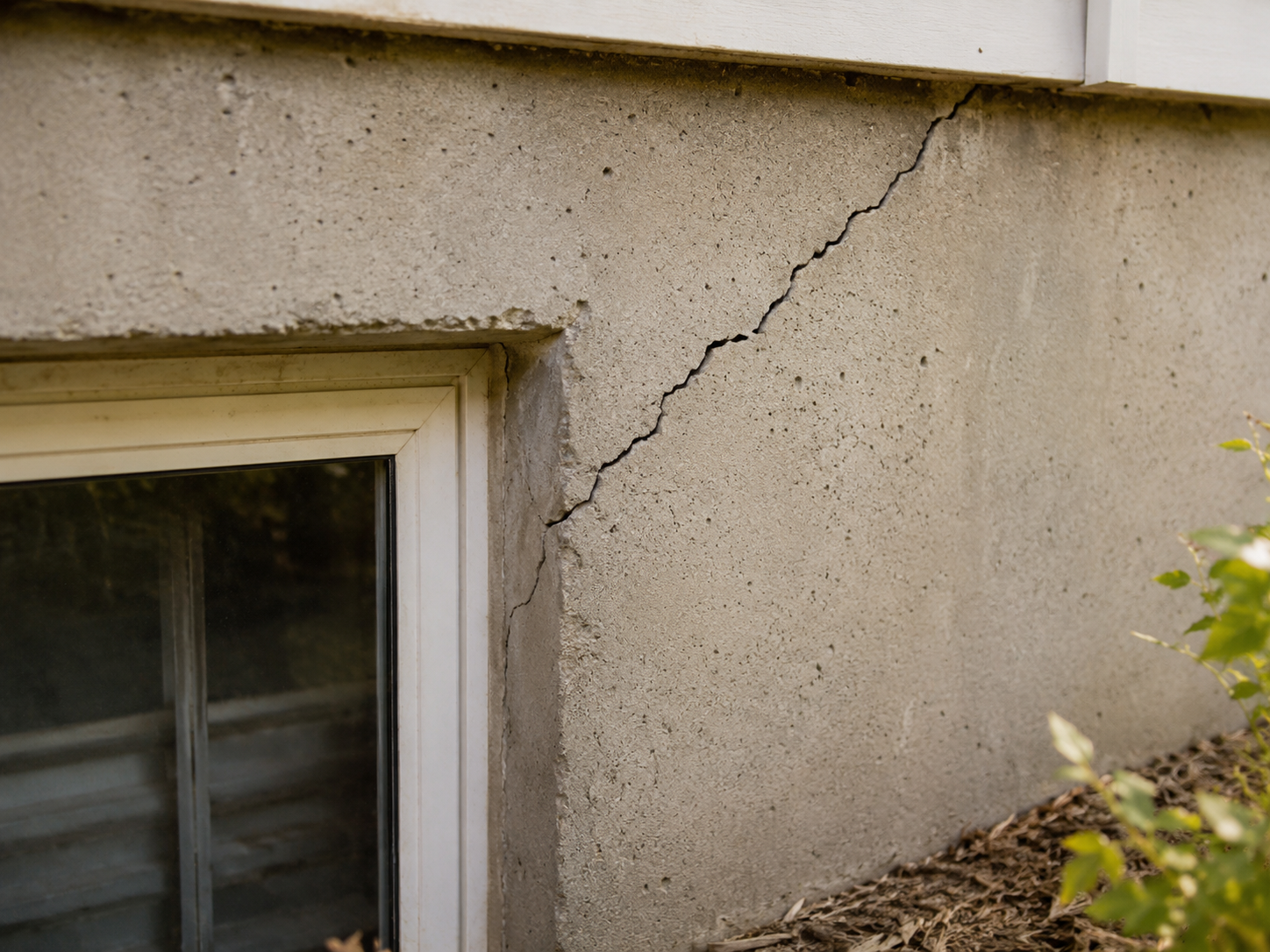
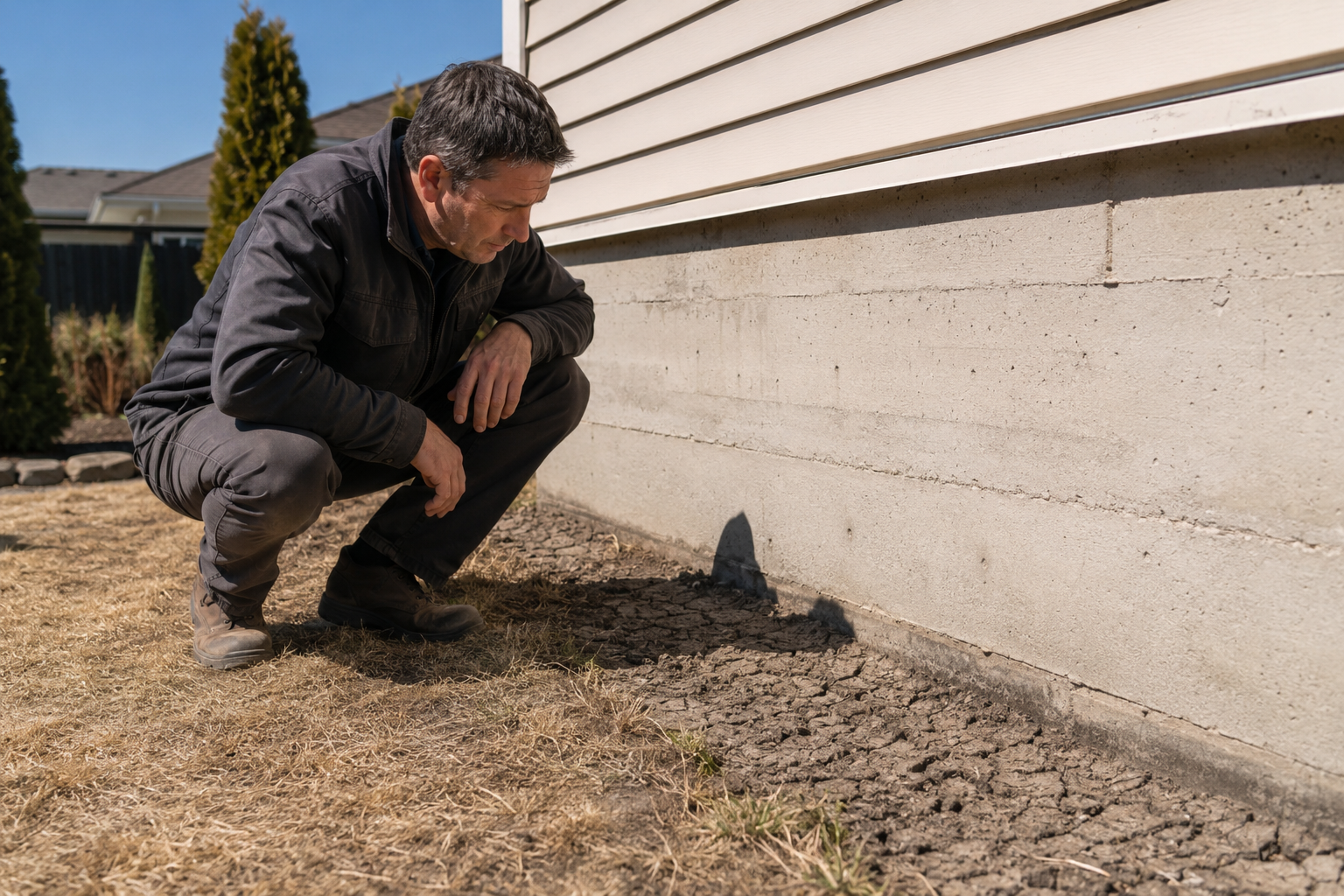
When our team arrives for an assessment, we start outside. Crack direction, location, and width each tell us something specific about what the soil is doing. A horizontal crack tells a different story than a diagonal one, and anything wider than a quarter inch usually signals active movement rather than old, stable settling. We also check whether the ground has pulled away from the foundation wall, because that gap confirms dry summer movement is underway. If you want to read those patterns yourself, our guide on what a crack's width and direction actually tell you walks through it in detail.
Diagnosis Comes Before Any Repair
The repair is only as good as the diagnosis behind it. A real foundation diagnosis goes well beyond eyeballing a crack and quoting a price. We start with a soil investigation, because expansive clay behaves nothing like sand or gravel. From there we map every crack by width, direction, and pattern, run an elevation survey to detect tilt or differential settlement, and check soil moisture to understand how shrinkage relates to the cracks above it.
The key question is whether the movement is active or historic. Active movement means the foundation is still shifting with seasonal moisture, and it needs intervention at the soil level. Historic movement has stabilized and may only need localized repair. Contractors who skip diagnosis and jump straight to crack injection are treating symptoms, not causes, and on Fraser Valley clay that is how you end up paying twice.
Repairs That Address the Soil, Not Just the Crack
If you have ever patched a crack only to watch it reopen the next season, this is why. The real fix starts underground. Underpinning extends the foundation down to stable soil that isn't affected by seasonal swings. Helical piers are screwed into load-bearing ground and transfer the weight of the structure past the problem zone, which makes them a strong fit for expansive clay. Polyfoam grout injection fills voids directly beneath a slab, compacting loose material and lifting settled sections back toward their original elevation. The right choice depends on the depth and pattern of movement, which is exactly what the diagnosis is for. We covered the full range of options in our guide to settling foundation solutions.
Stabilizing the structure is only half the job. Correcting the grading and installing perimeter drainage keeps moisture around the home consistent, so the clay isn't constantly swinging between waterlogged and bone dry. Root barriers are worth considering if you have mature trees pulling moisture unevenly from the soil. And sequence matters: stabilize the soil first, restore any displaced sections to proper elevation second, then seal cracks and joints once everything is stationary. Crack injection applied while the soil is still moving will fail. It is that simple.
Frequently Asked Questions
Why is my foundation cracking when it hasn't rained in weeks?
Dry weather is often more damaging to foundations than wet weather, especially in the Fraser Valley. When summer heat bakes the clay-rich soil in our region, it shrinks and pulls away from your foundation footings, creating voids that allow the concrete to shift unevenly. That uneven movement is what produces the cracks you're seeing, even without a drop of rain.
What does clay soil have to do with foundation cracks in the Fraser Valley?
The Fraser Valley sits on expansive clay and silt-heavy soils deposited over centuries by the Fraser River. Clay behaves like a sponge, swelling when wet and contracting significantly when dry. This cycle of expansion and shrinkage puts constant stress on your foundation, and over time it causes settlement and cracking that worsens with each passing season.
How can I tell if my foundation cracks are caused by dry weather or something else?
Cracks linked to clay soil shrinkage typically appear as diagonal fractures running from window corners, or as stair-step patterns in block walls. They tend to show up or worsen during late summer, after an extended dry stretch. If you're noticing new cracks without any recent heavy rain or flooding, seasonal soil movement is a very likely cause and worth having a contractor take a look at.
Do large trees near my home make foundation cracking worse in summer?
Yes, significantly. Mature tree roots pull large volumes of moisture out of the surrounding clay soil, accelerating the shrinkage that leads to foundation settlement. This creates uneven dry zones right next to your footings, which is one of the more common patterns we see during foundation assessments in the Fraser Valley during summer months.
Is drought foundation damage permanent, or can it be repaired?
Drought-related foundation damage can be repaired, but the sooner you address it the better. When soil shrinkage and settlement are caught early, the repair options are more straightforward and less costly. Leaving cracks alone allows further movement with each seasonal cycle, and what starts as a manageable issue can become a serious structural problem over time.
What can I do to protect my foundation during hot, dry Fraser Valley summers?
Keeping consistent moisture around your foundation is one of the most effective things you can do. A steady irrigation routine along the perimeter of your home helps keep clay soil from drying out too dramatically. Avoiding deep-rooted plantings close to the foundation, and making sure you have proper grading and drainage, also go a long way toward reducing seasonal soil movement.
Foundation cracks that appear during a dry summer aren't something to ignore or wait out. The soil movement behind them tends to deepen with each season. If you've noticed new or growing cracks and want an honest read on what's happening beneath your home, reach out to our team at Black Birch Contracting and we'll help you understand your options before the problem gets ahead of you.