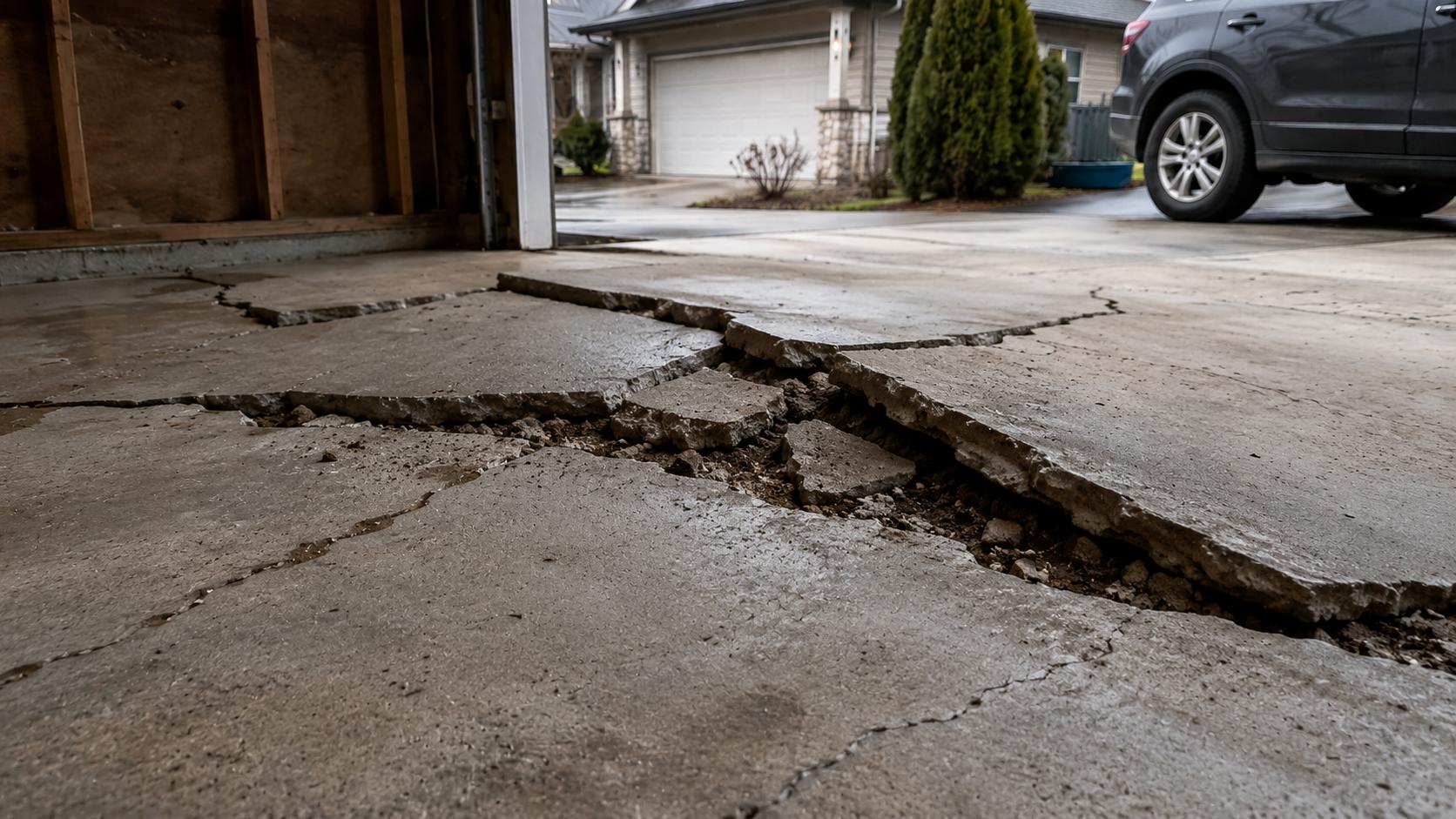
Sunken concrete gets all the attention. Homeowners know slabs can sink, and there is a whole toolbox of repairs built around lifting them back to grade. Heave is the opposite problem: the ground pushes the concrete upward, and it is far less understood. That matters, because the standard lifting repairs that fix a sunken slab will make a heaved one worse. If part of your slab is humping up, cracking, or pinching door frames, here is what is actually happening underneath, and why the fix looks nothing like a settlement repair.
Heave and Settlement Are Opposite Problems
Settlement happens when soil compresses or washes away and the slab drops into the space left behind. Heave happens when forces below push the slab upward. On the slab itself the direction is usually plain to see: a hump or ridge rising through a garage floor is heave, a dip or tilt is settlement. It gets less obvious in the finished parts of a house, where all you see is a cracked wall, a sticking door, or a floor that no longer sits level.
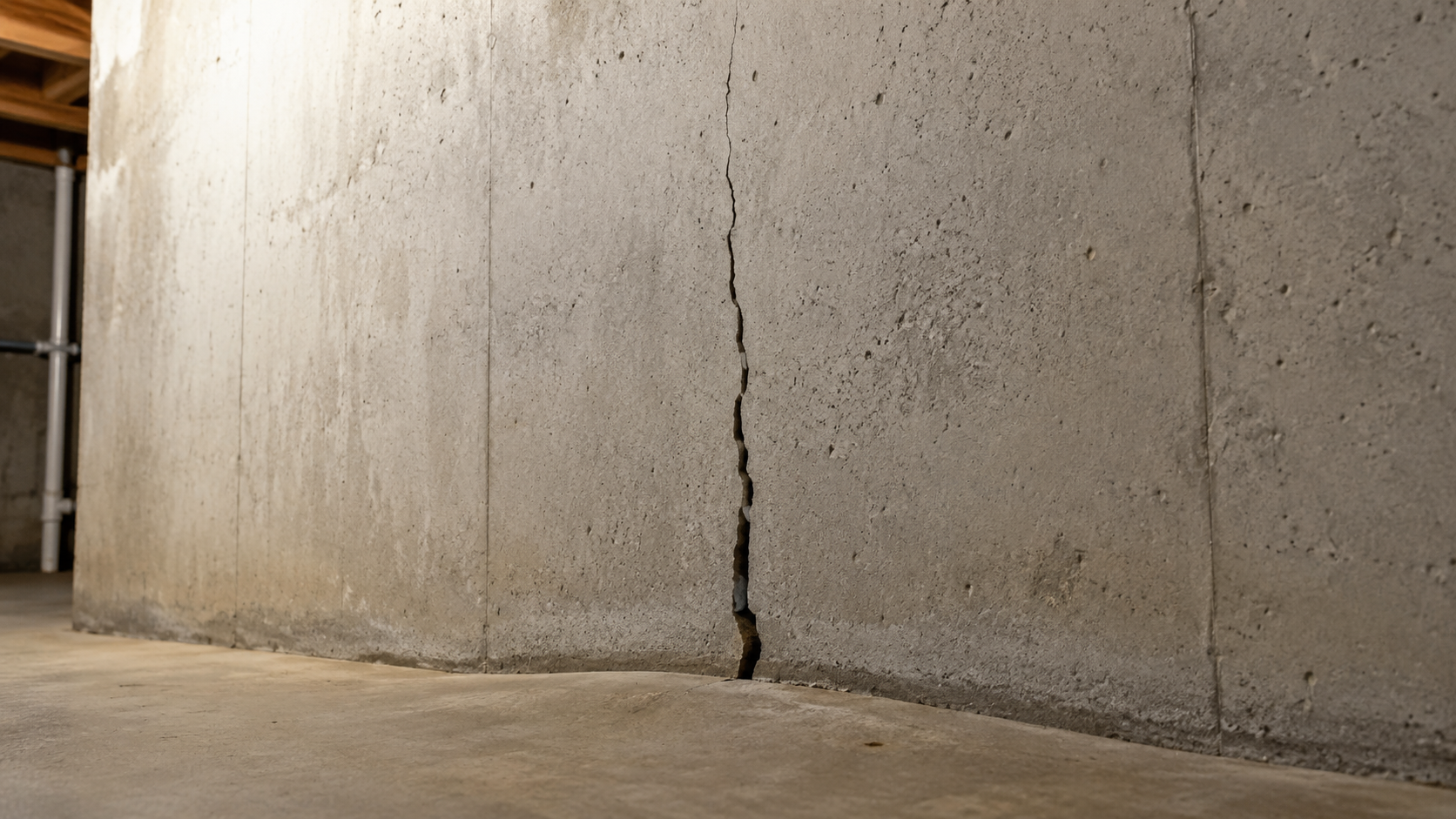
The crack patterns fill in the rest. Heave tends to produce floors that bow upward in the middle and wall cracks that open at the bottom and taper closed toward the top, because the centre of the slab is being lifted. Settlement cracks usually widen at the top, and gaps open under baseboards as the structure drops away. Check out our guide to reading what crack width, direction, and location tell you if you want to go deeper on this.
What Pushes Concrete Up in the Fraser Valley
Heave is not random. In our region it almost always comes down to one of four forces, and sometimes more than one at a time.
Expansive clay rewetting after a dry summer
Much of the valley sits on clay-rich soils that shrink noticeably through a dry summer and swell again when the fall rains arrive. That shrink and swell cycle generates enormous pressure under slabs and footings. In a drought year like this one, the clay loses a surprising amount of volume by September, then takes water back on quickly once the weather turns. The lift that follows can crack a garage floor or push up a section of basement slab in a single wet season. It is the same soil behaviour behind why foundations crack more in a dry summer than a wet winter, just running in reverse.
Frost
When water in the soil freezes, it expands, and it does not politely expand sideways. Ice lenses form under slabs and shallow footings and push straight up with thousands of pounds of force. Our valley winters, where the temperature crosses zero over and over, are harder on concrete than a consistently cold climate would be, because the ground heaves and relaxes repeatedly through the season. That repeated cycling is the same freeze-thaw action that cracks concrete surfaces, working at footing depth. Outbuildings and additions with footings above the frost line are the usual victims.
Tree roots
Root heave is slow, which is exactly why people underestimate it. Willows, poplars, maples, and birches all send aggressive roots under slabs looking for moisture, and as those roots thicken over the years they lift the concrete above them. These repairs take real judgment, because ripping the roots out can destabilize the tree, while leaving them guarantees the movement continues. The structural fix and the root problem have to be handled together.
Plumbing and drainage leaks
A slow leak under a slab can saturate the soil for months before anything shows at the surface. On clay, that added moisture triggers the same swelling as a wet fall, except concentrated in one spot and running year round. Failed perimeter drains and disconnected downspouts do the same thing by feeding roof water directly into the ground beside the foundation. When we find heave with no obvious cause, a leak is where we look next, and it turns out to be the answer more often than people expect.
Why Settlement Repairs Make Heave Worse
Mudjacking and polyurethane injection are good tools. We use foam lifting constantly, and it is the right call when a slab has sunk because the soil under it compacted or washed out. Both methods work by pumping material under the concrete to raise it back to grade. But if the slab is already being pushed up from below, injecting more material underneath adds pressure to a system that already has too much of it. Cracks widen, the slab fractures in new places, and a manageable repair turns into a replacement.
Pier systems can misfire the same way. Push piers and helical piers are excellent on settling soil, but driven into expansive or frost-active ground, they can transfer seasonal soil movement straight into the footing they were supposed to stabilize.
This is why the diagnosis matters more than the product. The visible damage does not tell you which repair is right. We have a full post on why two similar-looking cracks can need completely different repairs, and heave is the clearest example of it: the wrong fix here does not just fail, it actively makes things worse.
What a Proper Diagnosis Looks Like
Before we touch a heaving slab, we want to know what is pushing it. Depending on the site, that means some combination of soil assessment to confirm whether expansive clay is a factor, moisture readings to find where water is accumulating, a root survey if there are mature trees within reach of the slab, a plumbing pressure test to rule out a leak, and a check of footing depth against the frost line. None of this is exotic, but it is the difference between fixing the cause and decorating the symptom.
If a contractor looks at an uplifted slab and goes straight to quoting a lifting product, that is a red flag. Ask what testing they did, what they believe the root cause is, and how their repair stops it from coming back. A good contractor welcomes those questions. Here is how to tell whether a contractor is actually finding the source of the problem.
Repairs That Address the Cause
The right repair follows directly from the diagnosis.
When expansive clay is the driver, moisture control comes first: regrading so water sheds away from the structure, perimeter drainage, and in some cases soil stabilization to blunt the swelling. Until the moisture swings are under control, any slab work is temporary.
When roots are the cause, a root barrier redirects future growth, and sometimes partial root removal has to happen before any releveling. When a leak is the cause, sequence is everything: repair the leak, let the subgrade dry and recompact in a controlled way, and only then repair the concrete. Skip the drying phase and the movement comes back.
For chronic frost heave, the durable fix is getting the bearing below the frost line, either by deepening footings or underpinning, sometimes paired with rigid insulation around unheated structures. And when a slab is too badly buckled to save, partial or full replacement over a properly prepared subgrade beats endless attempts to rescue broken concrete.
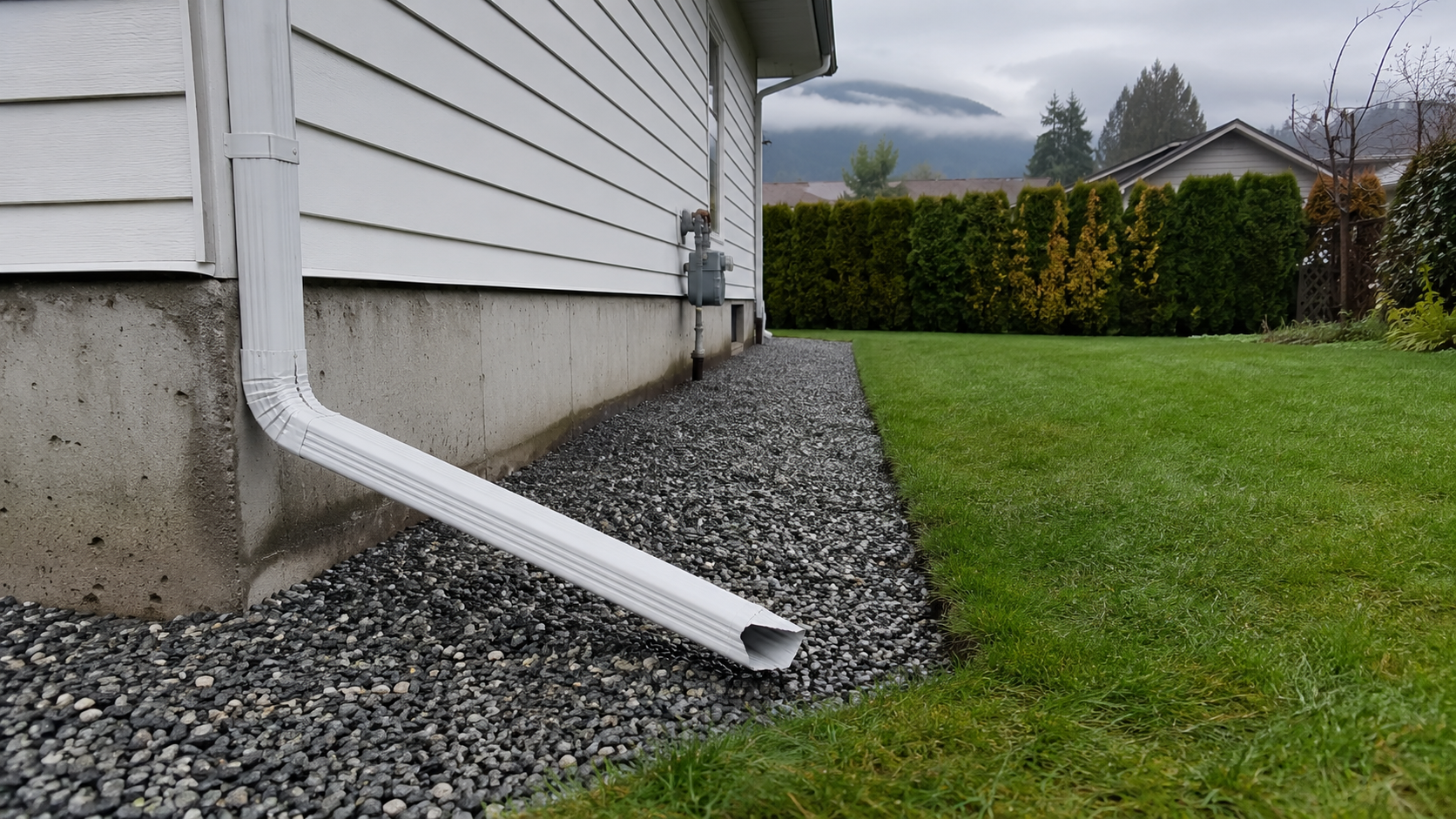
In many cases the most permanent heave repair on the menu is drainage redesign. French drains, catch basins, swales, downspout extensions: none of it is glamorous, but redirecting water away from clay permanently removes the force that was doing the damage.
Keeping Heave From Coming Back
Most recurrence is preventable. Keep the grade sloping away from the foundation, at least six inches of fall over the first ten feet. Extend downspouts well away from the building. Keep aggressive tree species a respectful distance from slabs and footings, and do not over-irrigate beds against the house, especially in a summer like this one when the surrounding clay is bone dry and concentrated watering creates a sharp moisture imbalance. Have older supply and drain lines inspected periodically. If an area has heaved and been repaired before, a simple crack gauge will tell you whether it is moving again long before the damage gets expensive.
Prevention is cheap compared to repeat repairs. A few hundred dollars of drainage and landscaping adjustments regularly saves Fraser Valley homeowners thousands in concrete work. Heave is a powerful force, but it is not a mysterious one, and once you know what is driving it, it can be stopped.
Frequently Asked Questions
What is concrete heave and how is it different from settlement?
Concrete heave happens when forces beneath a slab push it upward, while settlement happens when soil compresses or washes away and lets concrete sink. The two problems have opposite causes and need opposite repair methods. Applying a lifting technique to concrete that's already heaving can make the damage significantly worse, which is why getting the correct diagnosis first matters so much.
What causes concrete heave in the Fraser Valley specifically?
The Fraser Valley's combination of expansive clay soils, seasonal frost cycles, tree root growth, and plumbing leaks all create conditions where concrete heave is common. Clay soils absorb moisture and swell with considerable force, and freezing temperatures cause water in the soil to expand and push slabs upward. Any one of these forces, or some combination of them, can be responsible for the lifting you're seeing.
How can I tell if my concrete is heaving rather than settling?
Heave typically produces cracks that open at the bottom of walls and taper closed toward the top, along with floors that bow in the middle and doors that stick in their frames. Settlement cracks tend to widen at the top and are often accompanied by gaps forming beneath baseboards as the structure drops. If your slab appears to be rising rather than sinking, heave is the more likely explanation.
Can I use mudjacking or foam injection to fix a heaving concrete slab?
No. Mudjacking and polyurethane foam injection are designed to lift concrete that has sunk due to settlement. If heave is the actual problem, applying either of these methods adds even more upward pressure to a slab that's already being pushed too high. This can accelerate cracking and turn a manageable repair into a full foundation replacement.
Is concrete heave covered by home insurance in the Fraser Valley?
Coverage depends on your specific policy and the cause of the heave. Sudden events like a burst pipe causing foundation uplift may be treated differently than gradual soil movement from clay expansion or tree roots. It's worth contacting your insurer and having a professional assess the cause before filing any claim, so the documentation accurately reflects what happened.
How urgent is it to repair heaving concrete?
Get it assessed as soon as you notice it. The underlying forces driving the movement don't stop on their own, and waiting allows soil conditions to continue pushing the slab, which worsens cracking, damages adjacent structures, and creates tripping hazards. Early intervention almost always means a simpler, less costly repair than waiting until things get bad.
Concrete heave is a serious problem that gets worse when it's misdiagnosed or left alone, and the Fraser Valley's soil and climate make it more common than most homeowners expect. If you're seeing signs of lifting, cracking, or uneven surfaces on your property, the team at Black Birch Contracting can help you figure out what's actually happening beneath your slab. Get in touch with Black Birch Contracting to schedule an assessment and get accurate answers before any repair work begins.