
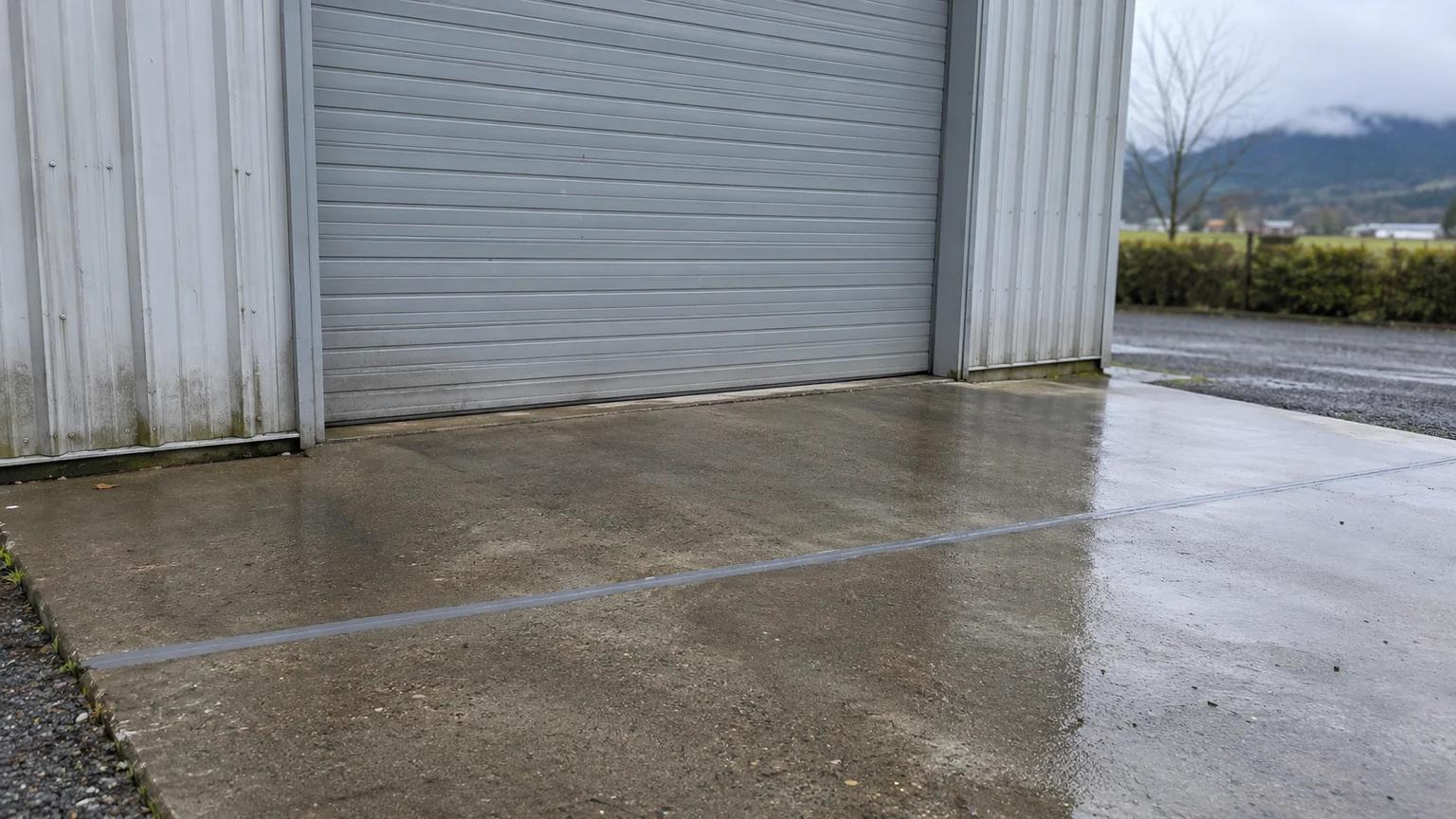
You might own a shop, a warehouse, a strata building or a small commercial property in Chilliwack. Maybe a slab has settled under the racking, a loading apron is breaking up, water is coming through a foundation wall, or a unit needs a renovation after a leak or a fire. You need a contractor who can work out what is actually wrong, plan the job around your operations and do it properly. This page covers the commercial work we take on, how our pre-construction process works, how we keep disruption down while we work, and what to check before you hire any commercial construction contractor in the Fraser Valley.
The Commercial Work We Take On
We're a concrete restoration and structural repair contractor, and we also do general contracting and custom work. Our commercial work falls into a few groups:
Slabs and floors. Warehouse floor stabilization, polyfoam lifting on commercial slabs, void filling under floors, and repair of slab curl, scaling and spalling.
Structural repair. Foundation repair, underpinning, helical piers, carbon fibre straps, crack sealing, wall removal and beam installation.
Site and civil work. Driveway apron stabilization, catch basin repair, civil and roadwork maintenance, and leveling sunken utility pads and leaning light poles without excavation.
Specialized structures. Elevator shaft void filling (see our article on stabilizing commercial elevator shafts with polyfoam injection), runway slab lifting and stabilization with Falling Weight Deflectometer testing, and barn and shop foundations.
Waterproofing. Polyfoam grout waterproofing, membrane systems, interior perimeter drainage and leak sealing on below-grade walls.
Restoration and renovation. Repair after water, fire or smoke damage, with coordinated trades and insurance claim coordination.
Why Commercial Concrete Fails in the Fraser Valley
When a commercial slab or foundation moves, water is one of the first things to check. From fall through spring the soils around Chilliwack and Abbotsford stay wet. Roof drains that empty next to slab edges, downspouts that discharge onto aprons and broken storm lines can all wash fine soil out from under concrete. The slab looks solid from above while a void grows underneath. Then a forklift, a loaded truck or a stack of pallets finds the unsupported section and the concrete cracks or drops.
That's why drainage correction comes alongside foam injection, not after it. Lift a slab without fixing the water that washed out its base and the same void comes back. Resurfacing and coatings come last, never first. Our article on why the order of repairs matters explains the reasoning in more detail.
Pre-Construction: What Happens Before We Quote
Commercial pre-construction is where a job gets set up to succeed or fail. A quote written from the finished surface is a guess. We inspect before we quote, and every project gets a substrate assessment. Depending on the problem, pre-construction can include:
Site assessment and consultation. We walk the property with you, look at how it's used and where loads and traffic go, and find out what can't be interrupted.
Diagnosis below the surface. Void detection, ground penetrating radar scanning, floor movement and heave diagnosis, and a drainage assessment. Heave and settlement look alike and need completely different repairs, so we confirm which one we're dealing with before we pick a method.
A written scope that names the cause. The scope should say why the concrete moved and how the repair deals with it, not just which areas get patched.
Permits and engineering. The BC government's permit guidance for homeowners lists repairs after flood, fire or wind damage, and structural changes like repairing load-bearing walls or foundations, among work that falls under building permits, and warns that starting without the necessary permits can lead to fines, legal issues, safety risks, project delays and notices on your property title. In Chilliwack, any retaining structure over 1.2 metres in height must be designed, inspected and certified by a registered Professional Engineer.
Scheduling around operations. We plan the sequence of work around your shifts, tenants, deliveries and access.
If you ask, we can give you photos and a written explanation during the repair.
Keeping Disruption Down While We Work
On a commercial property, keeping disruption low matters. Polyfoam grout suits a lot of commercial slab work partly for that reason. The injection points are small and the foam cures fast. In sinkhole repair it reaches 90 percent of its strength within 15 minutes, compared with a day or more for mudjacking, which we don't offer. Our hoses run over 300 feet, so the equipment doesn't have to sit right beside the repair. Elevator cabs don't need to come out for shaft repair, and occupants don't have to move out during wall injection. Once cured, the foam is chemically inert and can carry loads exceeding 14,000 pounds per square foot.
Foam isn't the answer for every slab, though. A shattered slab, or one with snapped or badly corroded rebar, isn't a candidate for lifting. Cracked or structurally damaged pads need excavation. A good contractor should tell you this during pre-construction, not after the foam has gone in.
How to Hire a Commercial Construction Contractor in Chilliwack
Whoever you hire, check these things before you sign:
Insurance and coverage. Ask for a certificate of commercial general liability insurance.
Licensing. In BC, a residential builder who builds or manages all or substantially all of a new home's construction must hold a BC Housing licence before starting construction on a new project. That licence is about new homes, so for commercial work, verify experience and references in other ways.
Inspection before pricing. Be cautious of a firm quote given without a proper look at the substrate.
Diagnosis. The contractor should explain the cause, not just the symptom.
Deposits. A deposit is normal. A large deposit is a red flag.
Credentials you can check. We're ICRI certified, BBB accredited with an A+ rating, members of the Canadian Home Builders' Association, and WHMIS and TDG trained. We have more than a decade of experience and a 5 star rating on Google.
Our guide on what to verify before you sign with a general contractor covers these points in more depth.
Where We Work
We're based in Chilliwack and work across Sardis, Vedder Crossing, Promontory, Fairfield Island and downtown. We also cover Abbotsford, Mission, Langley, Hope, Surrey and Greater Vancouver, and we take projects elsewhere in British Columbia. For an urgent structural concern, call our main line and we'll mobilize quickly.
Frequently Asked Questions
Do you offer commercial pre-construction services?
Yes. Before we quote, we do a site assessment, a substrate assessment, and void or movement diagnosis where it's needed, including ground penetrating radar. We also do a drainage assessment. You get a written scope that explains the cause and the repair, plus guidance on permits and engineering.
Can my business stay open during the work?
It depends on the job, and we work that out during pre-construction. Polyfoam injection is well suited to working around operations: the injection points are small, the foam cures quickly, and hoses over 300 feet long mean the equipment doesn't need to sit beside the work. Elevator cabs don't need to be removed for shaft work, and occupants aren't required to move out during wall injection.
Is polyfoam strong enough for a warehouse or shop floor?
Cured polyfoam can support loads exceeding 14,000 pounds per square foot. The repair is designed to be permanent once the cause, often water, has been corrected. That's why drainage correction is part of the scope and not an optional extra.
What if our slab is too damaged to lift?
If a slab is shattered or the rebar is snapped or badly corroded, lifting isn't the right repair. Cracked or structurally damaged pads need excavation. We'll tell you that during the assessment, along with the options that will actually work.
Do commercial repairs in Chilliwack need a permit?
The province's permit guidance for homeowners says repairs after flood, fire or wind damage need permits, including structural changes like repairing load-bearing walls or foundations. Check what applies to your commercial property with the City of Chilliwack. Taller retaining walls often need a permit and engineering too. We don't recommend skipping permits.
Can you help with insurance claims after water or fire damage?
Yes. Insurance claim coordination is part of our restoration service, along with coordinating the trades involved. If you ask, we can provide photos and written explanations during the repair so you can follow what was done and why.
If you have a commercial slab, foundation, waterproofing or restoration project in Chilliwack, Abbotsford, Langley or anywhere in the Fraser Valley, book a free estimate. We'll look at what's going on below the surface and give you a scope built around the cause.