
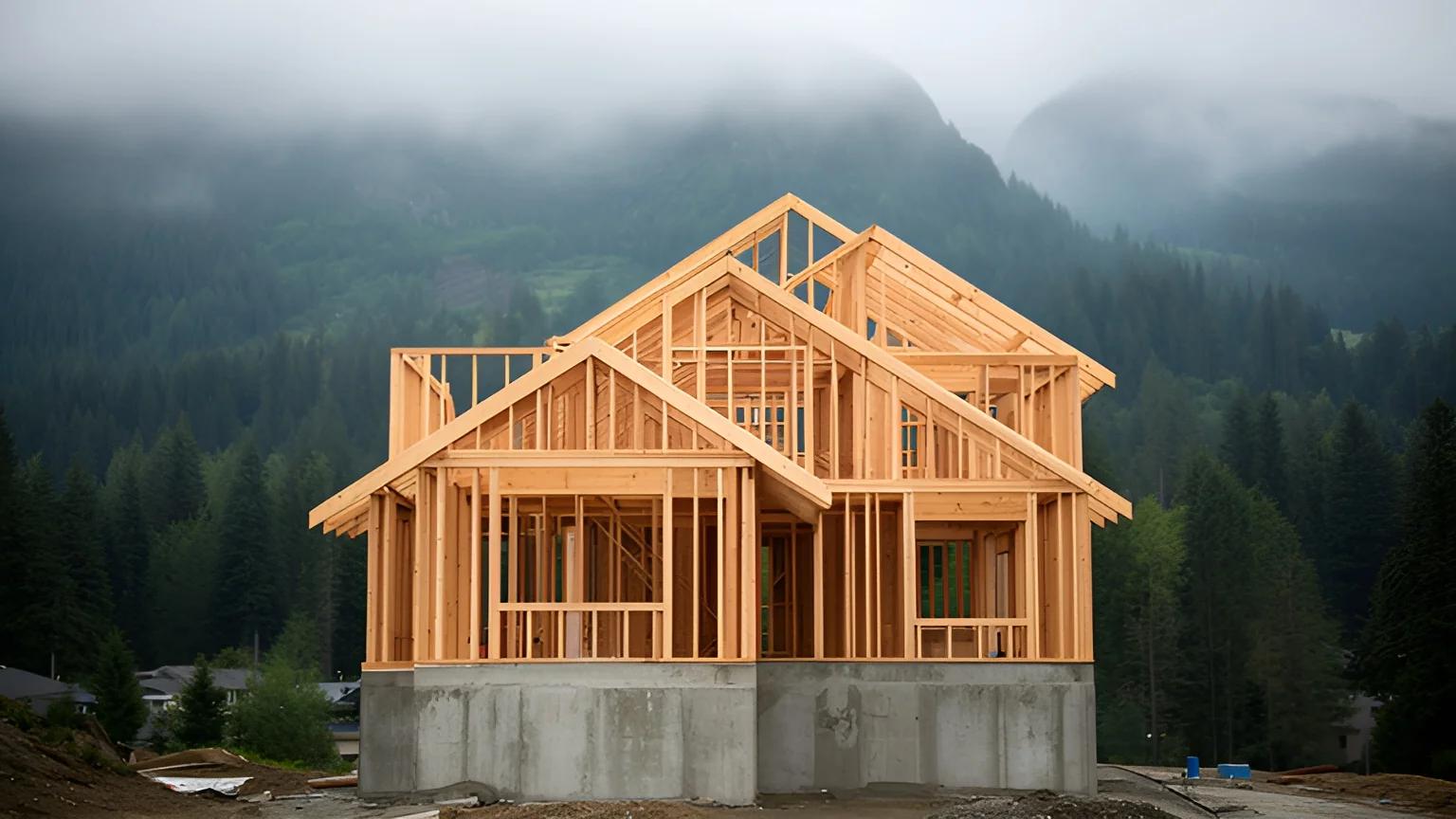
Maybe you have a lot in Chilliwack, or you're close to buying one, and you want a house built to suit how you live instead of buying whatever is on the market. The next step is finding a custom home builder you can trust with a big project that runs for a long time. This guide covers what a builder actually does, how to compare builders in Chilliwack and the Fraser Valley, how a new build usually runs from start to finish, and what drives the cost and the schedule. It's about building new. If you're working on a house you already own, our renovation guides are a better place to start.
What a Custom Home Builder Actually Does
A custom home builder is the general contractor for a new house. The builder takes your plans and turns them into a finished home that passes inspection. That means running the site, scheduling and supervising trades, ordering materials, dealing with the municipality and inspectors, keeping the budget and schedule honest, and fixing anything that isn't right before it gets covered up.
A good builder also helps before construction starts. They review drawings so they can be built, point out details that will cost more than they're worth, and work through site questions such as access, grading, drainage and where the house sits on the lot. Siting is a bigger decision than most people expect, and we cover it on its own in House Placement on Your Lot: The Decision Most People Get Wrong.
In British Columbia, anyone building a new home needs a residential builder licence, and new homes also need home warranty insurance. A renovation contractor doesn't need an equivalent provincial licence, so don't assume a company that renovates well can legally build new. Ask to see the licence.
Why Ground and Water Come First in the Fraser Valley
The ground under a house and the way water moves around it are the hardest things to change once the house is standing. The Fraser Valley has a long wet season, so drainage and moisture control can't be an afterthought. If a builder treats the foundation, drainage and grading as routine and puts the attention into finishes, the trouble can show up years later as cracked slabs, damp crawlspaces and doors that stick.
On a new build, these are the items we put ahead of anything else:
Footings sized and placed for the soil that's actually there, with a geotechnical review where conditions call for one.
Perimeter drainage, damp proofing and grading that carries water away from the house.
Crawlspace or basement moisture control designed in from the start, not added after a problem appears.
Retaining walls built correctly. Permit thresholds vary, but a permit is commonly needed at around 1.2 metres, and walls well over a metre tall usually need an engineer.
To see what happens when these things are missed, read What to Fix Before the Wet Season. Getting them right on a new build costs much less than fixing them later.
How to Choose a Custom Home Builder in Chilliwack
Asking "who are the best custom home builders in the Fraser Valley" doesn't help much. A better question is which builder suits your project and can show you how they work. Here's what to check:
Licensing and warranty enrolment. Confirm the builder holds a current BC residential builder licence and can enrol your home with a warranty provider.
Insurance. Commercial general liability coverage. Ask for proof that it's current.
A detailed, itemized quote. Allowances for fixtures and finishes should be listed clearly, so you can see what's included and what isn't.
A written contract. It should cover scope, payment schedule, change order process and who is responsible for permits.
A reasonable deposit. Deposits are normal. A large deposit up front before any work has started is a red flag.
Communication. Find out who your day to day contact is, how often you'll get updates and how decisions get recorded.
How they handle structure. Ask how they deal with foundations, drainage and moisture. A careful builder will give specific answers.
We go through these checks in more detail in How to Hire a General Contractor in Chilliwack: What to Verify Before You Sign. For why the foundation is the best test of any contractor, see Choosing a General Contractor in Chilliwack? Start With the Foundation.
The Build Process, Step by Step
Every project is different, but a custom home usually goes in this order:
Consultation and site analysis. Walk the lot and look at soil, slope, drainage, access, services and setbacks.
Design and engineering. Finish the drawings with your designer, along with structural and geotechnical input where it's needed.
Pricing and contract. Get a detailed quote based on the actual drawings, then sign a written agreement.
Permits. Apply for the building permit and any other approvals the municipality requires.
Site work and foundation. Clearing, excavation, footings, foundation walls, drainage and backfill.
Framing and building envelope. Structure, roof, windows, sheathing and weather barriers to close the house in.
Rough-ins. Plumbing, electrical and mechanical, followed by inspections before anything is covered.
Insulation, drywall and finishes. Cabinetry, countertops, flooring, tile, fixtures and paint.
Final inspection and handover. Occupancy, a walkthrough with you, and a list of any deficiencies to finish.
Each inspection is a checkpoint. A builder who schedules inspections properly and doesn't rush to cover work is protecting you.
What Drives the Cost of a New Build
We won't give a cost per square foot here. Any figure without your lot and plans attached would mislead you. These are the things that move the number most:
The site. Slope, poor soils, high groundwater, retaining walls, long service runs and tight access all add work before the house even starts.
Size and complexity. A simple footprint and roofline costs less to build than many corners, vaulted spaces and large spans.
Finish level. Cabinetry, countertops, windows, flooring and fixtures make up a big share of the budget.
Mechanical systems. Heating, ventilation and energy performance choices affect the build cost and also your running costs for decades.
Changes during construction. Decisions made late cost the most. Making them early is the best way to protect the budget.
An honest quote has to come from real drawings and a look at the site. We don't price structural or site work without seeing it.
What Shapes the Timeline
A custom home is measured in seasons, not weeks. Design and permitting often take longer than people expect and depend heavily on the municipality. On site, weather matters a lot in the Fraser Valley. Excavating and pouring foundations in the middle of the wet season can be done, but it needs careful water management. A good schedule tries to get the house closed in before the heavy rain arrives. Long-lead items such as windows and custom cabinetry need to be ordered early so they don't hold up the work. Ask any builder for a written schedule that includes these dependencies, not just an end date.
Frequently Asked Questions
Do I need a licensed builder to build a new home in BC?
Yes. New home construction in British Columbia requires a residential builder licence, and new homes need home warranty insurance. Owner builders have their own separate requirements. Check a builder's licence before you sign anything.
Should I have plans before I contact a builder?
You don't need finished plans. Bringing a builder in early, while the design is still changing, often helps you avoid expensive details and siting mistakes. An accurate quote does depend on complete drawings, though.
Can you give me a price per square foot?
Not responsibly. Site conditions, design complexity and finish level change the cost too much for one rate to mean anything. We give a quote after reviewing your plans and the lot.
How much should the deposit be?
Deposits are normal, and the payment schedule should be written into the contract and tied to stages of the work. Be wary of a builder who wants a large share of the money up front before work begins.
Why do you focus so much on foundations and drainage?
Because they're the hardest parts of a house to fix once it's standing, and problems there show up in everything built above them. Foundation repair is also one of our services. See our foundation repair guide for what fixing it later involves.
Which areas do you build in?
We're based in Chilliwack and work across the Fraser Valley and Greater Vancouver, including Abbotsford, Mission, Langley and Hope. We'll also consider projects elsewhere in British Columbia.
If you're planning a new home in Chilliwack, Abbotsford, Langley or anywhere in the Fraser Valley, we'd like to look at your lot and plans with you. Contact us to book a free estimate, and we'll start with the ground and the water, because that's where a home that lasts begins.