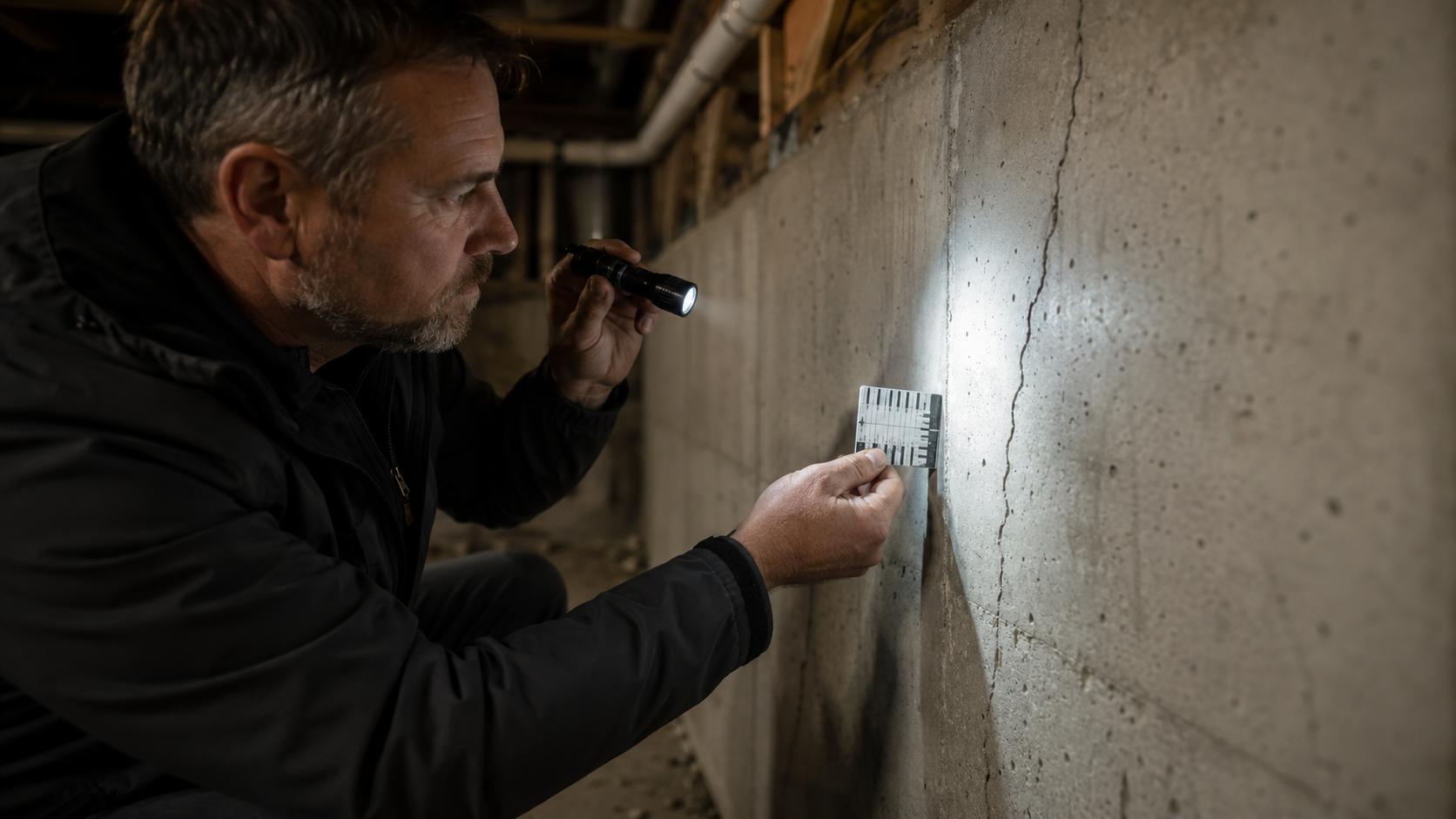
If you've owned a home in the Fraser Valley long enough, you've found one: a thin line creeping across a basement wall, a stepped pattern in a block foundation, or a hairline split near a window corner. Most people react one of two ways. They lose sleep over it, or they smear on some caulk and forget it. Both can cost you. A crack is a piece of information, and once you learn to read it, you can tell the difference between a wall that has simply aged and a wall that is actively moving.
A Field Guide From Someone Who Reads Cracks for a Living
My name is Marcus, and I run Black Birch Contracting. I have spent years in Fraser Valley crawlspaces and basements with a comparator card pressed against concrete, having honest conversations with homeowners about what they are actually looking at. Plenty of those talks end in reassurance. Some end with a repair plan that heads off tens of thousands of dollars in damage. The deciding factor is almost always how early the problem gets read correctly.
Here is what sits between panic and denial: not every crack is a crisis, but some of the quietest ones are serious problems hiding in plain sight. A narrow vertical crack near the top of a poured wall is often just shrinkage. A horizontal crack at mid-height can mean soil pressure is bowing the wall inward. A diagonal line from a window corner, or a stepped crack in a block wall, can point to settlement that is still in motion. Direction, width, and location work together, and you cannot read one without the others.
Start With Direction
On any site visit, the first thing I do is stand back and look at where the crack is heading, before I reach for a gauge or check for moisture. Orientation is the fastest filter for separating a structural problem from a cosmetic one.
A vertical crack is usually the least alarming. These tend to form as concrete cures and shrinks, or from minor, even settlement. Least alarming does not mean ignore it, though. I watch vertical cracks for any change in width and for water finding its way through, because today's hairline can become tomorrow's leak.
A horizontal crack is the one that gets my attention fastest. That orientation almost always means lateral soil or hydrostatic pressure is pushing inward against the wall, and it is nearly always structural. Diagonal cracks send a different signal: they usually mean differential settlement, with one part of the foundation dropping faster than another. The angle and position tell me where the movement is concentrated, and research into crack detection confirms that directional characteristics are fundamental to an accurate diagnosis.
Stepped cracking is mostly a block-wall pattern, where the crack traces the mortar joints in that familiar staircase shape. What matters is whether the steps stay uniform or widen as they climb. Uniform steps usually mean slow, gradual settlement. Widening steps suggest lateral pressure is building and deserve a closer look.
Orientation is not a verdict on its own. It is the first question that shapes the next ones. Is the crack active or dormant? What is the soil doing? Has drainage changed? Every answer starts with that first look at which way the concrete moved.
What Crack Width Actually Tells You
Width helps, but it is never the whole story. The industry sorts cracks into rough bands. Hairlines under 0.2mm are typically cosmetic and common in curing concrete. The 0.2mm to 1mm range is worth monitoring and may need sealing to keep water out. From 1mm to 3mm, finding the cause becomes a priority. Anything past 3mm warrants a professional assessment for possible structural compromise.

People ask constantly how wide a crack has to be before it is a real problem, and the honest answer is that width means little without orientation. A 2mm horizontal crack on a below-grade wall is far more concerning than a 4mm shrinkage crack in a non-load-bearing slab, because those two cracks come from completely different forces. A diagonal crack near a corner, a stepped crack on block, or a vertical crack that is wider at the top each tells its own story. That is why a number alone never settles the question, and why understanding structural versus non-structural cracks matters more than any single measurement.
Is the Crack Still Moving?
Width will not tell you whether a crack is growing or has been stable for years, and that distinction matters enormously. You can track it at home. Mark both ends with a pencil and date them, fit an inexpensive crack gauge across the gap, or photograph it every few weeks with a ruler next to it for scale. If it is opening up over weeks or months, get it evaluated regardless of how wide it is right now.
Where the Crack Sits Changes the Meaning
The same width and orientation can mean very different things depending on location. A horizontal crack through the middle of a poured wall is one of the more alarming patterns, since it usually signals inward bowing from soil pressure and tends to widen over time. Vertical cracks near corners are often just curing shrinkage and far less urgent. Diagonal lines radiating from window and door openings form at stress points and are usually non-structural, though seasonal soil movement can open them further.
Slabs behave differently again. A grid of fine lines across a basement floor is almost always normal shrinkage, but a single wide crack running wall to wall points to settlement. Cracks at the wall-footing junction get underestimated constantly, and that is a mistake, because they can signal footing movement or open a path for water. Cracks around pipes and window wells are usually shrinkage points, non-structural but reliable entry routes for moisture, so sealing them early pays off.
One more thing I always check is the full path of the crack. A split visible only on the exterior face can channel water through the wall cavity without ever showing moisture inside. That is why I ask homeowners to show me where it starts and ends. In my experience, damage rarely stays in one spot, and tracking how a crack progresses over time is the key to a correct diagnosis.
The Regional Forces Behind Most Fraser Valley Cracks
If you live here, your foundation is fighting forces that drier parts of B.C. rarely deal with. Much of the Fraser Valley sits on alluvial soils laid down over centuries by the Fraser River, ranging from loose silty fill near the water to clay-heavy subsoils across much of Chilliwack, Abbotsford, and the surrounding area. That ground can vary enormously from one property to the next. Expansive clay swells when it is saturated and shrinks as it dries, and that seasonal push and pull works against your foundation all year.
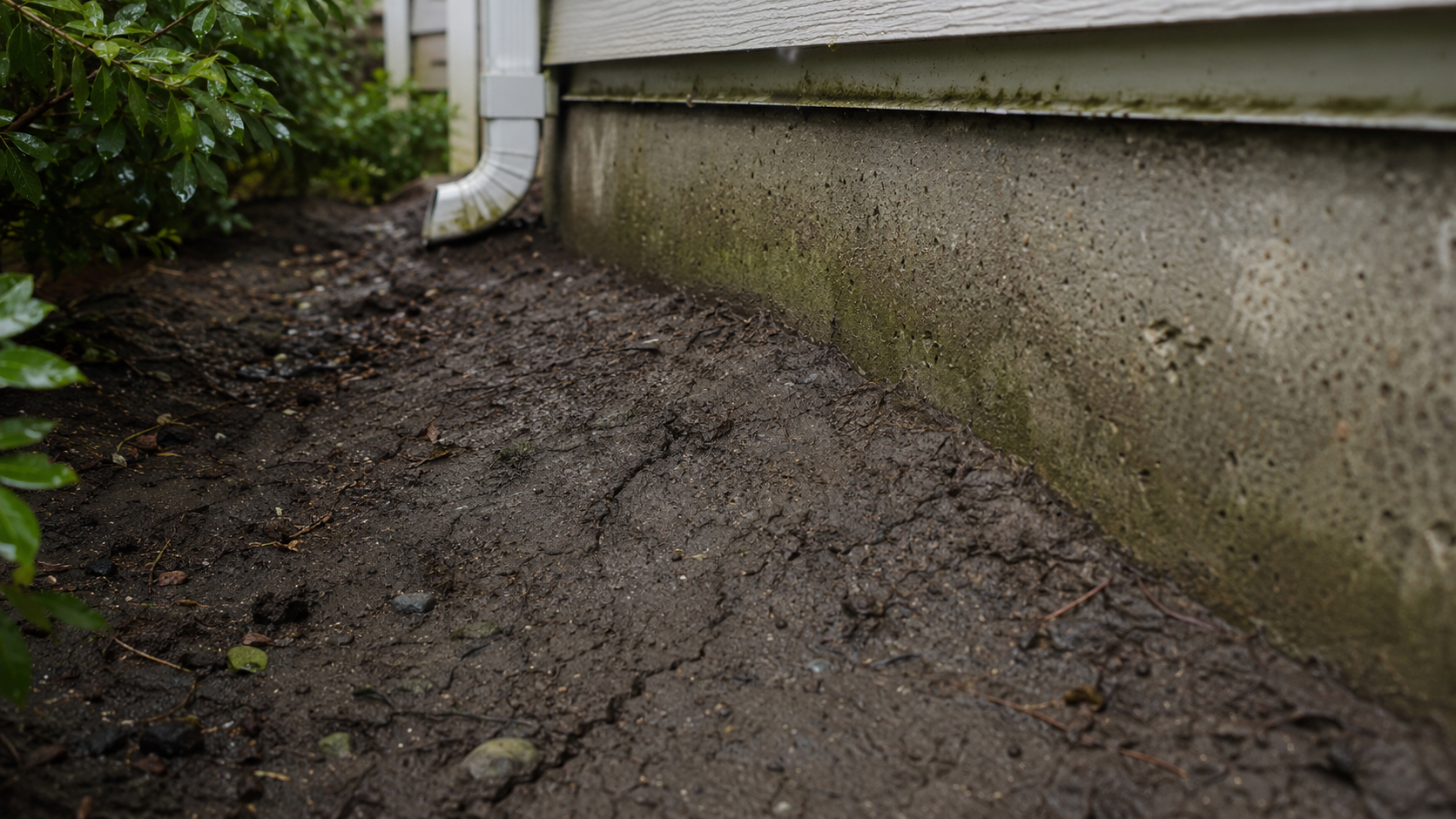
Winter adds its own pressure. Through the long wet season, hydrostatic pressure builds behind basement walls, especially where drainage or waterproofing is lacking, and that is often what drives a horizontal crack. The cold does separate damage. Water seeps into micro-pores, freezes, expands, and widens existing cracks a little more each year. Even a hairline can outgrow the cosmetic range after a few winters of this, which is why I treat freeze-thaw as a slow but relentless factor. Our breakdown of how freeze-thaw cycles crack concrete here explains the mechanism and the permanent fixes.
Settlement varies across the region too. Homes on looser river-adjacent fill see more differential settlement, while hillside properties contend with slope creep and drainage headaches. Some cracks visibly open in winter and close in summer, and that seasonal movement is not reassuring. It means the soil is active and the foundation is responding with every cycle. So I always ask how old a crack is and whether it looks different in spring than in fall, because here, regional context is everything when it comes to an accurate diagnosis.
Frequently Asked Questions
How do I know if a foundation crack in my Fraser Valley home is structural or non-structural?
The main things to look at are crack orientation, width, and where it sits on the wall. Horizontal cracks are almost always structural. Diagonal cracks often point to differential settlement, and vertical cracks more commonly come from concrete shrinkage or minor uniform settlement. A professional foundation crack assessment can confirm whether a crack is active, how quickly it's changing, and what repair approach makes sense for your situation.
What causes so many foundation cracks in the Fraser Valley specifically?
Fraser Valley soils are heavy in clay, which expands when wet and contracts when dry. This puts repeated stress on foundation walls throughout the year. Wet winters followed by dry summers, combined with freeze-thaw cycles, keep that pressure fairly constant on concrete and masonry. Those regional conditions mean cracks can develop and change more quickly here than in areas with more stable soil and milder seasonal swings.
What is the difference between a horizontal and a diagonal foundation crack?
A horizontal crack typically signals lateral soil pressure or hydrostatic pressure pushing inward against the wall, which makes it one of the more serious types to find. A diagonal crack usually points to differential settlement, meaning one section of the foundation is sinking or shifting at a different rate than the rest. Both warrant a professional evaluation, but horizontal cracks generally call for faster action and often require active stabilization.
What does a stair-step crack in a block foundation wall mean?
A stair-step crack follows the mortar joints of a concrete masonry unit wall in a stepping pattern. Uniform steps often suggest gradual, older settlement that may have stabilized. Steps that are visibly widening can indicate ongoing lateral pressure or active movement. Both the pattern itself and any changes over time matter when assessing what's actually happening.
At what point should I stop monitoring a crack and call a professional?
If a crack is wider than a hairline, is growing over time, shows water intrusion, or runs horizontally across your foundation wall, those are clear signals to get a professional assessment rather than keep watching it. Cracks that appear after heavy rain, after a dry summer, or near windows and corners should also be evaluated promptly. Catching movement early almost always means a simpler, less expensive repair than waiting until the damage becomes hard to ignore.
Can I use caulk or patching products to fix a foundation crack myself?
Surface patching can temporarily stop water from entering through a dormant crack, but it doesn't address the underlying cause and can actually hide signs of ongoing movement. If a crack is active or structural, filling it without treating the source of the problem creates a false sense of security while the issue keeps developing underneath. A proper repair starts with understanding what's causing the crack, not just covering it up.
Foundation cracks are one of those things where the right information at the right time genuinely matters. The Fraser Valley's soil and climate conditions mean that waiting rarely works in a homeowner's favor. If you have a crack you're unsure about, reach out to our team at Black Birch Contracting for an honest, straightforward assessment before a small problem becomes a costly one.