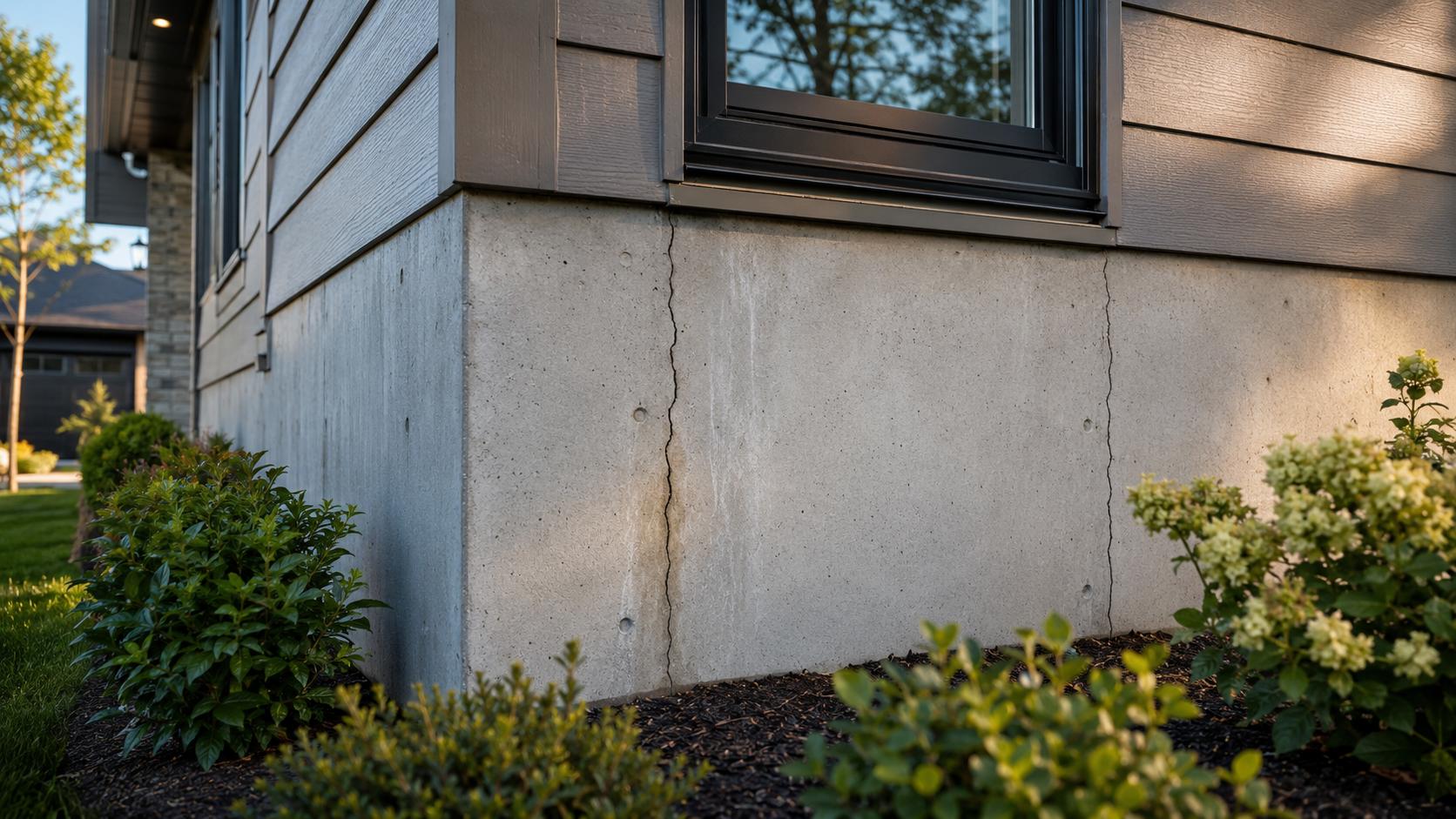
Two cracks in a basement wall can look practically identical to the untrained eye, yet one might be a harmless cosmetic blemish while the other signals serious structural failure in progress. That gap between what you see and what's actually happening is exactly why proper foundation crack diagnosis matters so much. A thorough structural foundation assessment goes far beyond measuring width or length. It considers the full story behind a crack, and getting that story wrong can cost homeowners thousands of dollars in unnecessary repairs. Worse, it can leave a dangerous problem untreated. At Black Birch Contracting, foundation crack repair in Chilliwack is our specialty. We've spent years learning to read what concrete is really trying to tell us across the Fraser Valley's unique soil and climate conditions.
Why Looks Can Be Deceiving
Here's the core problem: visual similarity is deeply misleading when it comes to foundation cracks. A thin diagonal crack near a window corner and a thin diagonal crack running from the footing to the sill plate might look identical in a photo, but their causes, risks, and repair methods can be completely different. Homeowners search for answers online and find generic guides that sort cracks into neat categories. Real foundation crack evaluation, though, requires understanding how multiple factors interact in your specific situation. The soil composition in Chilliwack, seasonal water table shifts, and the age of your home's construction all play roles that a simple chart will never capture.
What Goes Into a Real Diagnosis
When our team evaluates a foundation, we look at five diagnostic factors: location, moisture presence, evidence of movement over time, crack depth, and the broader structural context of the building. A horizontal crack in a block wall tells a very different story than stair-step cracks in a foundation built with brick or masonry units. Diagonal cracks near corners raise different questions than those appearing mid-wall. Foundation crack severity is never determined by any single characteristic. It's the combination of these factors that reveals whether you're dealing with normal settling, hydrostatic pressure, or something that needs immediate attention.
This isn't a DIY troubleshooting guide. Think of it as an expert explainer designed to help you understand what professionals are actually looking for during a foundation crack evaluation. With that context, you can make informed decisions and ask the right questions. Whether you've just noticed a new crack or have been watching one slowly change for years, what follows will give you a clearer picture of what matters and why.
What Makes Foundation Crack Diagnosis So Complex
If you've ever spotted a crack in your foundation wall and wondered whether it's something serious, you're not alone. Foundation crack diagnosis is genuinely complicated, and understanding the types of foundation cracks you might encounter is the first step toward making sense of the situation. Homeowners in the Fraser Valley often assume that a quick visual check can tell them everything they need to know. In reality, a proper structural foundation assessment goes far deeper than what meets the eye. It pulls together multiple factors that have little to do with surface appearance.
Structural vs Cosmetic Cracks: Harder to Distinguish Than You Think
One of the biggest challenges homeowners face is telling the difference between structural and cosmetic cracks. A thin, vertical hairline crack in a poured concrete wall might be completely harmless shrinkage. But a nearly identical-looking crack in a different location, say near a corner or running alongside a window opening, could signal something much more concerning. Without a professional foundation crack evaluation, it's easy to dismiss a warning sign or panic over something benign. That's a tough spot to be in, because these two categories can look almost identical on the surface while carrying completely different implications for your home's safety.
How Professionals Read the Clues
A trained eye evaluates cracks by looking at several factors at once: orientation, width progression, total length, wall thickness, and the surrounding structural context. Horizontal foundation cracks, for example, often point to lateral soil pressure, while diagonal cracks and stair-step cracks in block walls tend to suggest differential settlement. Location on the wall matters too. A crack near the top behaves differently than one near the footing, and seasonal changes can shift width over time. We've seen hairline cracks that looked harmless turn out to be early signs of serious movement, and we've seen dramatic-looking cracks that were purely cosmetic. That's what makes this work genuinely tricky. Recent research into structural health monitoring reinforces just how many variables go into getting the assessment right.
Severity Is a Spectrum
Knowing how to tell if a foundation crack is structural means accepting that severity isn't a simple "fine or failing" binary. Some cracks need monitoring, others need sealing, and some need immediate intervention with specific repair methods. The causes behind foundation wall cracking, from soil movement to hydrostatic pressure to curing shrinkage, are all topics we'll cover in detail later in this guide. For now, the point is straightforward: every crack tells a story, and reading it accurately takes experience.
How Crack Location, Orientation, and Pattern Change Everything
Most homeowners zero in on width when looking at a foundation crack, but a 1/8" crack in one part of your wall can mean something completely different from the same size crack somewhere else. Where a crack appears, how it runs, and what pattern it forms matter just as much as how wide it is. Getting those factors right is the whole point of a proper structural foundation assessment. For homeowners looking at foundation crack repair in Chilliwack, that context is what separates a cosmetic fix from a genuinely serious structural problem.
Horizontal Foundation Cracks: The Ones That Demand Attention
Horizontal foundation cracks are generally the most serious type you'll come across. They form when lateral soil pressure, often made worse by saturated clay soils or frost, pushes inward against the wall. That inward push causes the wall to bow, and if nothing is done about it, the wall can eventually fail altogether. What makes this crack type so concerning is that the structural integrity of the entire wall is at stake, not just one localized spot.
Diagonal and Stair Step Cracks
Diagonal foundation cracks usually point to differential settlement, where one part of the foundation is sinking faster than another. Small diagonal cracks near window corners are often relatively harmless, but a wide crack running at 45 degrees across a wall section is worth getting a professional foundation crack evaluation. Stair step cracks in foundation walls follow the mortar joints in block or brick construction and are closely related to the same cause. They can range from purely cosmetic (thin and stable) to genuinely serious (widening and showing displacement). Which category you're dealing with comes down to whether the underlying settlement is still active or has run its course.
Hairline Cracks and What Patterns Tell Us
Hairline foundation cracks are the ones homeowners most often dismiss, and they're usually right not to panic. Most hairline cracks come from normal curing shrinkage and carry no structural risk. Context matters, though. A hairline crack that weeps water, grows over time, or shows up alongside other cracks becomes part of a bigger story. Research into crack propagation thresholds confirms that even small cracks can become structurally significant under sustained loading conditions.
A single isolated crack and a network of cracks require completely different repair approaches. One crack may reflect a one-time event, while a pattern of cracks points to ongoing movement or systemic pressure. That distinction is why proper foundation crack diagnosis always weighs location, orientation, and pattern together, not just width alone.
The Role of Moisture, Movement, and Environmental Factors
Foundation cracks are not all created equal, and anyone looking into foundation crack repair in Chilliwack needs to understand that appearance alone doesn't tell the full story. A proper foundation crack diagnosis goes beyond measuring width or cataloguing types of foundation cracks. It means evaluating what's happening behind the wall, beneath the soil, and across the seasons. A thorough structural foundation assessment has to account for three variables: moisture, movement, and environment.
When water is actively coming through a crack, the entire repair approach changes. You can't seal over an active leak and expect it to hold. Hydrostatic pressure will push through standard patches, and trapped moisture speeds up deterioration of both the concrete and any embedded reinforcement. Foundation crack moisture damage compounds quickly once water finds a path, leading to efflorescence, spalling, mold growth, and in severe cases, compromised structural capacity. Ignoring water ingress doesn't just risk cosmetic problems. It invites progressive damage that gets exponentially more expensive to fix.
Foundation movement diagnosis matters just as much. Is the crack still widening, or has it stabilized? A dormant crack and an active crack can look identical on the surface, yet they need completely different repair methods. Dormant cracks may accept rigid sealants or epoxy injection, while active cracks need flexible materials that can accommodate ongoing movement without breaking the bond. Applying the wrong fix to the wrong condition is one of the most common mistakes in foundation crack evaluation, and it leads to repeated failures more often than people expect.
In the Fraser Valley, freeze-thaw cycles are a major driver of foundation wall cracking. Water enters microscopic pores in concrete, freezes, expands, and forces those pores open a little further with each cycle. Around Chilliwack specifically, seasonal soil movement from wet winters and dry summers creates shifting lateral pressures that can reactivate old cracks or generate new ones. That's why horizontal cracks, diagonal cracks, and stair-step cracks so often appear or worsen in spring. Understanding crack severity in the context of these environmental pressures is what separates repairs that last from ones you'll be redoing in two years.
Depth, Thickness, and Structural Context in Crack Assessment
Foundation cracks don't all tell the same story. A proper foundation crack diagnosis goes well beyond measuring what you can see on the surface. It requires understanding how deep the crack extends, what type of wall it's in, and what structural loads are at play. At Black Birch Contracting, we treat structural foundation assessment as a layered process, because the types of foundation cracks present in your home determine everything about how we plan a repair.
Surface Crazing, Partial-Depth, and Through-Wall Cracks
Concrete crack depth assessment starts with separating cracks into three main categories. Surface crazing is a network of fine, shallow lines caused by rapid curing or shrinkage, and it rarely affects structural performance. Partial-depth cracks penetrate further into the wall but don't extend all the way through. These deserve closer attention because they can deepen over time, especially under the freeze-thaw cycles Chilliwack sees every winter. Through-wall cracks are the most serious of the three. They compromise the full cross-section and can let water in. Foundation crack severity depends heavily on which category you're dealing with.
How Wall Type Changes the Picture
A crack in a poured concrete wall behaves very differently from one in a concrete block or stone foundation. Poured walls distribute stress more uniformly, so a crack there often points to a specific, identifiable force. Block walls, by contrast, tend to develop stair-step cracks along mortar joints, which can indicate lateral soil pressure or settlement. Horizontal cracks in block walls are particularly concerning because they suggest bowing. Knowing your foundation's construction type matters a lot in any crack evaluation, since the same crack pattern can mean very different things depending on the material.
Structural Context Matters Most
A diagonal foundation crack near a window opening may simply result from stress concentration at the corner, which is well-documented behavior in concrete design. But a similar crack in a load-bearing wall carrying roof and floor loads is a much more urgent finding. Cracks near concentrated load points, like beam pockets or column bases, get treated with far greater concern than those in free-span sections where forces are more evenly distributed. According to recent Canadian data, a significant number of homeowners underestimate these distinctions. That's exactly why foundation crack repair in Chilliwack should start with a thorough structural assessment, not just a quick look at the crack itself. You can't choose the right repair method until you understand what's actually going on with the whole structure.
Why the Right Repair Method Depends on Diagnosis, Not Appearance
Two foundation cracks can look nearly identical on the surface yet need completely different treatments. That's why a proper diagnosis matters so much more than a quick visual check. At Black Birch Contracting, we see this regularly across our foundation crack repair projects in Chilliwack: homeowners assume a crack is "just a crack," but a thorough structural assessment reveals that appearance alone tells only a fraction of the story. The type of crack, its cause, how it moves over time, and how it behaves when moisture is present, all of these factors determine which repair method will actually solve the problem.
Why the Right Repair Method Depends on Diagnosis, Not Appearance
Two foundation cracks can look nearly identical on the surface yet need completely different treatments. That's why a proper diagnosis matters so much more than a quick visual check. At Black Birch Contracting, we see this regularly across our foundation crack repair projects in Chilliwack: homeowners assume a crack is "just a crack," but a thorough structural assessment reveals that appearance alone tells only a fraction of the story. The type of crack, its cause, how it moves over time, and how it behaves when moisture is present, all of these factors determine which repair method will actually solve the problem.
Epoxy Crack Injection: Restoring Structural Strength
Epoxy crack injection is the go-to method when a crack is structural, stable, and dry. The technique works by bonding the concrete back together with a rigid adhesive that restores, and in some cases actually exceeds, the original tensile strength of the wall. It's ideal for cracks caused by one-time events like curing shrinkage, minor settlement, or load shifts that have since stabilized. If a foundation crack evaluation confirms the crack isn't moving and there's no active water infiltration, epoxy is typically the right call.
Polyurethane Crack Injection: Stopping Water and Handling Movement
Polyurethane crack injection works differently. Instead of bonding two surfaces together, this flexible foam expands inside the crack and creates a waterproof seal that can handle slight ongoing movement. If you're dealing with active water infiltration or cracks that shift seasonally, this is usually the right call. Diagonal foundation cracks, stair-step cracks that homeowners commonly spot, and cracks near areas with hydrostatic pressure tend to fall into this category. Using epoxy on a moving, wet crack is a bit like putting a rigid cast on a joint that needs to bend. It sounds reasonable until you think it through.
When Cracks Signal Something Bigger
Not every crack can be solved with injection alone. Sometimes foundation crack severity escalates beyond what either repair method can adequately address. Horizontal cracks caused by lateral soil pressure may require carbon fiber straps to prevent further inward bowing. Significant settlement might call for underpinning, and persistent moisture problems could require a full waterproofing membrane system.
The Cost of Guessing
Applying the wrong crack repair method doesn't just waste money. It can mask a deeper problem, giving you false confidence while the real issue keeps getting worse underneath. Two foundation cracks can look completely identical and still require totally different repairs, because what matters is what's happening beneath the surface: movement data, moisture readings, structural context. A proper diagnosis protects both your home and your investment, and there's really no substitute for it.
What a Professional Foundation Assessment Actually Looks Like
When homeowners in Chilliwack spot a crack in their foundation, the first instinct is often to grab a tube of caulk and move on. It's understandable, honestly. But a proper structural foundation assessment goes much deeper than what's visible on the surface. At Black Birch Contracting, our foundation crack diagnosis process is built to find not just what you can see, but what's happening behind and beneath the wall. Identifying the different types of foundation cracks accurately, whether you're looking at hairline surface marks or something far more serious, takes hands-on experience and a methodical approach you can't shortcut. Here's what homeowners can realistically expect when our team shows up for foundation crack repair in Chilliwack.
Our On-Site Inspection Checklist
Every assessment starts with a full visual mapping of the foundation. We document every crack we find, noting its location, direction, and pattern. Horizontal cracks, diagonal cracks, and stair-step cracks each tell a different story about what forces are acting on a foundation wall. Reading those patterns correctly is where experience really matters. From there, we measure crack widths precisely, because severity depends on a lot more than what looks "bad" to the naked eye. We've seen hairline cracks that warranted immediate attention and wider ones that turned out to be purely cosmetic. After that, we do moisture testing to identify where water is getting in, and we check for movement indicators like shifted door frames, sloped floors, or displaced mortar joints. The whole process wraps up with a structural load review, which helps us figure out whether loads are being transferred unevenly due to soil settlement or deterioration.
Why DIY Patching Often Makes Things Worse
One of the most common mistakes we see homeowners make is painting over cracks or filling them with hydraulic cement without any prior evaluation. These fixes mask the symptoms while the underlying problem quietly progresses. A crack that grows just a fraction of a millimeter per season can become a major structural concern within a few years. The right repair method depends entirely on an accurate diagnosis, which is why guessing tends to cost more in the long run. Skip the assessment phase and you risk applying the wrong fix, then paying to redo it properly anyway.
Reading the Full Picture
Experienced contractors don't rely on a single measurement. We read multiple signals at once: crack direction, moisture patterns, soil conditions, seasonal movement history, and building age all factor into our recommendations. This layered approach to foundation crack diagnosis is what separates a professional assessment from a quick visual scan. We've seen plenty of cases where one indicator pointed one direction and everything else told a different story entirely. Black Birch Contracting brings years of local knowledge about Chilliwack's clay-heavy soils, freeze-thaw cycles, and high water tables. When you work with a team that understands both the science and the specific ground beneath your home, you get solutions that actually hold up over time.
Frequently Asked Questions
How do I know if a foundation crack in my Chilliwack home is serious?
Foundation crack severity depends on much more than size alone. Professionals evaluate location, orientation, moisture presence, depth, and whether the crack has changed over time. A crack near a window corner or running horizontally along a block wall can carry very different risks than one that looks nearly identical in a different spot. The safest approach is to have a qualified contractor assess the crack before assuming it's cosmetic.
What is the difference between a structural and a cosmetic foundation crack?
Cosmetic cracks are typically caused by normal concrete shrinkage during curing and pose no threat to your home's integrity. Structural cracks, by contrast, signal movement, settlement, or pressure that could compromise the stability of the foundation. The tricky part is that both types can look nearly identical on the surface. That's exactly why a professional foundation crack evaluation matters before you decide on any course of action.
What causes foundation cracks in homes in the Fraser Valley and Chilliwack area?
Several factors contribute to foundation wall cracking in this region, including soil composition, seasonal shifts in the water table, hydrostatic pressure, and natural settling over time. The Fraser Valley's climate and soil conditions mean that what causes a crack in one home may differ significantly from the cause in a neighboring property. Accurate diagnosis requires someone familiar with local conditions, not just a generic checklist.
What crack repair methods are available for foundation cracks?
The right repair method depends entirely on the type, cause, and severity of the crack. Some cracks only need sealing to prevent moisture intrusion, while others call for more involved structural intervention. Diagonal cracks, horizontal cracks, and stair-step cracks in block or masonry foundations each point to different underlying issues and may require different approaches. A proper assessment comes first, and the repair method follows from that diagnosis.
Should I monitor a foundation crack before calling a professional?
Monitoring can be useful for cracks that appear stable, but it's not a substitute for a professional evaluation. Some cracks progress slowly over months or years, while others indicate an active problem that needs prompt attention. If you notice a crack that's widening, accompanied by moisture, or located near a corner, window, or the base of the wall, it's worth having it assessed sooner rather than later.
How often should a home's foundation be inspected in Chilliwack?
There's no single rule, but having your foundation checked any time you notice a new crack, moisture intrusion, or visible wall movement is a good habit. Older homes and properties in areas with clay-heavy or shifting soils may benefit from more routine checks. Catching a developing issue early almost always leads to simpler and less costly repairs than waiting until things get worse.
Foundation cracks are rarely as straightforward as they appear, and getting the diagnosis right from the start makes a real difference in protecting your home and your investment. If you've noticed a crack in your foundation and want a clear, honest assessment from a team that understands Chilliwack's soil and climate conditions, reach out to Black Birch Contracting to schedule your evaluation today.