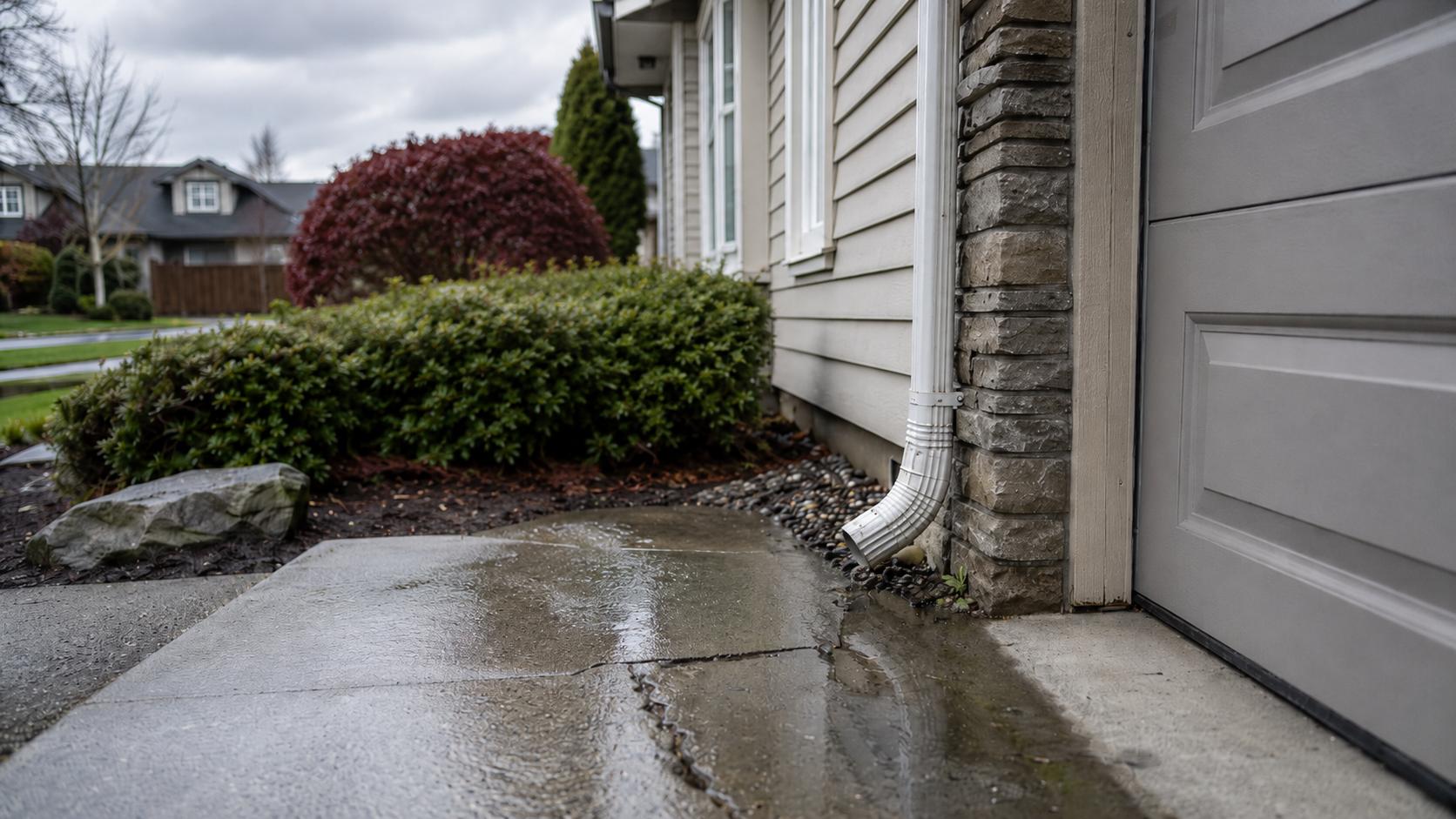
One of the most common calls we get at Black Birch Contracting is about a repair that did not hold. A driveway crack that was filled and came back wider than before. A slab that was lifted and settled again within a couple of seasons. In almost every case the pattern is the same: water from a downspout or a poorly graded lot is pooling against the concrete, saturating the soil underneath and pushing the slab apart from below. The crack is not the disease. It is the symptom. If drainage is not dealt with before the crack, the fix never stands a chance.
We handle concrete restoration and structural repair across the Fraser Valley, from Abbotsford to Hope. In more than a decade of this work, we've watched a lot of repairs fail because the steps were done out of order. A perfectly mixed epoxy injected into a crack means nothing if the ground beneath the slab is still washing out. A freshly lifted garage pad will sink again within a season if nobody stabilized the substrate first. Sequence matters as much as, and sometimes more than, the materials a contractor selects.
The Hidden Reason So Many Repairs Fail
If you noticed a brown water stain on your ceiling, you wouldn't just repaint it and call the job done. You'd find the leak first. Yet that's exactly what happens when a contractor jumps straight to injecting cracks or resurfacing damaged concrete without asking what caused the damage. They're treating the symptom, not the source. Proper sequencing means working backward from the visible damage to the root cause: drainage failure, soil movement, or compromised footings. Skip that investigation and you're setting a timer for the next failure. A freshly patched slab can look great in spring and be cracking again by fall for exactly this reason. If you want to spot this pattern in a bid before you sign it, read our post on fixing the symptom instead of the source.
Our region makes these mistakes more expensive than they would be elsewhere. The Fraser Valley's wet climate and clay-heavy soils punish poorly ordered work. Clay expands when saturated and shrinks in dry spells, a cycle of constant movement that will undo any repair that ignored what's happening underneath.
Drainage First: The Non-Negotiable Starting Point
Every repair plan we build starts with water management. Water is the driving force behind nearly every concrete problem in this region. Heavy seasonal rainfall saturates Fraser Valley soils for months at a time, creating hydrostatic pressure that pushes against foundations, lifts slab edges, and forces its way into every hairline crack it can find. Older properties in Chilliwack and Abbotsford are especially vulnerable because many sit on lots graded toward the foundation instead of away from it. The atmospheric rivers that hit the south coast most winters are a reminder that rainfall intensity here is not something you can plan around.
Here's what happens when you inject a foundation crack without touching the drainage. The epoxy fills the void and the repair looks solid, but the water pressure that opened the crack is still there, building with every wet season. Within months, sometimes within a single winter, the crack reopens or a new one forms right beside it. The difference between a lasting repair and a repeat repair is that simple.
A proper drainage assessment covers grading, downspout discharge points, perimeter drain condition, and soil saturation. Correct those issues, waterproof where needed, and the crack repair that follows actually holds. We wrote more about how water drives our repair decisions in what Fraser Valley rain really does to your house.
Soil Stabilization Before You Ever Lift a Slab
The next rule lives below the surface. Picture lifting a settled garage slab without doing anything about the voids, eroded channels, or soft sub-base underneath it. The slab goes up and looks fine for a while, then gravity does what it always does. The same weak soil that caused the settlement compresses or washes away again, and you're back where you started, except you've now paid twice.
Stabilization starts with finding the voids, usually through visual assessment, probing, and a hard look at the site's drainage history. Then comes the more important question: why did they form? Water erosion, decomposed organic fill, and poor compaction from the original build each call for a different plan. Filling and densifying the sub-base before lifting is what separates a repair that lasts from one that fails in two years. Expanding polyfoam grout is one of our main tools for this, and we've explained how polyfoam grout fills voids and stabilizes soil in an earlier post.
Structural Work Always Comes Before Finishes
Picture fresh drywall screwed over a basement wall that is still bowing inward, new tile laid over a floor that is heaving from unstable soil, or a freshly painted foundation wall where the paint is already cracking because the concrete behind it was never repaired. These are textbook cases of repairs that look finished before they're actually solved. The homeowner spent real money, the room looked great for a few months, then the underlying problem announced itself all over again.
When finishes go on first, you pay twice: once for the finish, and again to tear it out and fix what's behind it. Worse, covering a structural problem hides the warning signs that would otherwise tell you a wall or slab is approaching failure. Whatever the project, the order is the same. Stabilize the soil. Address the water. Repair the concrete. Only then apply finishes. That's not a preference, it's the standard, and it's a big part of why we argue that structural work should come before anything cosmetic in any renovation budget.
How to Read Your Property and Build the Right Repair Sequence
Before you pick up the phone, take a walk around your property with a simple model in mind. Water flows downhill, soil responds to moisture, structure sits on soil, and surfaces sit on structure. Start at the source: where is water coming from, and where is it pooling? Then consider how the soil under your concrete may have shifted. Only after that does it make sense to evaluate slabs, footings, and walls, and finishes come last.
Take a cracking driveway with a sunken garage slab near the door. The instinct is to fix what you can see. An experienced contractor instead traces where water travels along the foundation and under the slab, investigates whether the sub-base has washed out or settled, stabilizes the ground, lifts the slab if appropriate, and only then touches the surface cracks. Surface repairs only last when the layers below them are sound.
So be cautious if a contractor jumps straight to crack injection without assessing drainage, or offers slab lifting without investigating what's underneath. Ask one question of every bidder: "What is your sequence, and why?" The answer tells you whether you're getting a site-specific plan or the same playbook they run on every job. Knowing the right order of repairs puts you in control of that conversation, and it's the cheapest insurance you can buy against paying for the same fix twice.
Frequently Asked Questions
Why does the order of concrete repairs matter so much in the Fraser Valley?
The Fraser Valley's wet climate and clay-heavy soils create conditions where repairs done out of sequence almost always fail. Clay soils expand and contract with moisture, so if you patch a crack or lift a slab without first addressing drainage or soil stability, the same forces that caused the original damage will simply undo the new work. Getting the sequence right the first time is what separates a lasting repair from an expensive loop of repeat fixes.
What should be fixed before repairing concrete cracks?
Drainage issues need to be resolved before any crack or surface repair begins. If water is pooling against a slab, running beneath it, or saturating the surrounding soil, injecting a crack with epoxy or filler won't hold. The water will continue to move the concrete from below, and the crack will return, often wider than before. Removing the water source is the true starting point of any sound repair plan.
What is soil stabilization and why does it come before slab lifting?
Soil stabilization is the process of addressing voids, washout, or unstable ground beneath a concrete slab before any lifting work takes place. If the substrate is still shifting or eroding, a lifted slab has nothing solid to rest on and will sink again within a season. Stabilizing the base first gives the lifted concrete a foundation that can actually hold the correction over time.
Why do my concrete repairs keep failing even when I hire a contractor?
In most cases, repeated repair failures come down to sequence rather than materials or workmanship. A contractor may apply the right product correctly, but if drainage wasn't addressed first or the soil beneath the slab wasn't stabilized, the root cause of the damage is still active. The repair gets undone by the same problem that caused the original damage. It's always worth asking a contractor how they plan to identify and address the source of the damage before work begins.
Should structural work always be done before surface finishes or coatings?
Yes, always. Applying a decorative or protective finish over unresolved structural issues means you may need to tear that finish out later just to access and correct the underlying problem. This adds cost and time to a project that could have been handled correctly in a single pass.
Does this repair sequence apply to all concrete surfaces, including driveways and garage pads?
The same sequencing principles apply across virtually all concrete surfaces, including driveways, garage pads, patios, and walkways. Each of these surfaces can be affected by drainage failure and soil movement, and each one will show the same pattern of repeat failure if repairs are made without addressing root causes first. The specific steps may vary by project, but the order of drainage, stabilization, structural repair, and then finishes holds across the board.
Getting concrete repairs right the first time comes down to working in the correct order, and that takes real experience with the conditions Fraser Valley properties face. If you have a crack, a sinking slab, or a repair that keeps coming back, reach out to Black Birch Contracting and we can walk you through what a properly sequenced repair plan would look like for your property.