
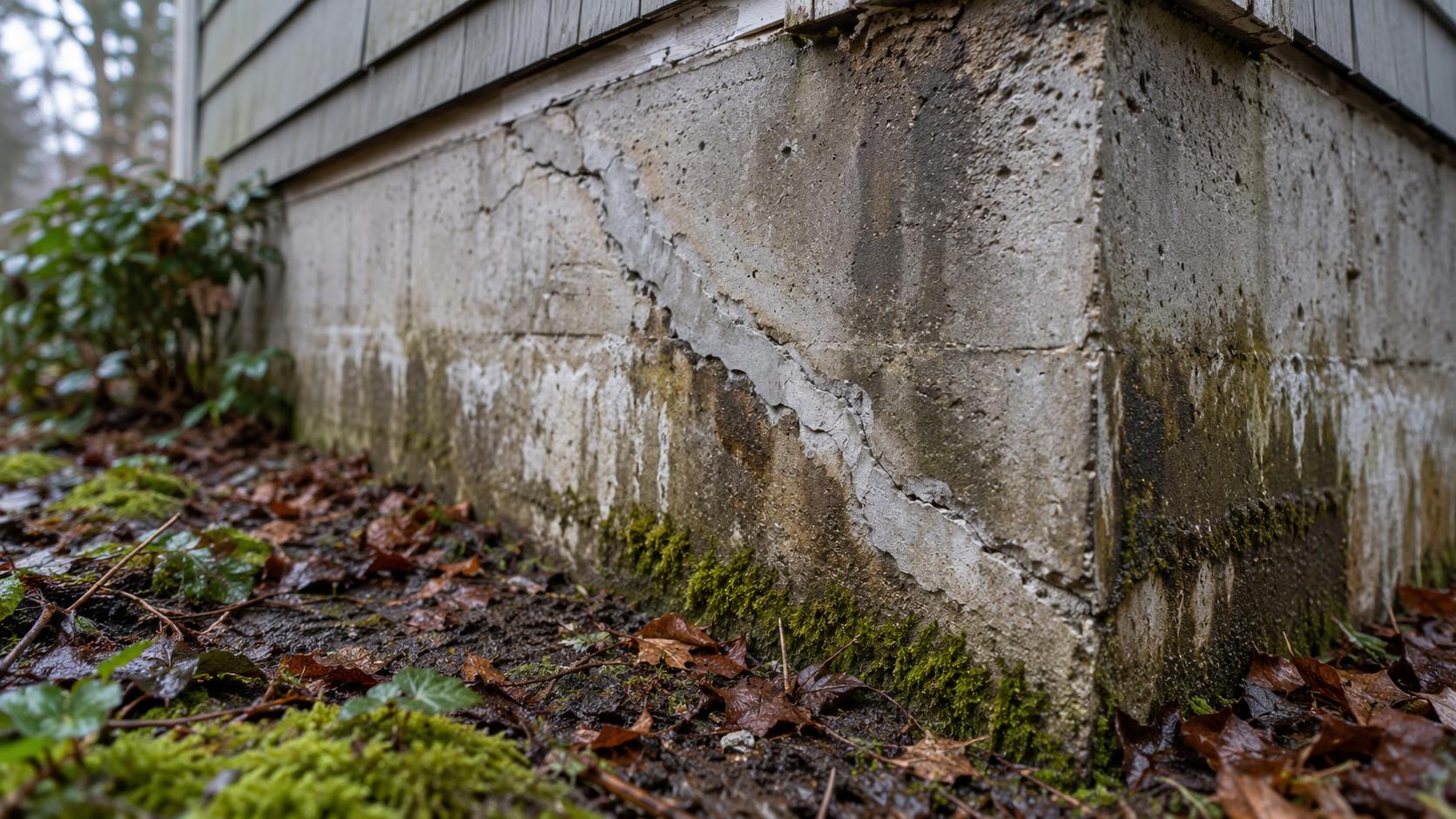
A crack in a foundation wall, a flaking front step or a patch that keeps coming back all raise the same question: is this structural damage worth worrying about, or something cosmetic that can wait? The answer decides what the repair costs, who should do it and whether waiting is safe. Telling them apart comes down to a handful of signs you can check yourself, how soon each one needs attention, the Fraser Valley conditions that turn small defects into bigger ones, the surface fixes that make a structural problem look solved, and what a real structural repair involves.
Structural and Cosmetic Damage Defined
Structural damage affects how a building carries load. A foundation wall pushed inward by soil pressure, a footing that has settled, corroded rebar inside a beam or column, or a slab that has lost the support underneath it all change how weight travels from the roof to the ground. Left alone, structural problems tend to progress.
Cosmetic damage affects appearance and surface durability, not load. Shrinkage hairlines in a garage floor, light scaling on a driveway, discolouration and chipped step edges belong here. They are worth fixing, especially where water can get in, but they are not urgent in the same way.
The catch is that the two can look alike. A narrow crack through a footing can matter more than a wide one in a decorative cap, so size alone does not settle the question. We go deeper on width, direction and pattern in the difference between structural and non-structural cracks.
Signs of Structural Damage
Horizontal cracks in a foundation wall, or a wall that bows or leans.
Stair-step cracking in block or brick, or diagonal cracks running from the corners of windows and doors.
One side of a crack sitting higher, lower or further out than the other.
Cracks that measurably widen over weeks or months.
Doors and windows that start sticking, floors that slope, or new drywall cracks above a cracked foundation.
Spalling deep enough to expose rusty or bare rebar.
Signs of Cosmetic Damage
Hairline vertical cracks with no offset that do not change over time.
Surface scaling or flaking on otherwise solid flatwork.
Discolouration and staining.
Chipped edges and corners on steps, curbs and walkways.
Cosmetic does not mean ignore. An open crack in a driveway lets water reach the base below, and in this climate that water does real damage over a few winters.
When to Worry and When to Wait
Anything on the structural list is a reason to book an assessment now. Each sign points to movement that has not stopped or to steel corroding inside the concrete, and both get worse with every wet season.
A hairline crack with no offset can be watched instead. Mark its ends, note its width, and check it again after the next heavy rain and again late in a dry summer, once the soil has gone through its full swing. If it holds still, it is a cosmetic repair you can plan for. If it grows or one side shifts, treat it as structural. We cover the right way to do this in how to tell if a foundation crack is moving.
Fraser Valley Conditions That Raise the Stakes
Three local conditions push borderline defects toward the structural side. Long wet seasons saturate the ground and build water pressure against basement walls. Fine-grained soils in parts of the valley shrink in dry summers and swell again when the rain returns, so foundations move with the seasons. Winter cold snaps add freeze-thaw cycles that widen any crack holding water. A surface patch that might last for years in a drier, more stable climate can fail in a single wet season here.
Cover-Up Repairs to Watch For
The quickest way to make a structural problem look solved is to treat only what shows. Four surface fixes do this most often:
Filling a crack without finding out why it opened.
Skim coating spalled or pitted concrete without removing the unsound material first, which tends to delaminate once water and frost get behind it.
Caulking over an active crack or a failed joint, which slows water for a season while it finds a path behind the bead.
Painting or parging over moisture stains and hairline cracks.
Each has legitimate uses on sound concrete. The problem is using them in place of a diagnosis. A previous repair was probably cosmetic if the same crack reopens, the patch separates from the concrete around it, or new spalling appears at its edges. Those are the same patterns to watch for when judging whether a contractor is fixing the source of a problem or only the symptom.
What a Structural Repair Involves
A structural repair starts with the cause: drainage, soil movement, overloading, corrosion or a combination. On every project we diagnose before we price the fix, because the cause decides the method.
From there, the work usually means removing all unsound concrete, often well past the visible damage; cleaning, treating or adding to exposed reinforcement; and repairing with a method matched to the load and exposure. That might be epoxy injection to bond a structural crack, polyurethane injection to stop water or fill voids, slab lifting or underpinning where support has been lost, or added reinforcement where a wall or beam needs strength. Larger and load-bearing repairs often involve a structural engineer and, depending on the municipality and the scope, a permit.
A structural repair costs more up front than a patch. Paying to patch the same area every few years while the cause keeps working usually costs more.
Repair Order: Structure Before Finish
When a home needs both kinds of work, drainage and structural repairs come first, then resurfacing, coatings and finishes. A new overlay or fresh paint over a foundation that is still moving hides the evidence while the problem continues. We explain how sequencing decides whether repairs last in why the order of repairs matters.
Frequently Asked Questions
How do I know if a crack in my concrete is structural or cosmetic?
Look at where the crack is, which way it runs, how wide it is, whether one side has shifted and whether it is changing. Horizontal cracks in foundation walls, stair-step cracks, offsets and cracks that widen over time point to structural causes. Hairline vertical cracks with no offset that stay the same are usually shrinkage. Because a narrow crack in a footing can matter more than a wide one in a decorative surface, an on-site assessment is the reliable answer when you are unsure.
Can I just patch over a structural crack to save money?
You can, but the patch only hides it. If soil movement, water pressure or corrosion opened the crack, that force keeps working behind the patch, and the repair usually gets more expensive the longer it stays covered. Patching makes sense after the cause is fixed, not instead of fixing it.
How can I tell if a previous repair was only cosmetic?
The clearest sign is the same damage returning: a crack reopening in the same place, a patch pulling away from the concrete around it, or new spalling or efflorescence at its edges. If the original work never dealt with drainage or movement, it was probably surface-level.
Is skim coating damaged concrete ever acceptable?
Yes, when the concrete underneath is sound and the problem really is surface wear. Over active damage, such as spalling from rusting rebar or cracking from foundation movement, a skim coat traps moisture, hides the symptom and often fails faster than bare concrete would.
Why does the Fraser Valley make this distinction more important?
Long wet seasons, soils that move with moisture and winter freeze-thaw cycles all act on any defect left open. A cosmetic patch that would last for years in a drier climate can break down in a single winter here, and structural problems progress faster when water keeps reaching them.
Does a structural repair cost much more than a cosmetic one?
Up front, usually yes, because it involves diagnosis, more removal and preparation, and sometimes engineering. Over the life of the home it is usually cheaper than patching the same area again and again while the cause gets worse.
If you have a crack, a sinking slab or a repair that keeps failing anywhere in Chilliwack, Abbotsford, Langley or the wider Fraser Valley, contact Black Birch Contracting to book an assessment. We will tell you whether it is structural or cosmetic, and what it will take to fix it properly.