Concrete surface damage rarely announces what it actually is. A lifted edge, a flaking patch, and a crater with broken edges can all read as "bad concrete" at a glance, yet each points to a different failure mechanism, and mixing them up usually means paying for the wrong repair. This guide covers three of the most common concrete slab surface problems in the Fraser Valley: slab curl, scaling, and spalling. Each has its own cause, its own warning signs, and its own threshold where a cosmetic annoyance becomes a structural concern.
The local climate matters here. Heavy rainfall, wide seasonal temperature swings, and periodic hard freezes in Chilliwack and the eastern valley can trigger or worsen all three conditions, sometimes on the same slab. Getting the diagnosis right is the first real step toward a repair that lasts.
What Slab Curl Is and What Causes It
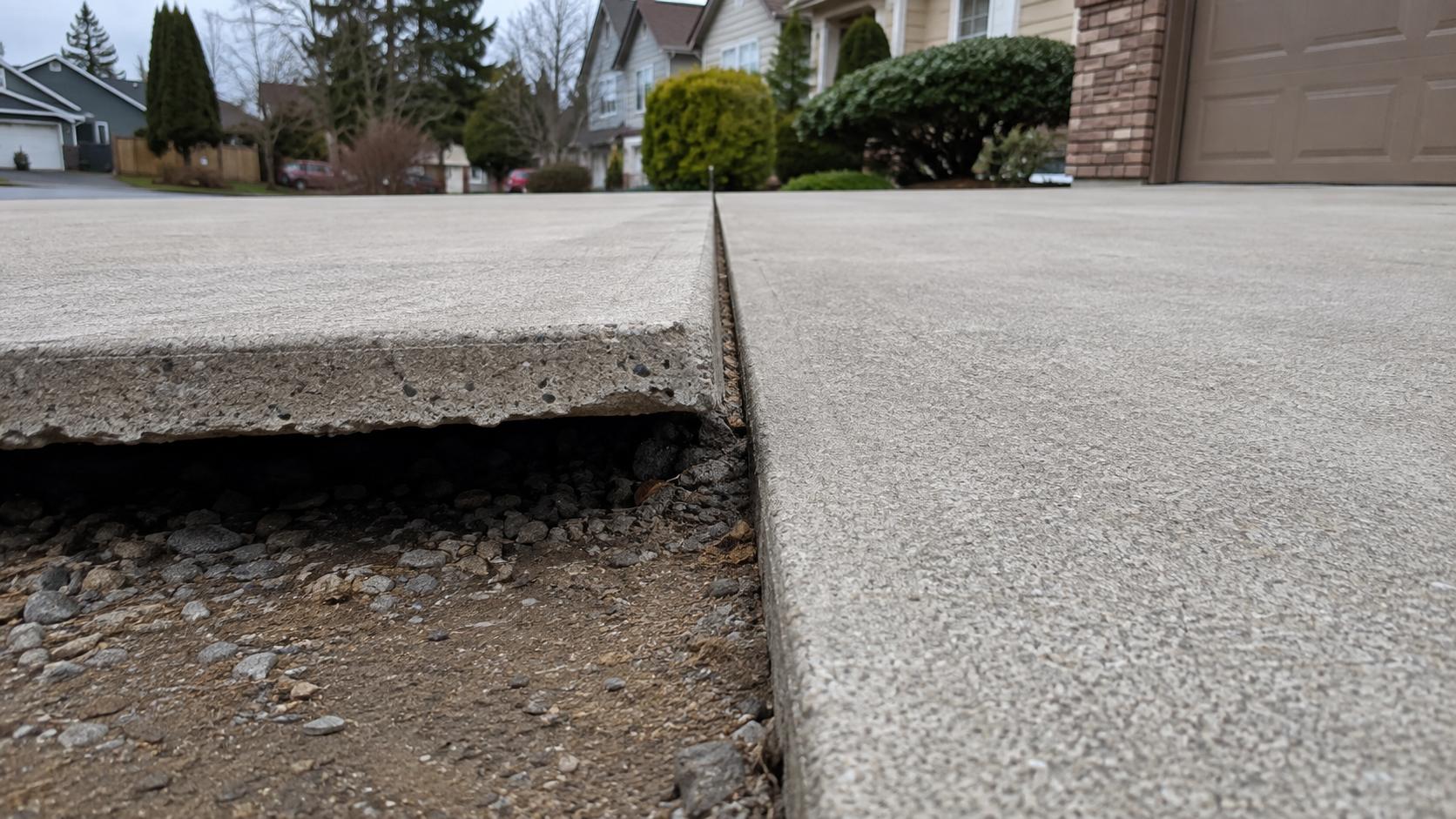
Slab curl is the bending of a slab's flat plane so that edges or corners dish upward or downward. The main culprit is differential drying. The exposed top surface of fresh concrete loses moisture faster than the bottom, so the top shrinks while the still damp underside holds its original volume. Internal tension builds, and the edges pull upward.
Temperature gradients make this worse. On a hot afternoon, the top of a slab can run significantly warmer than its shaded underside, stacking thermal contraction differences on top of an existing moisture imbalance. A warm, dry summer following a wet spring pour is a classic setup for curl in this region, which is part of why the condition is so common on Fraser Valley driveways and garage floors.
How to Spot Slab Curl
Visible gaps between slab edges and the subgrade, especially at corners
A rocking sensation when walking near slab edges or joints
Uneven transitions between adjacent slabs, creating lip edges or trip hazards
Fine stress cracks running parallel to edges where the slab is bending
Is Slab Curl Cosmetic or Structural?
Mild curl is usually a mix and curing issue rather than a sign of structural failure. Severe curl is a different story. It creates tripping hazards, opens stress cracks to freeze-thaw damage, and leaves surfaces far more vulnerable to scaling once de-icing salts get involved. The biggest hidden risk is the one nobody can see: curled edges lose contact with the base material, which lets voids form beneath the concrete slab. Those voids remove support right where traffic loads concentrate, and what started as a curing problem becomes a cracking and spalling problem that keeps getting worse without repair.
What Concrete Scaling Is
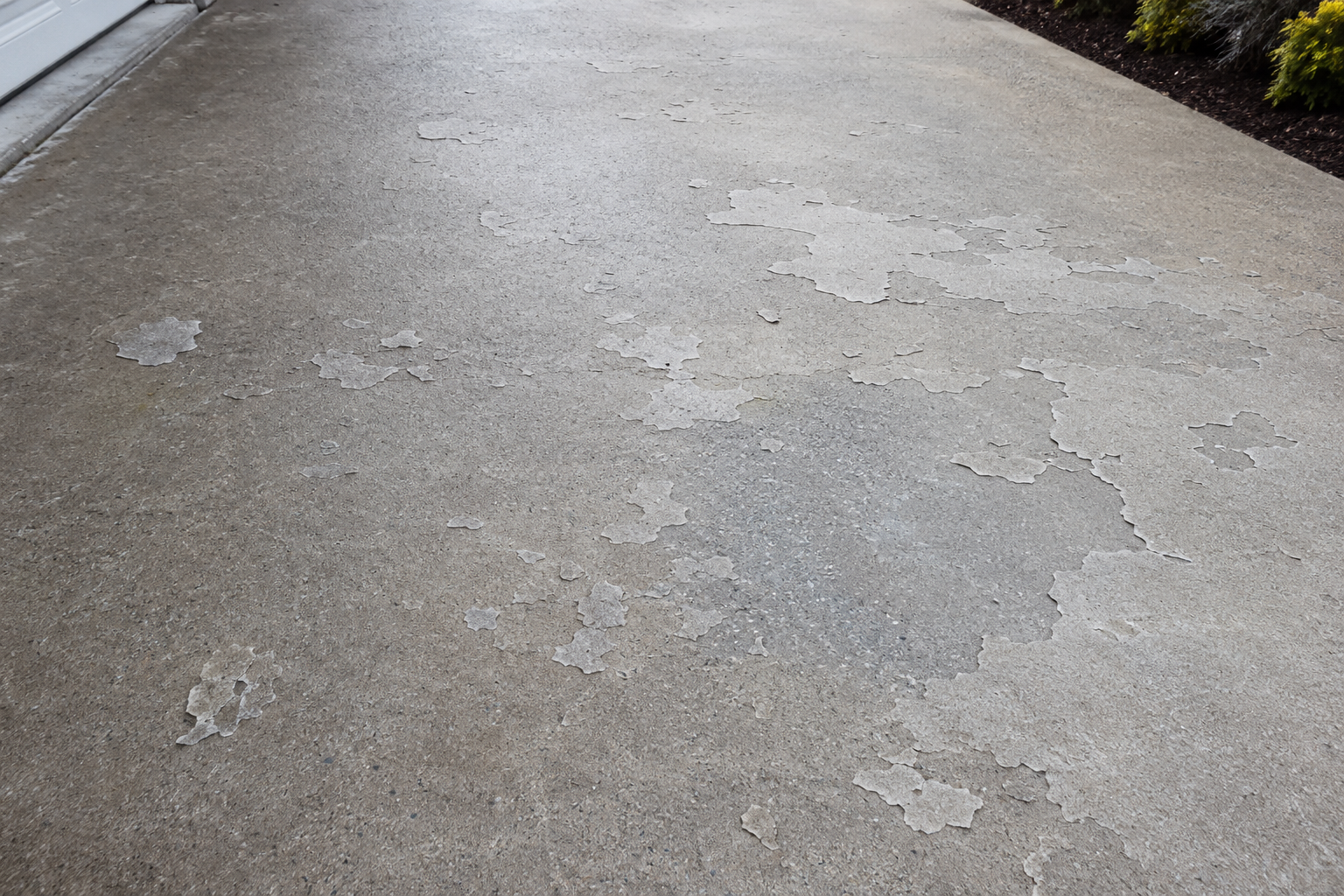
Scaling is what happens when thin, flat layers of the concrete surface peel or flake away, leaving a rough, pitted texture. Unlike deeper spalling, which can expose large aggregate chunks, scaling stays relatively close to the top. The damage tends to spread outward rather than digging downward, at least in its early stages. It usually starts as small patches that gradually connect until the whole surface looks worn.
How Freeze-Thaw Cycles Cause Scaling
Freeze-thaw cycling is the leading cause of scaling. When water saturates the top layer of a slab and temperatures drop below freezing, that water expands by roughly nine percent. The expansion breaks the bond within the cement paste just below the surface, loosening thin layers that eventually flake off. Chilliwack and the eastern corridor sit in a zone where winter temperatures cross above and below zero repeatedly, and each cycle compounds the damage from the last. Repeated cycling is far more destructive than a single deep freeze, and repeated cycling is exactly what this region delivers. We covered the mechanism in more detail in our post on how freeze-thaw cycles crack concrete in the Fraser Valley.
How De-Icing Salts Speed Up Scaling
Many homeowners accelerate scaling without realizing it by spreading rock salt or calcium chloride on driveways and patios. De-icing salt damages concrete in two ways: it draws additional moisture into the surface, and it lowers the freezing point of water, which increases the number of freeze-thaw cycles the slab has to endure. More cycles mean faster deterioration, and a minor cosmetic issue can turn into a genuine structural concern quickly.
When to Act on Scaling
Early scaling is mostly cosmetic. Once the protective surface layer is gone, though, moisture can work deeper into the slab and open the door to reinforcement corrosion and more serious freeze damage. If light flaking has progressed to widespread roughness or exposed aggregate, it is worth a professional assessment before the damage reaches the structural core of the slab.
What Concrete Spalling Is and Why It Matters
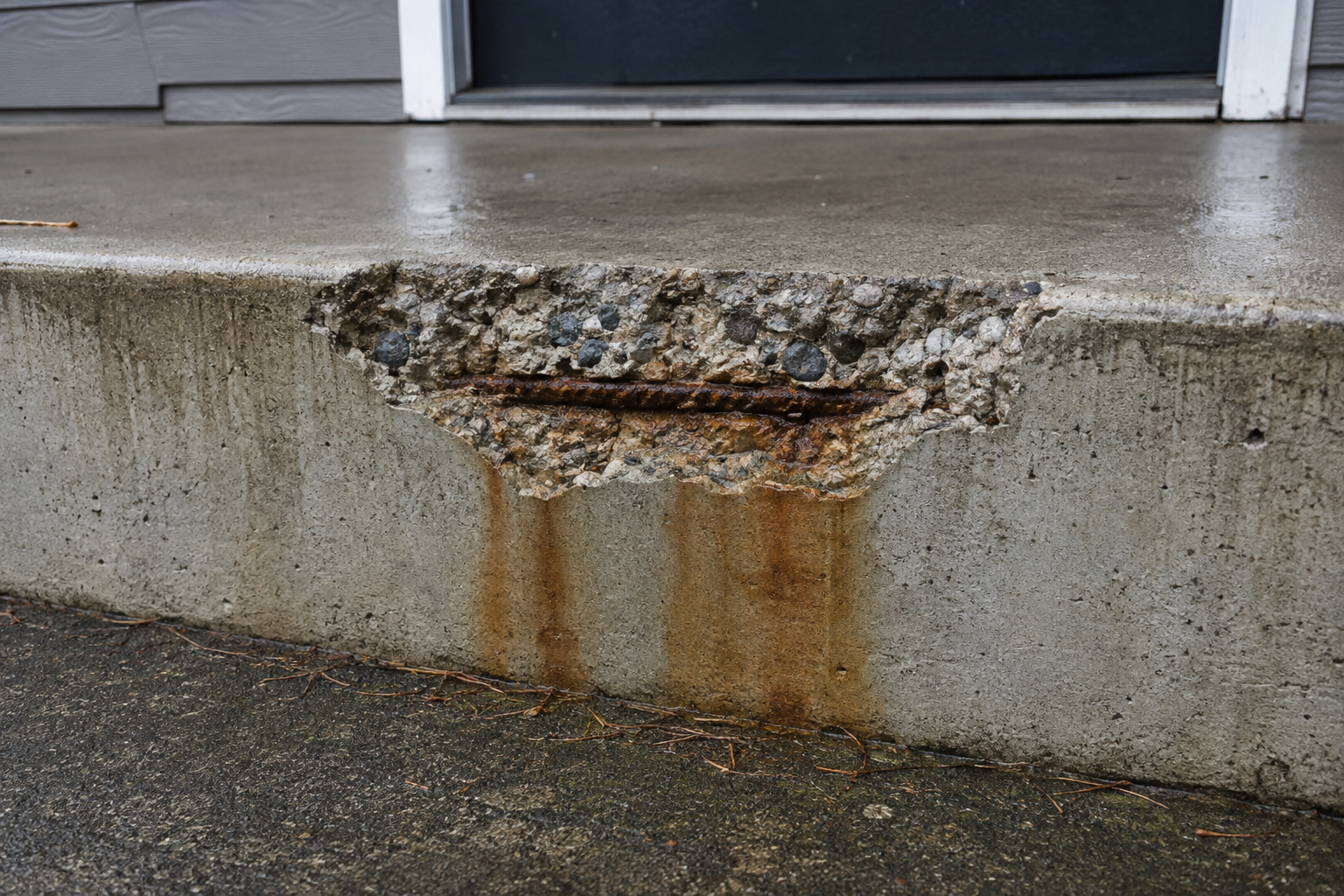
Spalling happens when chunks, flakes, or rough craters break away from the concrete, often exposing the aggregate underneath or, worse, the reinforcing steel inside. Scaling and spalling get confused constantly because both involve surface material coming loose, but the distinction matters. Scaling peels away in thin, flaky layers. Spalling goes deeper and looks messier, with rough craters and broken edges. A simple rule: if you can see aggregate or rebar, that is a spall, not scale.
What Causes Spalling
Spalling causes fall into three broad categories. Moisture damage occurs when water penetrates the surface, freezes, expands, and breaks the bond holding the concrete together. Rebar corrosion is typically the most serious: when embedded steel rusts, it expands to several times its original volume, generating enormous internal pressure that pops the concrete cover off from the inside out. Then there are mix problems from the original pour, such as a poor water-to-cement ratio, insufficient air entrainment, or finishing before bleed water has fully evaporated. Any of these can leave a weak surface layer prone to breaking apart years later.
Why Spalling Is Common in the Fraser Valley
Wet winters bring relentless moisture cycles, and many older local slabs were poured before modern mix standards addressed air entrainment and curing. Those two factors together accelerate nearly every spalling mechanism at once.
Signs a Spall Is Serious
Not every spall needs immediate attention, but some signs point to a real structural problem. Exposed rebar, deep craters, and cracks radiating outward from spall zones all suggest the damage runs well beyond the surface. Rust stains or steel showing through mean corrosion is actively working against the slab's integrity. At that point, it is worth understanding the difference between structural and cosmetic concrete damage before deciding how to approach repairs, because catching corrosion early is dramatically cheaper than dealing with it after the next winter.
How Serious Is Each Condition?
Cosmetic damage is surface-only. It does not touch the slab's load-bearing capacity or long-term integrity: light discoloration, hairline cracks, minor texture changes. Structural damage affects the slab's ability to function, carry loads, or stay waterproof. The right repair approach depends entirely on which one you are dealing with.
As a practical guide: minor curl at joints is generally cosmetic while the slab still sits flat and stable, but large gaps beneath edges, rocking underfoot, or cracking radiating from curled sections means structural territory. Isolated surface flaking from scaling is manageable, while widespread scaling that exposes aggregate needs prompt attention. Shallow spall pop-outs without rebar involvement can often be patched, while spalling with exposed steel, deep craters, or active cracking warrants a professional evaluation.
Assess All Three Conditions Together
One warning before you do anything: beware of surface repairs that mask a deeper problem. A coat of resurfacer over structurally compromised concrete just delays a proper diagnosis, and it can make the outcome considerably worse. Curl, scaling, and spalling tend to share root causes, whether that is moisture intrusion, poor finishing, or both, so we evaluate them as a system rather than treating each in isolation. That is what gives a clear picture of what a slab actually needs, and it is why the diagnosis stage matters as much as the repair itself.
Frequently Asked Questions
What is the difference between concrete scaling and concrete spalling?
Scaling involves thin, shallow layers of the concrete surface flaking or peeling away, typically caused by freeze-thaw cycles and de-icing salt damage. Spalling runs deeper into the concrete material itself, often linked to embedded moisture, corroding reinforcement, or more severe structural breakdown. Both conditions involve surface material coming loose, but the depth, pattern, and underlying cause are different. That means the repair approach for each will be different too.
What causes slab curl in concrete?
Slab curl happens when the top surface of a concrete slab loses moisture faster than the bottom, a process called differential drying. This moisture imbalance creates internal tension that pulls the slab edges upward. Temperature differences between the top and underside of a slab can make this worse, especially in climates like the Fraser Valley where warm, dry summers can follow wet spring pours.
Is slab curl just a cosmetic problem, or does it need to be repaired?
Mild slab curl may start as a cosmetic issue, but it can become a serious concern if left alone. Curled edges create tripping hazards, and the stress cracks that form invite freeze-thaw damage and de-icing salt deterioration. Those curled edges also lose contact with the base material beneath, which can lead to voids forming under the slab and eventually cause cracking and spalling that requires professional repair.
Why is concrete surface damage so common in the Fraser Valley?
The Fraser Valley's combination of heavy rainfall, seasonal temperature swings, and occasional hard freezes creates conditions that trigger or worsen multiple types of concrete surface problems. Freeze-thaw cycles are a major factor, as water repeatedly expanding and contracting within the concrete breaks it down over time. Even well-placed concrete can develop scaling, spalling, or curling when local climate conditions work against it season after season. We've seen this play out on driveways and slabs that were properly installed but simply weren't built to account for how punishing the local weather can be.
Can de-icing salts really damage concrete surfaces?
Yes, de-icing salts are one of the most common contributors to concrete scaling and surface deterioration. Salts draw moisture into the concrete and accelerate freeze-thaw cycles at the surface level, causing the top layer to flake and peel away faster than it otherwise would. Driveways and walkways treated with salt during icy stretches are particularly vulnerable, especially if the concrete is newer or the surface wasn't properly finished and cured.
How do I know if my concrete slab has voids forming underneath it?
One early sign of voids beneath a concrete slab is a rocking or hollow sensation when you walk near the edges or joints. Visible gaps between slab edges and the ground, along with fine stress cracks running parallel to the edges, can also indicate that the slab has lost contact with the base material below. Voids remove support right where traffic loads are concentrated, so it's worth having a professional assess the situation before the damage progresses.
Concrete slab surface problems like curling, scaling, and spalling are easier to address when caught early, and getting the right diagnosis is what determines whether a repair actually lasts. If you're noticing changes to your concrete in Chilliwack or anywhere across the Fraser Valley, reach out to our team at Black Birch Contracting to talk through what you're seeing and find out what your options are.