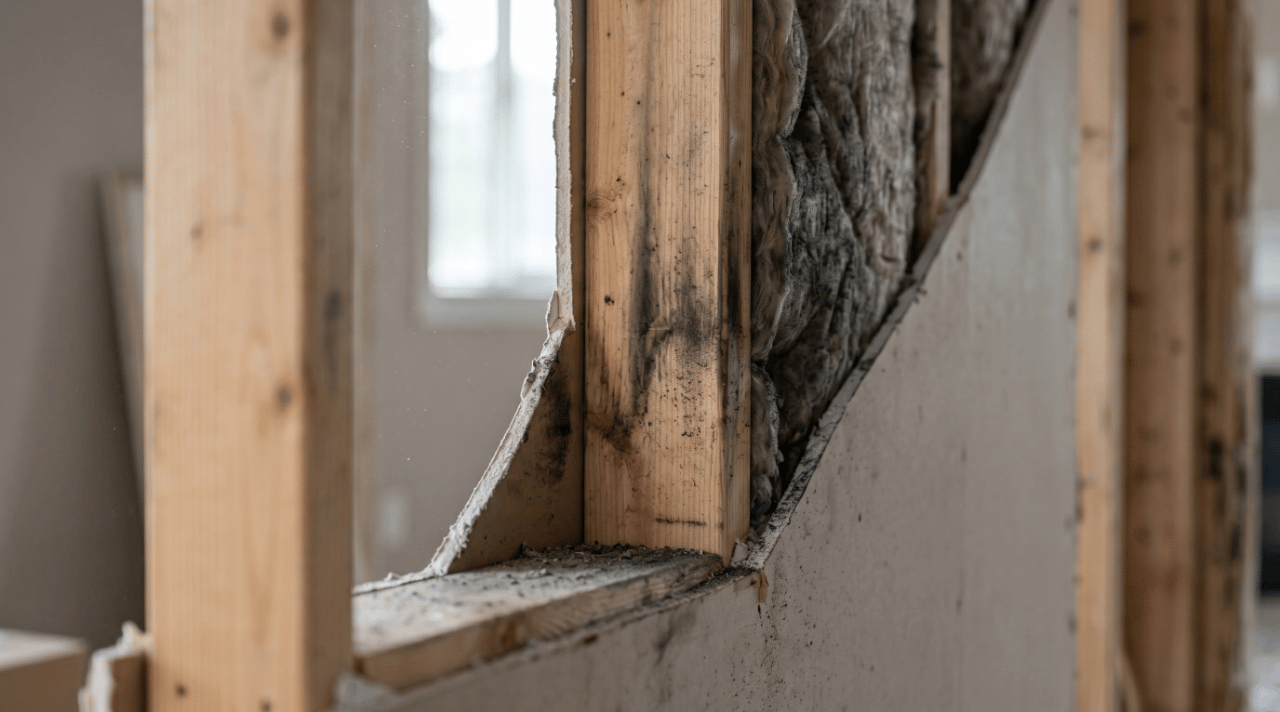
When wildfire smoke rolls through the Fraser Valley, most homeowners assume the worst is over once the haze clears. The wildfire smoke damage restoration many Fraser Valley families actually receive is often surface-level at best, focusing on what you can see and smell while ignoring the deeper problem. Smoke damage restoration Chilliwack residents deal with after a bad fire season typically involves wiping down surfaces, running ozone machines, and calling it done. That approach barely scratches the surface. Wildfire restoration BC homeowners deserve should treat the problem for what it actually is: a building science challenge, not just a cleaning job.
The real threat from BC wildfire season home damage hides inside your walls, attic cavities, and mechanical systems, long after the air outside looks clear again. Smoke infiltration through the building envelope is insidious. It follows pressure differentials, slipping through gaps around wiring penetrations, plumbing stacks, recessed lights, and every other tiny opening connecting your home's interior to the outdoors. Once combustion byproducts settle in wall cavities and insulation, they don't just sit there quietly. They off-gas for months or even years, contributing to lingering smoke odor and ongoing exposure to harmful particulates that standard smoke odor removal techniques never actually address.
The Fraser Valley's geography makes this an almost unavoidable reality. Surrounded by wildfire-prone corridors stretching from the interior through the mountain passes, smoke infiltration events are a near-annual risk for communities from Chilliwack to Abbotsford and beyond. Yet hidden smoke damage in homes here remains a documented but under-discussed problem in residential restoration circles. Most fire damage restoration contractors still treat wildfire smoke remediation like a glorified deep clean, skipping the forensic investigation that soot removal at a structural level actually demands.
This article is here to change that. We'll walk through what gets missed during typical smoke damage assessments, why smoke damage inside walls poses real structural and health risks, and what you should demand from any contractor claiming to offer wildfire smoke remediation. When combustion byproducts are hiding in your wall assemblies, a surface wipe-down is not restoration. It's a Band-Aid over a problem that will keep working against you for years.
How Wildfire Smoke Actually Enters Your Home
If you've lived through a Fraser Valley smoke season, you know the haze that hangs in the air for days or even weeks. What most people don't realize is that smoke damage inside walls is remarkably common, and it happens silently while you're sheltering indoors thinking you're safe. Homeowners across the region are discovering, sometimes months later, that smoke didn't just linger outside. Our homes, despite closed windows and locked doors, aren't nearly as sealed as we assume. Smoke damage restoration needs in Chilliwack and surrounding communities keep growing because of it.
Why Wildfire Smoke Is Different
House fire smoke is intense but short-lived. Wildfire smoke is the opposite: low-temperature, long-duration, and loaded with ultra-fine particulate matter. Those particles are often smaller than 0.3 microns, which gives them a level of penetration that most building materials simply aren't designed to stop. They slip through gaps that would block ordinary dust, and they pass through standard HVAC filters without much resistance. When a wildfire smoke event stretches on for days or weeks, even a slow infiltration rate adds up to serious contamination inside the building. That cumulative effect is exactly what makes envelope infiltration such a recurring problem in wildfire restoration BC work, and why treating it the same as ordinary smoke damage tends to fall short.
Where Smoke Gets In
The usual entry points are attic vents, soffit gaps, crawlspace vents, and deteriorated weatherstripping around windows and doors. Bathroom exhaust fans and dryer vents can backdraft smoke indoors when pressure shifts. Your HVAC system is often the biggest culprit, though, actively pulling smoke particles inside and pushing them through ductwork and wall cavities across the whole house. FEMA's guide on residential smoke damage points out that pressure differentials and the stack effect keep these infiltration pathways open continuously. The stack effect occurs when warm air rises inside your home and draws outdoor air in at lower levels.
Fraser Valley Homes Are Especially Vulnerable
A lot of homes in this region were built with older envelopes, typically vinyl siding over OSB sheathing with fiberglass batt insulation. That combination does almost nothing to stop ultra-fine smoke particles. Once those particles get into wall assemblies, the combustion byproducts they carry, including acrolein, formaldehyde, and polycyclic aromatic hydrocarbons (PAHs), deposit onto insulation and framing and just sit there. What you're left with is hidden smoke damage that goes well beyond a lingering smell.
How to Tell If Smoke Got Inside Your Walls
Most homeowners don't realize contamination happened until weeks after the fact. By then, they've already cleaned every visible surface and still can't shake the smell. The warning signs are pretty telling once you know what to look for: a smoke odor that keeps coming back after you've scrubbed everything down, yellowish discoloration around electrical outlets, and that distinctive smell that hits you every time the HVAC kicks on. Those aren't surface problems. They're signals that particles have worked their way into the structure itself. If you're seeing any of this, professional soot removal from structural components is likely what's needed. Real smoke odor removal means dealing with what's inside the wall cavities, not just wiping down drywall.
Persistent odor despite thorough surface cleaning
Staining or discoloration around outlets, switches, and baseboards
Odor that worsens when the HVAC system runs
Respiratory symptoms that began during or after a smoke event
If any of that sounds like your situation, the home needs a proper assessment before anything else. At Black Birch Contracting, we understand the building science behind smoke infiltration, and we know how to trace contamination to its actual source rather than just masking it.
What a Proper Smoke Damage Structural Assessment Actually Involves
If you need wildfire smoke damage restoration in the Fraser Valley, the difference between a thorough assessment and a quick walk-through can mean years of lingering problems in a home you thought was fine. Too many contractors in Chilliwack and Abbotsford treat assessment as a formality, spending twenty minutes poking around visible surfaces before writing a scope of work. A real assessment goes deeper, because smoke damage inside walls, attic cavities, and building envelope assemblies is where the serious issues hide. Wildfire restoration BC projects require more than a clipboard and a flashlight.
Diagnostic Tools That Actually Reveal the Problem
Any restoration crew worth hiring should show up with thermal imaging cameras. These trace smoke infiltration through the building envelope and map out the pathways that hot combustion gases traveled during the fire. This matters because smoke doesn't move in straight lines and rarely ends up where you'd expect it. PID meters and Dräger tubes can detect combustion byproducts inside walls and cavities that you can't see or smell from the living space. We've seen plenty of cases where a room smells clean at nose-level while the wall cavity behind the drywall is saturated. Air sampling for particulate matter and volatile organic compounds gives the project a measurable endpoint, so you actually know when remediation is done rather than just hoping it is. Without these tools, the whole assessment is guesswork, and guesswork is expensive when the problem comes back six months later.
Where Samples Need to Come From
Air quality readings alone tell an incomplete story. Surface wipe samples should be collected from inside electrical boxes, HVAC ductwork, attic decking, and wall cavities accessed through small inspection openings. These locations reveal hidden smoke damage because smoke deposits preferentially on cold surfaces first. Exterior walls, rim joists, and north-facing assemblies collect soot and residue long before interior finishes show any visible staining. That is why soot removal from structural components is a priority that surface cleaning alone will never address.
Standards Most Contractors Skip
The IICRC S700 standard and related wildfire restoration guidance require formal scope determination before remediation begins. That means documented sampling, categorization of residue types, and a written protocol for smoke odor removal that addresses every affected assembly in the home. Most contractors skip this step entirely. As recent reporting on wildfire insurance claims has shown, insurers are increasingly scrutinizing whether post-wildfire home inspection requirements were met, and a thin assessment leaves homeowners exposed. A smoke damage restoration contractor who bypasses formal assessment isn't completing a restoration. They're setting up a callback or a health complaint down the road. For related technical guidance on restoring affected finishes, see our guide on fire damage restoration for drywall and structural finishes.
The Hidden Damage Most Restoration Contractors Never Address
After wildfire smoke rolls through the Fraser Valley, most homeowners assume a thorough cleaning means the problem is solved. It doesn't. Smoke damage goes far deeper than what you can see on surfaces, and we've seen this firsthand on job after job. Smoke infiltrating wall cavities, attic spaces, and sealed building assemblies is the real threat, and most contractors Fraser Valley homeowners hire never open those walls to check. Surface cleaning of walls, ceilings, and contents creates an illusion of completion while combustion byproducts keep off-gassing behind every sheet of drywall. Honest wildfire restoration in BC starts with acknowledging what's actually hiding inside your home.
What Smoke Does Inside Your Walls
During a wildfire smoke event, fine particulate pushes deep into wall cavities through gaps in the building envelope, settling on insulation, framing, and the back face of drywall. The paper facing on drywall absorbs these particles and then off-gasses for months, releasing volatile compounds back into your living space. Fiberglass batt insulation is an even bigger problem. It traps combustion byproducts throughout its matrix, and there is no viable method for cleaning it in place. Removal and replacement is the only real solution. That is precisely why a house can look perfectly clean and still smell wrong six months after a smoke event.
Why Wiping Surfaces Is Not Enough
Soot removal on structural assemblies is a completely different problem from wiping down a countertop. Wall cavity soot requires controlled demolition to expose the framing, followed by HEPA vacuuming and dry-ice blasting on every accessible surface. You cannot solve smoke particle removal from walls by rolling encapsulant paint over intact drywall. Smoke odor removal means addressing the source at a molecular level, because odor molecules bond to porous materials in ways that paint and ozone treatments simply mask rather than fix. We've seen this play out repeatedly in post-fire assessments where homes looked fine on the surface but were still contaminated inside.
Attics, Moisture, and Shortcuts That Fail
Attic assemblies get overlooked constantly. Blown-in insulation, roof decking, and rafter bays hold smoke deposits that are invisible from below, quietly contaminating your indoor air the whole time. Wildfire smoke remediation has to include these spaces. When late-summer humidity combines with a smoke event, compromised wall cavities face a serious mold risk on top of everything else. It is the same basic problem of hidden moisture and contamination inside building assemblies. Common restoration shortcuts that cause long-term failure include painting over contaminated surfaces, reinstalling the original insulation, and skipping duct cleaning entirely. Each of those decisions saves a little money today and guarantees a callback tomorrow.
What Wildfire Smoke Remediation Should Actually Look Like
If you've been through a wildfire event in the Fraser Valley, you already know the visible damage is only part of the story. The smoke damage homeowners face often hides behind finished walls, inside duct systems, and within insulation cavities. Smoke trapped inside walls can go undetected for months, releasing combustion byproducts long after the skies have cleared. Residents in Chilliwack and across BC deserve a clear, honest breakdown of what proper remediation actually involves. Here's the step-by-step scope of work we follow.
There Is No One-Size-Fits-All Package
Wildfire smoke remediation done correctly is a multi-trade, multi-phase project. It involves demolition crews, HVAC technicians, industrial hygienists, and rebuild specialists working in coordinated sequence. Be skeptical of any single-crew, single-day solution that promises complete restoration. Scope varies significantly based on event intensity, home age, and envelope condition. A 1970s home with no vapor barrier and single-pane windows absorbs smoke very differently than a 2020 build with a tight envelope. Your home deserves a scope of work built around its actual condition, not a generic checklist.
Frequently Asked Questions
How do I know if wildfire smoke has gotten inside my walls?
The most common signs are a persistent smoky odor that comes back even after thorough surface cleaning, yellowish discoloration around electrical outlets and baseboards, and smells that get worse when your HVAC system kicks on. Smoke infiltration happens slowly and quietly, so many Fraser Valley homeowners don't notice the problem until weeks or even months after the smoke event has passed.
Why is wildfire smoke damage harder to treat than smoke from a house fire?
Wildfire smoke is low-temperature and long-duration, which means it produces ultra-fine particles smaller than 0.3 microns that can slip through gaps ordinary dust can't penetrate. Unlike a house fire, which is intense but brief, a wildfire smoke event can drag on for weeks. That extended duration gives particles time to accumulate inside wall cavities, insulation, and ductwork. At that point, you're dealing with a building science problem, not a simple cleaning job.
Can closing my windows and doors during a smoke event protect my home?
It helps, but it won't fully stop smoke from getting in. Pressure differentials and the stack effect, where warm air rises inside the home and pulls outdoor air in at lower levels, create constant infiltration pathways through gaps around wiring, plumbing stacks, recessed lights, and HVAC systems. Fraser Valley homes with older building envelopes are especially vulnerable, because their construction offers little resistance to ultra-fine smoke particles.
Is running an ozone machine enough to remove wildfire smoke odor?
Ozone machines and surface cleaning can knock back odor temporarily, but they don't touch the combustion byproducts that have settled inside wall cavities and insulation. Chemicals like acrolein, formaldehyde, and polycyclic aromatic hydrocarbons can off-gas for months or years from within the structure, so the smell will likely come back. Getting rid of smoke odor for good means identifying and treating the source at a structural level, not just the surfaces you can see.
What should I look for when hiring a contractor for wildfire smoke damage restoration in the Fraser Valley?
Look for a contractor who treats smoke remediation as a building science investigation rather than a deep clean. They should assess pressure dynamics, inspect attic and wall cavities, evaluate your HVAC and ductwork, and test for combustion byproducts rather than relying on smell alone. A contractor who skips the forensic inspection and goes straight to surface wiping or ozone treatment is almost certainly missing the contamination that matters most.
Which parts of my home are most at risk for hidden smoke damage?
Attic cavities, crawlspaces, wall assemblies insulated with fiberglass batt, and HVAC ductwork are where smoke particles most commonly accumulate out of sight. Bathroom exhaust fans and dryer vents can also backdraft smoke indoors during pressure changes, adding contamination in areas homeowners rarely think to inspect. If your home has older vinyl siding over OSB sheathing, it has very little resistance to smoke infiltration and warrants a thorough professional assessment after any prolonged smoke event.
Wildfire smoke damage is a structural problem, and Fraser Valley homes deserve a restoration approach that treats it as one. If you've noticed lingering odors, discoloration around outlets, or smells coming back through your HVAC system after a smoke event, don't wait to have it looked at. Reach out to our team at Black Birch Contracting for a thorough inspection and an honest conversation about what your home actually needs.